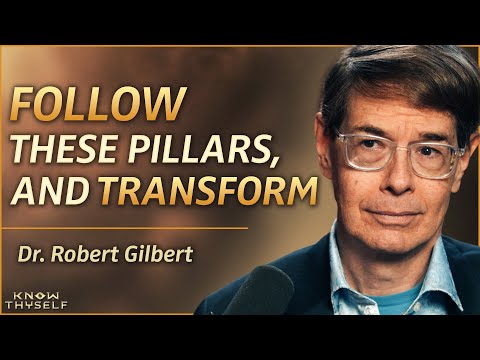
Rather than attempting to prove or disprove astral projection through experiments or debate, this interview focuses almost entirely on one guest's personal experiences and spiritual worldview. The discussion explores out-of-body experiences, consciousness, life purpose, manifestation, reincarnation, suffering, free will, and what the guest believes exists beyond physical reality. The result is a conversational episode that is engaging for viewers already interested in metaphysical topics, while remaining heavily dependent on subjective testimony rather than independently verifiable evidence.
The host deserves credit for approaching the conversation with curiosity instead of treating every claim as unquestionable fact. Throughout the interview he repeatedly asks practical questions that many viewers would naturally have, including how the guest first experienced astral projection, whether frightening encounters occurred, what evidence convinced him personally, how everyday life changed afterward, and how these experiences affect family life, decision making, and personal purpose. Those questions help keep a very abstract discussion accessible even as the subject matter becomes increasingly speculative.
The guest presents an extensive metaphysical framework in which consciousness exists independently of the physical body and individuals can intentionally leave their bodies, communicate with higher beings, travel through different realms, and receive guidance unavailable through ordinary perception. He also describes humanity as participating in a deliberately designed spiritual experience involving reincarnation, planned life events, soul development, and an eventual collective awakening. These are presented confidently as direct personal knowledge rather than as hypotheses or symbolic interpretations. The interview makes little effort to distinguish between personal conviction and claims that could be objectively demonstrated, so viewers should recognize that these ideas fall outside established scientific consensus.
One of the strongest aspects of the episode is the amount of time devoted to exploring implications rather than simply collecting extraordinary stories. Instead of jumping from one paranormal experience to another, the conversation examines how the guest believes these experiences influence ethics, fear, manifestation, suffering, spirituality, suicide, and personal responsibility. Whether or not viewers accept the underlying premises, this broader philosophical focus gives the discussion greater depth than many interviews centered solely on supernatural anecdotes.
The discussion is also notable for how often the host challenges the guest to explain difficult questions instead of accepting simplistic answers. Topics such as trauma, childhood suffering, planned life events, and suicide are addressed directly rather than avoided. The guest offers interpretations grounded in his spiritual framework, emphasizing soul growth, purpose, and continued existence beyond death. These responses may provide comfort to some viewers, but they remain expressions of belief rather than established fact and touch on sensitive subjects where many philosophical, religious, and psychological perspectives differ substantially.
As the interview progresses, the conversation increasingly expands into broader claims involving governments, hidden knowledge, the nature of reality, future societal transformation, and humanity's eventual awakening. Because these topics are discussed almost entirely from the guest's perspective without independent corroboration or competing viewpoints, viewers seeking evidence-based analysis may find the later portions considerably less persuasive than the earlier discussion of personal experiences.
The pacing generally benefits from the relaxed conversational format. The guest is given sufficient time to explain his beliefs without constant interruption, and the host maintains an approachable tone throughout. At the same time, the lack of occasional summarization or critical reflection means that long stretches of increasingly elaborate metaphysical claims can blend together, making it difficult to separate firsthand experiences from broader cosmological conclusions.
Pros
- The host asks thoughtful questions that naturally guide viewers through a complex subject.
- Explores both personal experiences and their broader philosophical implications rather than focusing only on sensational stories.
- Maintains a respectful, conversational tone throughout the interview.
- Addresses difficult topics such as fear, purpose, trauma, and personal meaning instead of avoiding them.
- Gives the guest enough uninterrupted time to explain his worldview in detail.
Cons
- Nearly all major claims rely on personal testimony without independent supporting evidence.
- Extraordinary paranormal and cosmological assertions are presented with little distinction between subjective experience and objectively established fact.
- Later portions drift into increasingly speculative territory that may reduce the interview's appeal for skeptical audiences.
- Some lengthy explanations become repetitive as similar themes about awakening, manifestation, and higher consciousness reappear throughout the discussion.
This interview succeeds as an extended exploration of one individual's beliefs about astral projection and the nature of consciousness rather than as an investigation intended to verify those beliefs. The host keeps the conversation approachable by asking practical questions and allowing the guest to explain his experiences in detail, resulting in an engaging discussion for viewers interested in spirituality, consciousness, and metaphysical ideas. At the same time, the interview asks audiences to accept numerous extraordinary claims based primarily on personal experience, making critical thinking especially important when evaluating its conclusions.