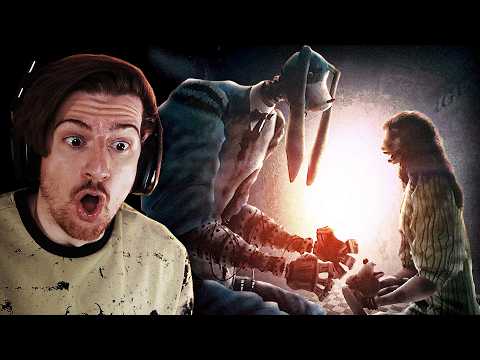
Rose Walten’s collapse after the deaths of her children gives this reaction far more emotional weight than a typical horror watch-along. The group quickly recognizes that the disturbing imagery is built around grief rather than existing solely for scares, identifying denial, anger, bargaining, depression, and acceptance as recurring ideas while watching Rose struggle to function. Their reactions are loud and frequently chaotic, but the horror clearly gets under their skin because they become invested in Rose, Sophie, and Jack rather than merely waiting for the next frightening image.
That investment produces some of the reaction’s best discussion. Sophie’s inability to feel what she thinks she should feel after losing her siblings leads to a thoughtful exchange about people processing loss differently, while Jack’s insistence that he is “strong” prompts criticism of suppressing grief and leaving Rose to cope largely by herself. The group is especially attentive to Sophie’s position as the surviving child, recognizing that she is grieving while simultaneously watching her mother deteriorate. Their interpretations are informal rather than clinical, but they generally treat the characters’ responses as complicated manifestations of trauma instead of simple moral failures.
The reaction becomes less measured whenever Jack enters the discussion. His disappearance provokes genuine anger, and the hosts repeatedly condemn him for apparently abandoning his wife and daughter before they know what actually happened to him. One participant does occasionally push back by pointing out that something may be preventing Jack from returning, but the conversation repeatedly races ahead of the information available. That impulsiveness is part of the entertainment, yet it also demonstrates the downside of trying to judge a mystery narrative scene by scene before its revelations arrive.
Visually, the animation earns an unusually strong response. Distorted faces, barely visible figures, unsettling paintings, changing environments, hidden details, and the contrast between deceptively gentle imagery and grotesque horror repeatedly catch the group’s attention. They notice background figures and faces that others initially miss, pause to examine images, and appreciate how changes in brightness and music accompany shifts in Rose’s emotional state. Their praise becomes especially emphatic toward the end, when they describe the production as exceptionally high quality and marvel at how much effort must have gone into it.
The escalating mystery also works because the hosts keep revising their theories. They speculate about Felix, Jack, the missing employees, the animatronics, the children’s bodies, Rose’s visions, and the identity of the figure drawing her toward Bon’s Burgers. Many guesses prove incomplete or wrong, but that uncertainty actually shows how successfully the story keeps them engaged. The downside is that overlapping voices, repeated exclamations, jokes, and rapid-fire theorizing sometimes obscure what is happening, particularly during scenes where careful listening would make the narrative easier to follow.
Rose’s final encounter with the animatronic is where the reaction reaches its peak. The hosts understand the cruel appeal being offered to someone who feels that her family, identity, work, and future have been stripped away, and they recognize the promise of being “fixed” as manipulation rather than salvation. Their horror at Rose’s death and transformation is intensified by the earlier emotional groundwork, so the gruesome imagery lands as the culmination of her deterioration rather than an isolated shock. By the conclusion, their enthusiasm feels earned: they praise the unpredictability, art style, storytelling, depiction of grief, and ability to genuinely frighten them, even going so far as to argue that the material deserves a feature-film treatment.
Pros
- The hosts become genuinely invested in Rose, Sophie, and the family tragedy rather than reacting only to jump scares and disturbing imagery.
- Discussion of Sophie’s emotional numbness and Jack’s suppression of grief adds meaningful character-focused commentary.
- Close attention to background faces, paintings, lighting, music, and visual changes highlights several elements of the animation’s horror craft.
- Constant theorizing demonstrates how effectively the story maintains uncertainty and keeps the group engaged.
- The climactic transformation receives a strong emotional response because the hosts connect its physical horror to Rose’s prolonged psychological collapse.
- Their final praise clearly identifies what impressed them most: the art style, unpredictable story, depiction of grief, production quality, and sustained sense of dread.
Cons
- Frequent shouting, repeated exclamations, overlapping commentary, and jokes can overwhelm quieter story moments.
- Jack is harshly condemned for abandoning his family before the reaction has enough information to establish what actually happened to him.
- Some interpretations are asserted quickly and then revised moments later, making portions of the discussion difficult to follow.
- The hosts occasionally become so focused on predicting twists or spotting hidden figures that the emotional dialogue receives less room to breathe.
The group’s unfiltered fear and growing emotional investment make this an energetic companion to a piece of horror they clearly find exceptional. Although the commentary can become noisy and prematurely judgmental, their attention to grief, character behavior, visual details, and the devastating finale gives the reaction considerably more substance than simple screaming at scares. Their stunned enthusiasm at the end convincingly reflects how thoroughly the story worked on them.