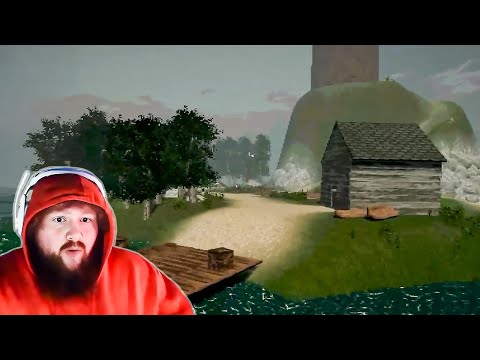
The reaction is at its strongest when Chris recognizes that the new installment is less interested in immediate shocks than in showing a family deteriorating under accumulated loss. He quickly identifies Rosemary as the emotional center and follows her progression from denial and anger into guilt, isolation, and apparent hopelessness. His commentary can be chaotic, but his central reading remains remarkably consistent: the horror is effective because the supernatural material grows out of recognizable grief rather than replacing it.
That emotional investment gives the lengthy reaction genuine momentum. Chris responds particularly strongly to Rosemary and Jack trying to maintain normality after Ed and Molly's deaths, Sophie's inability to understand her own muted response, and Jack explaining that people experience grief differently. Later, when Sophie admits that her mother's behavior frightens her and Rosemary describes herself as a failed parent, his joking largely recedes. The contrast matters because it demonstrates that he is reacting to the characters rather than simply waiting for frightening imagery.
His interpretation becomes shakier whenever established lore is required. He openly warns that years between installments have left him uncertain about names and events, and that uncertainty repeatedly surfaces in questions about Felix, Jack, Bon, the animatronics, previous explorations, and what earlier episodes may already have established. He sometimes corrects himself seconds after making an assumption, which is preferable to presenting guesses confidently, but viewers looking for a careful lore breakdown will find the running speculation considerably less reliable than the emotional commentary.
The presentation is also extremely unfiltered. Jokes about frightening faces, rabbits, animatronics, bodily imagery, his cat interrupting the recording, and improvised descriptions frequently break into otherwise serious scenes. Some of that looseness is part of the appeal: the sudden shift from humor to stunned silence can make a disturbing moment feel even sharper. At other points, however, the constant remarks compete with dialogue and visual storytelling that Chris himself considers unusually strong, making the reaction more entertaining as companionship than useful as a clean way to absorb every detail.
One of his better observations concerns the episode's visual ambiguity. He repeatedly questions whether Rosemary is experiencing hallucinations, symbolic representations, genuine supernatural encounters, or some combination of them, especially around the water, her confinement, the rabbit figure, and her return to Bon's Burgers. Importantly, he generally treats these as questions rather than settled answers. His uncertainty over whether an apparent escape was supernatural or physically facilitated is exactly the kind of distinction the material appears designed to provoke.
The closing discussion gives the reaction more substance than the constant interruptions might suggest. Chris connects the missing acceptance stage to Rosemary's inability to recover, emphasizes Sophie's increasing isolation, and returns to unresolved questions surrounding Jack's disappearance and Felix's role. His claim that the family's entire collapse stems from one man's drunken decision is a forceful thematic interpretation rather than a complete explanation of every subsequent supernatural event, but it accurately reflects what most angered and saddened him about the story. Most importantly, despite an installment he describes as deliberately slow, he finishes wanting more—a convincing endorsement from someone who admits that very long reaction subjects sometimes lose his attention.
Pros
- Strong emotional engagement with Rosemary, Jack, Sophie, Ed, and Molly makes the family tragedy more important than the individual scares.
- Recognizes how the installment uses grief, guilt, denial, anger, and isolation as structural elements rather than treating the story as straightforward animatronic horror.
- Frequently distinguishes uncertainty from certainty when interpreting supernatural scenes, hallucinations, symbolism, and unresolved lore.
- The final discussion usefully gathers major themes and unanswered questions after a highly spontaneous reaction.
- Genuine enthusiasm for the filmmaking, pacing, artwork, sound, and visual presentation communicates why the slow-burn episode held his attention.
Cons
- Repeated uncertainty about names, prior events, and established mythology limits the reaction's usefulness as a detailed Walten Files analysis.
- Constant jokes, tangents, interruptions, and shouted observations sometimes compete with important dialogue and atmosphere.
- Several speculative theories are raised and abandoned almost immediately, producing more confusion than insight in lore-heavy sequences.
- The repeated demand for Felix to receive punishment becomes excessive and narrows discussion of a story that is also exploring Rosemary's choices, Sophie's suffering, and supernatural manipulation.
- The lengthy runtime would benefit from tighter editing around repeated expressions of shock, confusion, and praise.
Chris is most effective here as an emotionally invested viewer rather than a definitive guide to the mythology. His messy recall and nonstop commentary occasionally obscure an unusually character-driven horror story, but his response to its grief, ambiguity, and escalating tragedy feels genuinely engaged. The result is an entertaining and often perceptive companion reaction that works better for sharing the experience than for untangling every piece of lore.