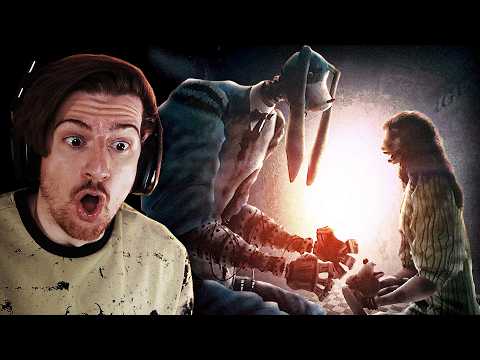
The strongest element of this playthrough is how quickly an ordinary lighthouse assignment develops into a mystery about isolation, perception, and trust. The opening establishes a straightforward routine: arrive at Outpost Nine, maintain the lighthouse, observe the surrounding water, mark unusual objects, and report findings by radio. That mundane structure gives the later disturbances something concrete to disrupt. A survivor named Mark drifting ashore is initially just an unusual event to report, but his arrival gradually becomes the center of the story as strange visions, missing information about the island, and increasingly unreliable communications make it difficult to determine whether he is a companion, a threat, or something else entirely.
The video benefits considerably from the player's energetic reaction style. Routine exploration becomes material for jokes about the lighthouse, books, stairs, food, chat, and the protagonist's strange vocalizations, while genuine surprises produce immediate suspicion rather than detached commentary. The discovery that the developer apparently incorporated a vocal sound inspired by the player's reactions to an earlier game creates an especially memorable diversion. It briefly interrupts the horror story, but the excitement of recognizing the sound and finding the developer's explanation makes the interruption feel connected to the relationship between creator and streamer rather than completely unrelated filler.
Mark gives the game its most effective emotional anchor. The player initially treats him as another suspicious horror-game stranger, joking about charging him rent and expecting him to die, but the attitude changes after Mark helps following the protagonist's collapse. From that point onward, concern for him becomes genuine enough that the possibility of his death matters. That progression pays off during the final confrontation, when two versions of Mark appear and the player must decide which one to shoot. The choice works because the preceding days have established familiarity with Mark rather than introducing the dilemma as an isolated final twist.
The mystery itself is strongest while several explanations remain plausible. Historical records reveal that the lighthouse was automated, abandoned for nearly twenty years, and then mysteriously staffed again in 2005 without accessible records explaining why. Figures appear around the island, voices communicate through dreams or hallucinations, ashes remain after an experience that seemed unreal, and a buried gun is provided by entities claiming to offer freedom. Later, a radio operator claims that a spreading contamination has caused towns to go silent and warns that human contact transmits a virus. The game presents these details as revelations within its fiction, but deliberately leaves their relationship uncertain: contamination, hallucination, supernatural activity, duplication, and institutional deception are all suggested without being fully reconciled.
That uncertainty creates effective tension, but it also exposes the story's biggest limitation. The final sequence introduces the mainland crisis, raises the possibility that Mark infected the protagonist, immediately presents two Marks, and then ends shortly after one is shot. The player's identification of the duplicate through Mark's mirrored appearance gives the decision a satisfying observational component, yet the broader questions remain unanswered. Why staffing resumed, what happened on the mainland, what the shadow figures are, why they knew the protagonist, what the gun was intended for, and what exactly Mark is all remain unresolved. An ambiguous ending can strengthen horror, but here the conclusion feels closer to a cliffhanger because so many major threads are opened without enough resolution to establish what the ambiguity means.
The pacing is similarly mixed. The game's repeated observation-and-report routine gives the island a useful sense of daily life and makes each disruption noticeable, while the escalating events prevent the basic lighthouse duties from remaining static for long. The video around those events is much looser. Extended chat interactions, food discussions, book tangents, jokes, technical adjustments, the accidental quit, and the mid-playthrough detour to watch the developer's video frequently interrupt the narrative. Much of that material is entertaining on its own and suits the stream's conversational energy, but viewers primarily invested in the horror mystery may find that suspense repeatedly has to rebuild after long comedic diversions.
Even with those interruptions, the playthrough succeeds because the player's investment rises alongside the game's stakes. Mark goes from suspicious castaway to valued companion, the repetitive job becomes increasingly unsafe, and apparent hallucinations eventually leave physical consequences that make them harder to dismiss. The finale does not provide enough information to make the story feel complete, but the duplicate-Mark confrontation gives the session a memorable final test of everything the player has learned and felt about his companion. The enthusiastic response to the developer also adds an unusual personal dimension to a playthrough that might otherwise have been another compact lighthouse horror game.
Pros
- The lighthouse duties establish a clear routine that gives later supernatural or psychological disruptions greater impact.
- Mark develops from a suspicious stranger into a companion the player genuinely wants to protect, strengthening the final identity dilemma.
- Historical records, strange figures, physical evidence after apparent dreams, radio messages, and the mainland contamination claim create several overlapping possibilities without prematurely explaining the mystery.
- The duplicate-Mark confrontation turns accumulated familiarity into a practical final choice rather than relying solely on a jump scare.
- The player's energetic commentary and recognition of the developer's use of a familiar vocal gag give the playthrough a distinctive creator-audience connection.
Cons
- Frequent chat tangents, food discussions, jokes, technical interruptions, and the developer-video detour repeatedly break the horror game's developing tension.
- The ending introduces major information about the mainland crisis immediately before the duplicate-Mark confrontation, leaving little time to explore its implications.
- Too many central mysteries remain unresolved for the ending to feel fully satisfying, including the resumed lighthouse staffing, the shadow figures, the contamination, and Mark's true situation.
- Repeated observation, reporting, and stair-climbing sequences occasionally slow the progression between the game's stronger story events.
The playthrough is at its best when a lonely lighthouse job gradually becomes a question of whether anything the protagonist sees can be trusted. The arrival of Mark gives that uncertainty a human stake, while the unexplained staffing history, strange figures, dreamlike encounters, buried gun, and alarming mainland broadcast continually undermine the apparent simplicity of the assignment. The player's comedy sometimes works against the atmosphere, particularly when extended tangents interrupt moments of suspense, but his growing attachment to Mark ultimately helps the final choice land. The game leaves considerably more unanswered than its ending can comfortably support, especially after introducing a potentially enormous mainland crisis so late, yet the mystery remains engaging precisely because the session progresses from routine work to a decision about which version of a trusted companion is real. It is an entertaining horror playthrough with strong personality and a memorable central relationship, even if its cliffhanger-like conclusion withholds too much of the payoff its setup invites.