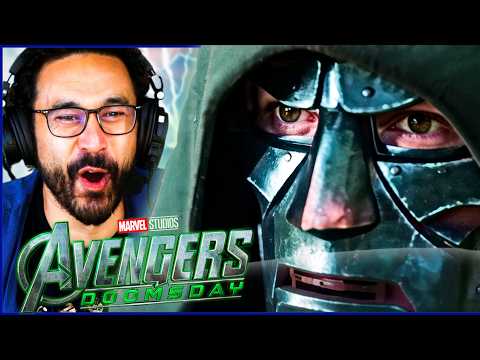
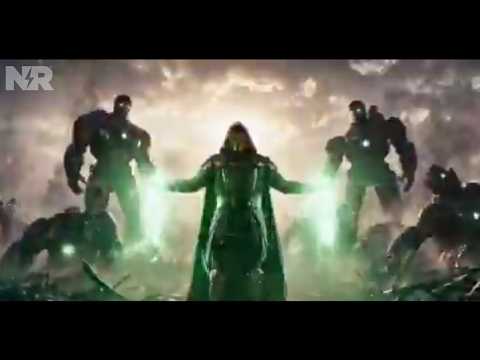
The strongest material comes from connecting the newly displayed Doctor Doom imagery to recognizable comic-book concepts rather than simply cataloging costumes. The discussion of the “Latverian witches,” their masks, robes, armor, and repeated rune designs gives the video a useful visual thread, especially when those details are compared with Doom’s appearance in the Fantastic Four post-credit scene and the newer Avengers footage. The explanation that Doom traditionally combines technology with magic also gives the recurring runes a plausible thematic purpose without requiring them to represent some entirely new power system.
The video becomes more interesting when it links those apparent Doom followers to Jonathan Hickman’s Black Swans and Doctor Strange’s Black Priests. That comparison offers a coherent way to think about how Avengers: Doomsday could simplify or remix material from the Time Runs Out era for a broad movie audience. The suggestion that masked followers might conceal familiar characters is particularly well suited to a multiverse story built around shifting alliances. However, the argument quickly moves from comic precedent into prediction, and the distinction is not always emphasized strongly enough. Ideas about Doctor Strange secretly working with Doom, recognizable heroes beneath masks, and Scarlet Witch connections are theories built from reported material, visual similarities, and comic parallels rather than conclusions established by the footage discussed.
Scarlet Witch is the clearest example of the video stretching an intriguing clue farther than the available evidence comfortably supports. Green Doom-like robes and red lighting provide an entertaining basis for speculation, and the Children’s Crusade reference shows why viewers familiar with the comics might make the association. Yet red lighting around a character described as a Latverian witch is extremely thin evidence that Wanda Maximoff is actually involved in that specific role. The presenter does acknowledge that Elizabeth Olsen’s Scarlet Witch is not expected to be a major part of Doomsday and frames much of this as interpretation, but the rapid accumulation of suggestive details can still make a possibility sound more substantial than it is.
The supposed Iron Man image receives similarly cautious treatment at first, with the video describing a kneeling figure in promotional artwork that resembles Tony Stark’s Endgame snap. The possibility that this imagery relates to the planned Avengers: Endgame theatrical rerelease is a reasonable narrative connection to explore. From there, though, the discussion expands into an elaborate proposed sequence involving additional footage, Steve Rogers, Peggy Carter, their son, Loki, the TVA, a branch timeline, and a move into the Fantastic Four universe. That scenario is internally consistent with the presenter’s reading of earlier teasers, but it remains a chain of assumptions in which each uncertain step depends on the previous one being correct.
The same pattern continues with Captain America, Thor, Fantastic Four characters, and Doom’s possible role among the heroes. Observations such as identifying the blurry figure aboard the Fantastic Four ship as likely Johnny Storm are refreshingly straightforward, while speculation that Doom may spend much of the film presenting himself as an ally fits the villain’s described belief that he is saving the multiverse. The Civil War comparison also helps communicate the kind of moral conflict the presenter expects: Doom may pursue a defensible goal through methods that place him against the Avengers. It is a compelling framework for discussing the footage, but the proposed timing of Doom’s betrayal and the prediction of a “Doom was right” response are still forecasts rather than evidence of the finished story.
Presentation is energetic and densely informed, particularly for viewers already following Marvel casting rumors, leaked footage, comic storylines, and convention reveals. The presenter moves comfortably between costume details, MCU history, comic inspirations, and speculation, and frequently explains why a particular connection might matter instead of merely pointing it out. The drawback is that nearly every visual clue becomes a gateway into several additional theories, reports, and assumptions. That makes the video rich for committed Marvel followers but less precise as an analysis of what the available material actually confirms. A lengthy sponsorship interruption also lands directly between the initial Doom rune discussion and the larger theory about his followers, noticeably disrupting the momentum.
Pros
- The Latverian witch costume discussion identifies specific recurring masks, robes, armor, and rune imagery rather than relying on vague visual similarities.
- Comparisons with the Black Swans, Black Priests, and Time Runs Out material provide useful comic context for how Marvel could adapt complicated multiverse concepts.
- The video frequently explains the reasoning behind its theories, allowing viewers to follow how individual visual clues lead to broader predictions.
- Doom’s potential role as a self-appointed multiverse savior is framed in a way that gives the possible conflict more nuance than a simple hero-versus-villain setup.
Cons
- Numerous predictions about Doctor Strange, Scarlet Witch, Steve Rogers, Loki, the TVA, and Doom depend on unconfirmed reports and layered assumptions.
- Red lighting and Doom-coded clothing are treated as meaningful Scarlet Witch clues despite offering little evidence that Wanda is actually connected to the masked character.
- The proposed Endgame rerelease and Captain America timeline sequence becomes highly specific despite much of that scenario remaining speculative.
- The sponsorship segment significantly interrupts a discussion that was building toward the video’s central theory.
- The fast accumulation of leaks, rumors, comic parallels, and visual interpretations sometimes obscures which details are actually shown and which are conjecture.
The video is at its best when using costume details and comic history to suggest credible directions for Doom, his followers, and the coming multiverse conflict, but its most elaborate theories often rest on several unverified assumptions stacked together. For Marvel fans who enjoy connecting every rune, costume, rumor, and comic precedent, there is plenty to consider; viewers looking for a disciplined assessment of what the footage firmly establishes will need to separate the strong observations from the much broader predictions.