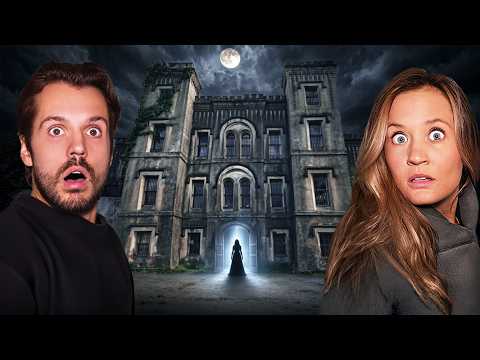
The strongest element across these four stories is how consistently the fear begins with recognizable vulnerability rather than immediate supernatural spectacle. Running out of gas on an empty road, hearing someone scream for help deep in the woods, trespassing inside an abandoned school and becoming separated from friends after a fall all create situations where escape or assistance is already difficult. That grounding gives the later threats more impact because the narrators are frightened before anything overtly strange happens. The recurring theme of being stranded also gives the collection more cohesion than a random assortment of horror anecdotes would have.
The roadside story is especially effective at exploiting helplessness. The narrator cannot simply drive away from the silent woman approaching his disabled car, and her refusal to respond makes an otherwise ordinary encounter increasingly unsettling. Her banging on the door and apparent attempt to enter raise the threat considerably, while the later discovery that a rear door has been opened provides a strong unresolved final detail. The story wisely stops short of insisting on a paranormal explanation, with the narrator ultimately suggesting she may simply have been a strange wandering woman, although his decision to abandon the relative protection of a locked vehicle and run down an isolated road is an understandably debatable survival choice.
The hiking account involving unexplained screams takes a different approach by making concern for another person the source of danger and anxiety. The repeated pleas for help, the inability to locate their source and the discovery of a backpack containing only a few ordinary objects create an effective mystery without requiring anything visibly monstrous. It also presents its uncertainty appropriately: the narrator does not claim to know that the backpack belonged to the person screaming or that anything supernatural occurred. However, later claims that authorities attempted to compare the handwriting in a card with mothers of other missing people and that there were no relevant missing-person reports are simply parts of the account as presented; no independent evidence is provided to establish those investigative details.
The abandoned-school story delivers the most traditional haunted-location material, but much of its tension actually comes from the narrators placing themselves somewhere they should not be. Entering an abandoned building at night without phones immediately removes several sensible safeguards, and the dark hallways, unfamiliar sounds and difficulty reopening the gym door make the setting naturally frightening even before the unexplained shadow and pursuit are introduced. The story does acknowledge that another person could have been inside and never insists that a ghost was responsible. That restraint helps, although descriptions of footsteps, a moving shadow and a mysteriously locked door remain subjective experiences rather than evidence of paranormal activity.
The final camping story is the collection's most overtly threatening because the danger appears human. A fall down a steep slope and the narrator's decision to walk away rather than remain where friends could potentially locate him establish the practical survival crisis first. The stranger who frees him from the rocks then becomes progressively more suspicious by claiming the narrator's friends are waiting inside an isolated structure and resisting requests to bring them outside. Hearing two sets of footsteps after fleeing provides an effective climax, but the account leaves the men's identities, intentions and even the precise location of the structure unresolved. As with the other stories, uncertainty is central to the fear.
Presentation throughout favors slow escalation and plentiful first-person detail. Small observations about money problems, hiking habits, teenage recklessness and friendships give the narrators enough personality to make the situations easier to imagine, while repeated moments of self-criticism prevent them from being portrayed as flawlessly rational protagonists. At the same time, several stories are substantially longer than their central incidents require. Repeated descriptions of fear, darkness, screaming and confusion sometimes reiterate an established mood rather than advancing events, and more aggressive editing could preserve the atmosphere while improving momentum.
As a collection of purportedly true horror stories, the video works best when treated as storytelling rather than documentation. It repeatedly leaves room for mundane explanations and generally avoids declaring supernatural conclusions as established fact, which is preferable to presenting ambiguity as proof. The limitation is that extraordinary or highly specific elements—including unexplained investigative outcomes, impossible-seeming door behavior and unknown pursuers—are entirely dependent on the narrators' accounts. Viewers looking for verification will find little to assess, but those interested primarily in suspense receive four thematically consistent stories built around isolation, questionable decisions and uncertainty.
Pros
- Each story establishes a credible form of isolation or helplessness before introducing its main threat.
- The roadside woman, unexplained forest screams, abandoned-school pursuit and suspicious woodland stranger provide distinct scenarios without abandoning the stranded theme.
- The accounts frequently acknowledge uncertainty and possible ordinary explanations instead of automatically declaring paranormal causes.
- Specific environmental and personal details help create atmosphere and make the narrators' predicaments easy to visualize.
- Several narrators acknowledge their own poor decisions, which makes the storytelling feel less artificially heroic.
Cons
- Claims of truth and specific investigative details are unsupported within the video and cannot be independently evaluated from what is presented.
- Some stories repeat descriptions of fear and confusion after the danger has already been firmly established, slowing the pacing.
- Several characters make conspicuously risky decisions—including leaving a locked car, separating during a search, entering an abandoned building without phones and wandering away after becoming lost—that can strain plausibility.
- The strongest mysteries remain unresolved by design, so viewers wanting explanations rather than atmosphere may find the endings unsatisfying.
The collection succeeds primarily because each story turns isolation and limited options into the foundation of its horror rather than relying exclusively on supernatural claims. Its best moments preserve ambiguity, allowing strange people, unexplained sounds and poor decisions to remain frightening without pretending there is definitive proof of what occurred. Tighter editing and stronger verification would improve the package, but as suspenseful first-person storytelling it is consistently effective.