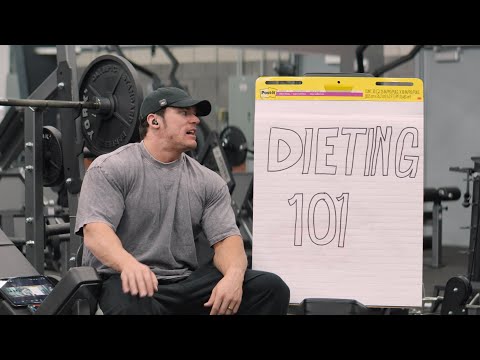
Losing 140 pounds is an extraordinary personal achievement, but Leah emphasizes that her transformation involved more than reducing the number on the scale. She describes how preserving muscle while losing body fat helped her develop a stronger, more defined physique than she had before gaining weight. Her discussion gains credibility through an unusually candid explanation of her medical circumstances, including PCOS, insulin resistance, and the use of GLP-1 medication after losing her first 50 pounds independently. Rather than portraying medication as a shortcut or concealing its role, she acknowledges its benefits while explaining why resistance training and nutrition remained central to her approach. This transparency establishes a useful foundation for an approachable fitness discussion.
The presentation's central argument is that successful body recomposition requires protecting muscle rather than simply pursuing rapid weight loss. Leah reports that DEXA scans showed approximately 98% of her final 50 pounds of weight loss came from fat, which she contrasts with studies suggesting that GLP-1 users can lose a substantial proportion of lean mass. The comparison illustrates why body composition deserves attention, although the research is not identified in sufficient detail to evaluate its relevance or methodology. Her personal scan results are encouraging, but the absence of specific measurements, testing intervals, and supporting documentation limits independent assessment. Additionally, changes in lean mass do not necessarily represent muscle tissue alone, making the distinction important when interpreting such percentages.
Strength training receives a particularly useful explanation, with Leah translating progressive overload into a manageable system for beginners. She clarifies that lifting heavy means selecting weights that challenge an individual's current abilities, not attempting intimidating numbers immediately. Her preferred approach of two sets of seven to twelve repetitions, with adjustments based on performance, provides a concrete example that viewers can understand and potentially adapt. Tracking weights and repetitions also offers a practical alternative to judging progress exclusively through appearance. However, her dismissal of Pilates and high-intensity interval training as methods for developing a muscular physique is overly categorical. While progressive resistance training is especially effective for building muscle, different exercise methods can contribute to strength and muscular development depending on their intensity and progression.
Nutrition occupies a substantial portion of the discussion, and Leah's emphasis on sustainable calorie deficits, sufficient protein, and enjoyable meals is among the presentation's strongest features. Rather than recommending restrictive diets or eliminating entire food groups, she encourages manageable portion adjustments, leaner protein sources, and substitutions that preserve familiar flavors. Examples ranging from cottage cheese-based sauces to homemade high-protein macaroni and cheese make her approach feel considerably more achievable than conventional bland meal-preparation advice. Her explanation of tracking calories and macronutrients also provides a clear rationale for monitoring food intake. Nevertheless, her insistence that beginners cannot reliably eat intuitively and her characterization of reluctance to track food as laziness risk oversimplifying individual circumstances. Although she appropriately acknowledges that tracking may be unsuitable for people with eating disorder histories, a more flexible discussion of alternative approaches would have strengthened the guidance.
The commercial elements are more intrusive than the educational content requires. Leah devotes considerable attention to the sponsored RENPHO Morpho ScanNova, highlighting its extensive body-composition metrics, segmental measurements, connected application, and promotional discount. She also recommends MacroFactor, discusses her promotional trial code, and mentions several food and fitness products. These recommendations are generally connected to her actual routines, and she clearly identifies the RENPHO sponsorship. However, the detailed sales discussion interrupts the progression of her advice, while the scale's numerous estimated measurements are presented with insufficient consideration of their limitations. Consumer bioelectrical impedance devices can be useful for monitoring trends under consistent conditions, but their outputs should not be treated as equivalent to precise clinical measurements.
Leah's discussion of cardiovascular activity introduces an important distinction between exercise for weight management and exercise for broader health. She explains that she relied primarily on nutrition, resistance training, and everyday movement rather than extensive dedicated cardio sessions, while acknowledging that she has recently added more cardiovascular training for endurance and health. Her comparison between calories burned during a run and calories consumed through snacks makes the difficulty of relying exclusively on exercise for weight loss immediately understandable. Recommendations to increase walking and non-exercise movement are practical, especially with her recognition that living in a walkable city makes accumulating steps easier. Still, the discussion occasionally minimizes cardiovascular exercise's independent health benefits, and the suggested daily step targets are not sufficiently contextualized for viewers with different physical capabilities or medical needs.
The concluding emphasis on consistency rather than perfection gives the presentation its most encouraging message. Leah describes abandoning the all-or-nothing mentality that previously caused small dietary deviations or imperfect workouts to derail her efforts. Her suggestion to begin with just two manageable habits, such as preparing one meal or laying out gym clothes, provides a realistic starting point without demanding an immediate lifestyle overhaul. She also acknowledges that her relationship with fitness continues to evolve and that reaching a desired weight has not eliminated every insecurity or future ambition. This personal reflection helps balance the video's frequent emphasis on physical appearance, although its lengthy conversational delivery, repeated reassurances, and numerous product references make the overall presentation less efficient than it could be.
Pros
- Leah openly discusses her PCOS, insulin resistance, and GLP-1 medication use, providing valuable context for her personal weight-loss experience.
- The emphasis on preserving muscle while losing fat encourages viewers to consider body composition rather than focusing exclusively on scale weight.
- The beginner-friendly explanation of progressive overload includes a practical system for tracking repetitions and adjusting resistance.
- Sustainable calorie deficits, adequate protein intake, and flexible food choices are presented as alternatives to extreme dietary restrictions.
- Specific meal-preparation ideas and realistic food substitutions demonstrate how nutritious eating can remain enjoyable.
- The discussion distinguishes everyday physical activity from dedicated cardiovascular exercise while encouraging more consistent movement.
- Personal examples of overcoming perfectionism and gradually building habits make the motivational advice relatable and actionable.
Cons
- The research comparing GLP-1-related lean mass loss with Leah's personal DEXA results lacks sufficient methodological detail and supporting measurements.
- Several exercise recommendations are expressed too categorically, particularly the dismissal of alternative workouts for muscular development.
- The extended RENPHO sponsorship and additional promotional recommendations interrupt the educational discussion and give substantial attention to commercial products.
- The presentation does not adequately explain the accuracy limitations of consumer body-composition scales or distinguish estimated measurements from clinical assessments.
- The strong insistence on food tracking overlooks potentially effective alternatives and occasionally adopts an unnecessarily judgmental tone toward beginners.
- Repetitive explanations, conversational tangents, and limited discussion of individualized medical considerations reduce the presentation's precision and efficiency.
Leah delivers an engaging and frequently practical account of long-term weight management, combining personal transparency with accessible explanations of strength training, nutrition, and sustainable habits. Her willingness to acknowledge medication, imperfect routines, and evolving fitness goals makes the transformation more relatable than a simple before-and-after success story. Although promotional interruptions, oversimplified exercise claims, and insufficient scientific context weaken its authority as comprehensive health guidance, the presentation remains a valuable motivational resource for viewers seeking a more sustainable approach to changing their body composition.