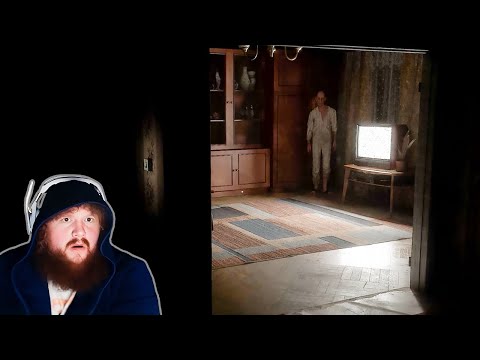
A nearly empty late-night bus outside Beijing and a mist-covered river in nineteenth-century Wyoming give MrBallen two settings perfectly suited to stories where ordinary travel gradually becomes something impossible. The first follows 19-year-old Zhang onto Bus 375, where three strangely dressed men board along an isolated road before an old woman suddenly accuses Zhang of theft and gets both of them removed. The second follows ranch hand Gene Wilson, whose agitated dog and terrified horse draw his attention to an enormous ship moving through the shallow Platte River. Both stories use the same effective progression: familiar surroundings become subtly wrong, a disturbing encounter escalates, and only afterward does the apparent supernatural meaning reveal itself. As campfire storytelling, the formula is simple but extremely well matched to MrBallen's patient narration.
The Bus 375 story is the stronger of the two because its tension develops through uncertainty rather than immediate supernatural spectacle. Zhang knows the route, recognizes that the driver has stopped somewhere he should not, and watches three men in traditional silk robes board from a dark stretch with no obvious reason for being there. Two support a dirty and apparently injured third man while everyone else behaves as though the situation requires little explanation. The most effective stretch comes after they sit in the rear and Zhang becomes convinced they are watching him but cannot bring himself to turn around. Nothing overtly paranormal has happened yet; discomfort comes from silence, darkness, unfamiliar passengers, and the possibility that Zhang's instincts are warning him about something he cannot identify.
The old woman's apparent attack provides a clever reversal. Her screaming, hitting Zhang with her purse, and accusing him of theft initially seems irrational, especially when the driver simply ejects them instead of investigating. Once outside, however, she explains that she believed the two men in blue were evil spirits staring at Zhang and invented the theft to get him off the bus. The story then escalates dramatically with claims that the bus disappeared, was discovered three days later in a reservoir roughly 60 miles away, and contained the driver, ticket seller, and red-robed passenger, all dead with broken necks. Most sensational is the assertion that the bodies appeared decomposed as though they had been dead for months despite the bus having been missing only days. Those details make the legend memorable, but the episode provides no records, authorities, reports, or other evidence allowing viewers to verify the disappearance, crash, decomposition claim, or subsequent search for the two men in blue.
Gene Wilson's encounter relies more openly on supernatural imagery. His dog begins barking at the mist-covered Platte River, his horse refuses to approach, and an enormous wooden ship emerges from the fog despite apparently being far too large for the shallow water. Nine sailors eventually turn toward Gene in unison before revealing a blackened body beneath a tarp, which he believes resembles his wife. He races home and discovers his house burned and his wife dead, apparently in the same condition as the body he had just seen aboard the ship. The sequence has the qualities of an old frontier ghost story: isolated landscape, animals sensing danger first, unnatural weather, an impossible vessel, silent figures, and a premonition of death. It is less grounded than the bus story from the outset, but the visual simplicity of a ship appearing through fog makes it particularly suited to spoken horror.
The attempt to give the Wyoming legend historical weight is where the presentation becomes most questionable. The episode says Gene's story eventually reached journalist Vincent Gaddis, described as having extensively reported on the Bermuda Triangle, and initially presents him as concluding that grief could have caused Gene to construct the supernatural experience after his wife's death. It then claims Gaddis discovered two additional witnesses, separated by decades, who saw the same impossible ship displaying a loved one's body shortly before learning that person had died. That repetition is offered as the development that turns an individual experience into the legend of a "death ship." Yet no publications, documents, dates for the investigation, identities of the additional witnesses, or other supporting material are supplied, so the alleged corroboration cannot be evaluated from the episode itself. The reference to paranormal reports surrounding the Bermuda Triangle also adds atmosphere rather than establishing the credibility of the Wyoming claims.
Presentation remains the video's major strength. MrBallen repeatedly gives listeners enough geographical and practical information to understand why characters make particular decisions: Zhang needs the final bus because taxis are unavailable at night, the route becomes isolated and dark, Gene knows ordinary river traffic, and the Platte's shallowness makes the enormous vessel seem impossible. He also delays critical information effectively. The woman appears hostile before her motive is revealed, the bus becomes threatening before its fate is disclosed, and Gene sees the covered mound before learning what it represents. The conversational narration occasionally repeats reactions and questions after their significance is already clear, but that repetition serves the spoken campfire format better than it would a tightly edited written account.
The episode ultimately works best when treated as a collection of eerie legends rather than evidence for paranormal phenomena. The bus story leaves behind unanswered questions about strange passengers and an allegedly impossible condition of the recovered bodies, while the death ship becomes more disturbing through claims of similar encounters across different decades. MrBallen describes these elements as unexplained and sometimes speaks as though key events occurred as narrated, but the episode itself does not establish the historical reliability of either account or demonstrate that supernatural explanations are necessary. Fortunately, neither story needs that certainty to succeed as horror. Their appeal comes from the lingering possibility that a routine journey could suddenly reveal something incomprehensible—and that recognizing the warning might be the only reason someone survives it.
Pros
- Bus 375 builds suspense gradually through an unexplained roadside stop, unsettling passengers, darkness, silence, and Zhang's growing sense that something behind him is wrong.
- The old woman's apparent attack becomes an effective narrative reversal once her accusation is revealed as an attempt to remove Zhang from perceived danger.
- Gene's frightened animals, river mist, impossible ship, synchronized sailors, and covered body create vivid imagery well suited to campfire horror.
- Both stories use delayed revelations effectively, allowing apparently strange behavior to acquire much darker significance later.
- Practical details about the bus route, surrounding area, river, ranch work, and characters' motivations help establish believable environments before supernatural elements appear.
- Pairing two very different legends around unexplained encounters and death gives the episode thematic consistency without simply repeating the same scenario.
Cons
- Extraordinary claims about Bus 375's disappearance, reservoir recovery, broken-neck deaths, abnormal decomposition, and unidentified blue-robed passengers are presented without supporting documentation.
- The death ship's supposed history relies on later accounts of similar sightings without identifying those witnesses or supplying material that would allow their stories to be evaluated.
- Invoking the Bermuda Triangle adds paranormal context but does not provide evidence for the Wyoming encounter itself.
- Some reactions and rhetorical questions are repeated after the tension or mystery has already been established, slightly extending otherwise tightly structured stories.
- The narration does not consistently distinguish between details established by historical evidence and elements preserved through legend or retelling.
MrBallen turns a mysterious Beijing bus ride and an impossible Wyoming river vessel into two absorbing campfire stories by carefully controlling what the audience knows and letting ordinary settings become increasingly threatening before revealing their alleged supernatural consequences. The atmosphere, pacing, reversals, and imagery are excellent, but the historical and paranormal claims receive far less substantiation than their specificity warrants, making the episode considerably stronger as eerie storytelling than as documentation of unexplained events.