A shadow figure capable of crashing Saints Row 2 provides an unusually strong starting point for exploring the blurry boundary between gaming glitches and folklore. The “freezer” is treated carefully as a documented anomaly rather than evidence of anything supernatural, with reports of corrupted saves and hardware problems separated from what can actually be demonstrated. More importantly, the creator does not simply retell the legend. Hours are spent navigating the game’s empty out-of-bounds city on both PC and original Xbox 360 hardware, turning the investigation itself into an entertaining experiment in how atmosphere and expectation can transform an ordinary technical malfunction into something resembling a creepypasta.
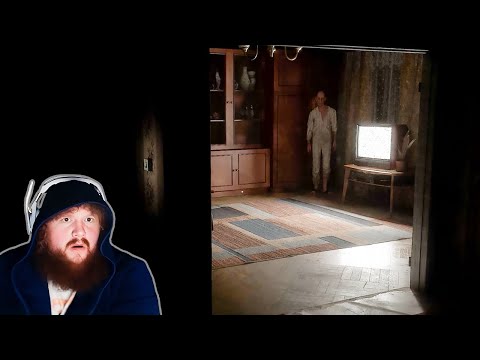
That hands-on approach gives the lengthy Saints Row 2 section much of its appeal, even though the freezer never actually appears. Empty streets, overexposed lighting, abandoned interiors, unexpected zombies, and the mysterious reappearance of a previously driven car provide plenty of incidental scares without being misrepresented as proof. The creator frequently proposes mundane explanations for these moments and eventually presents a developer-supplied hypothesis involving improperly loaded interiors, memory conflicts, and a possible rendering error. The inability to reproduce the central phenomenon is therefore a limitation, but also an important strength: failure is allowed to remain failure rather than being transformed into a sensational conclusion.
Grand Theft Auto: San Andreas expands the idea from one mysterious glitch into an entire culture of myth hunting. Bigfoot, Leatherface, UFOs, ghost cars, strange photographers, desert mysteries, and other legends become stops on an elaborate road trip across the game. Some are explicitly described as unlikely or unsupported, while confirmed phenomena such as driverless “ghost cars” receive ordinary technical explanations. Playing through enough of the game to understand its world before investigating it is particularly valuable, because the creator recognizes that distinguishing anomalies from normal behavior requires knowing what normal behavior actually looks like.
The strongest material in this section is often less about whether a monster exists than why players once thought they saw one. Low-resolution graphics, analog video output, fog, darkness, ambiguous shapes, glitches, environmental storytelling, and expectation combine remarkably well. A chainsaw pickup briefly looks like evidence for Leatherface; plants resemble distant figures; malfunctioning vehicle behavior becomes ghostly when encountered under the right circumstances. These moments demonstrate the argument rather than merely stating it, showing how sincere gaming legends can emerge without requiring dishonesty or supernatural explanations.
Minecraft’s Herobrine provides a natural third case study because the investigation shifts toward the possibility of players genuinely encountering something they understood to be Herobrine without the character ever officially existing in the game. Modified launchers and server plugins are offered as possible mechanisms, though the creator appropriately admits limited technical expertise when discussing the launcher theory. Exploring an old anarchy server and later recreating a childhood-era PC setup produces another effective demonstration of suggestibility: delayed footsteps, unexplained signs, strange terrain, and ordinary animal behavior all become more threatening once the player deliberately adopts the mindset of a cryptid hunter. The extensive construction of a Herobrine observation tower is charming, although it also contributes to an already considerable runtime without yielding much evidence.
The final analytical section gives the project considerably more depth than a collection of gaming ghost stories. Concepts including quasi-ostension, legend-tripping, interpretive drift, and playful ostension are connected directly to events experienced during the investigations. Academic work is used to explain how ambiguous events acquire folkloric meaning and why someone does not necessarily need to believe a legend in order to enjoy acting as though it might be true. The creator's willingness to examine his own reactions is especially useful: being genuinely startled by mundane events becomes evidence for the psychological process being discussed, not evidence for the monsters themselves.
That ambition also creates the video's largest weakness. The investigations are extremely long, frequently interrupted by extended gameplay, travel, nostalgic recollections, jokes, repeated descriptions of eerie environments, and unsuccessful searching. The closing academic discussion is thoughtful but quotation-heavy and sometimes restates ideas already demonstrated more effectively through the earlier gameplay. A tighter edit could preserve the unusual combination of folklore research, personal experimentation, technical explanations, and gaming history while giving the central argument considerably more momentum.
Pros
- Extensive firsthand investigations turn gaming folklore into something more substantial than a retelling of familiar internet legends.
- The freezer investigation carefully distinguishes documented anomalies, community reports, developer hypotheses, and the creator’s own unsuccessful search.
- San Andreas provides excellent practical examples of how glitches, atmosphere, old hardware, and expectation can generate convincing gaming myths.
- The Herobrine section offers a thoughtful explanation for how players could sincerely believe they encountered the character without requiring a supernatural interpretation.
- Folklore research gives the concluding argument genuine analytical depth and connects the gaming examples through concepts such as legend-tripping and quasi-ostension.
- Personal reactions are handled with useful skepticism rather than being exaggerated into evidence for unsupported claims.
Cons
- The very long investigations contain substantial stretches of unsuccessful searching and incidental gameplay that could be condensed without weakening the argument.
- Several observations about eerie environments, suggestibility, and ambiguous visual or audio cues become repetitive across the three games.
- The Herobrine investigation produces relatively little beyond atmospheric experiences and hypothetical explanations despite receiving considerable attention.
- The final scholarly discussion becomes dense and quotation-heavy, occasionally explaining at length ideas that the gameplay has already illustrated effectively.
What begins as a hunt for monsters inside old games develops into a surprisingly thoughtful examination of why people create, experience, and preserve digital folklore. The enormous amount of firsthand exploration sometimes overwhelms the pacing, but the combination of genuine curiosity, appropriate skepticism, gaming history, and folklore research gives the project unusual substance.