A flickering television provides the only reliable protection against the darkness in I Am Not Alone, the first of three independent horror games explored by Markiplier. The simple instruction to remain near the screen immediately creates tension, especially when strange shapes begin appearing beyond its limited illumination. Markiplier's nervous curiosity and increasingly frantic reactions make the experience entertaining, while the game's oppressive atmosphere establishes an effective opening. Rather than relying entirely on sudden scares, it encourages players to investigate an environment where even looking in the wrong direction can feel dangerous.
The first game's strongest moments emerge from its unusual relationship between light, visibility, and survival. Markiplier gradually discovers how to manipulate the television, encounters disturbing figures, and obtains a crowbar while attempting to escape. His playful conversations with approaching creatures provide welcome comic relief without completely dissolving the tension. Although the adventure ends rather abruptly, its compact design prevents the concept from overstaying its welcome. Markiplier's enthusiastic praise for developer Max Horror feels justified by the memorable atmosphere and inventive presentation, even if the underlying story remains relatively unexplored.
The second game, Signed For, introduces a more elaborate horror premise involving a postal worker assigned to deliver mail to addresses 400 through 410. The mysterious instructions surrounding house 410 quickly become the central attraction, particularly when a damaged letter appears to predict the player's actions before they happen. Repeated warnings from an evasive postmaster, reports of missing mail carriers, and packages disappearing without anyone opening the door build an intriguing supernatural mystery. Markiplier's sarcastic exchanges with his employer add considerable personality, especially as increasingly alarming discoveries are dismissed as ordinary workplace responsibilities.
Unfortunately, Signed For struggles to sustain the suspense generated by its premise. Numerous delivery rounds, repetitive trips to bed, and relatively uneventful walks through the neighborhood make the experience feel longer than its story requires. The mysterious computer records provide useful background, but their revelations are not integrated smoothly with the surrounding gameplay. Markiplier also identifies weak environmental audio and inconsistent volume levels as obstacles to immersion. By the time the postmaster announces the carrier's impending departure and an empty bag becomes the final delivery, the conclusion is more predictable than frightening. His subsequent critique is particularly valuable because he explains how fewer delivery cycles, stronger environmental events, and better-connected storytelling could improve the game without abandoning its promising mechanics.
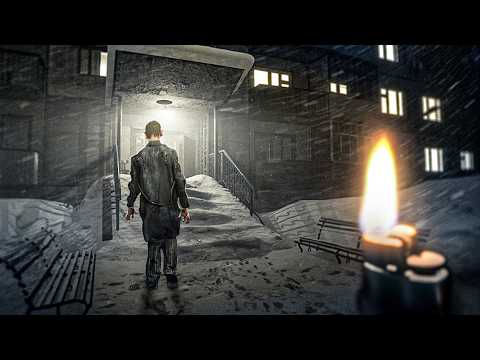
Still With Me offers a different approach, placing the player inside a deteriorating apartment building after returning to retrieve a forgotten laptop. What should be a quick errand becomes an increasingly uncomfortable overnight stay involving cleaning, electrical problems, locked rooms, and a mysterious figure that repeatedly appears nearby. Markiplier immediately questions the logic of remaining in such an unpleasant location, turning the questionable setup into an ongoing joke. However, the game's visual styling and disturbing domestic atmosphere gradually establish a distinctive identity. Ordinary household activities become unexpectedly threatening because the player never knows whether an apparently harmless object or familiar room might conceal something sinister.
The third game's greatest achievement is its willingness to make its supernatural presence seem strangely ordinary. Rather than presenting every encounter as an immediate attack, the mysterious figure occasionally behaves in ways that almost resemble normal interactions. Markiplier recognizes how this contrast between familiarity and danger creates discomfort, arguing that horror benefits from moments of apparent normalcy instead of relying exclusively on startling interruptions. The atmospheric music, shifting environments, and increasingly bizarre discoveries reinforce that approach. Although the objectives sometimes become confusing and the demo concludes before its larger mystery can develop, it leaves a more intriguing impression than its modest apartment setting initially suggests.
Across all three experiences, Markiplier's commentary provides the connective entertainment. His exaggerated protests, spontaneous jokes, and willingness to investigate suspicious situations give each game a personality beyond its mechanics. More importantly, he does not simply declare everything frightening or enjoyable. His criticism of Signed For demonstrates an ability to distinguish an interesting premise from uneven execution, while his appreciation of Still With Me highlights the creative importance of tonal contrast in horror design. Some extended wandering and repeated comedic phrases occasionally dilute the momentum, but the combination of genuine reactions and practical observations makes this an engaging showcase of independent horror development.
Pros
- I Am Not Alone establishes immediate tension through its television-based lighting mechanic, oppressive darkness, disturbing figures, and concise exploration.
- Markiplier's energetic reactions and humorous conversations with threatening creatures provide entertaining contrasts to the games' unsettling environments.
- Signed For develops an intriguing supernatural mystery through predictive letters, missing postal workers, mysterious deliveries, and the increasingly suspicious house 410.
- Markiplier offers thoughtful criticism of the second game's repetitive structure, predictable conclusion, disconnected narrative elements, and underdeveloped atmosphere.
- Still With Me uses its deteriorating apartment setting, eerie visual styling, and unsettling environmental changes to create an effective sense of vulnerability.
- The third game's unusually restrained supernatural encounters demonstrate how moments of apparent normalcy can make horror more disturbing than constant jump scares.
- The selection provides three distinct approaches to independent horror, allowing viewers to appreciate different storytelling techniques and gameplay concepts.
Cons
- The first game's abrupt ending leaves its mysterious world and underlying narrative largely unexplored.
- Signed For relies too heavily on repetitive delivery assignments, unnecessary sleeping sequences, and lengthy stretches with limited meaningful activity.
- Weak environmental audio and low volume levels undermine the second game's atmosphere, while its fragmented storytelling prevents several intriguing discoveries from achieving their full impact.
- The postal horror game's increasingly explicit warnings make its final revelation relatively predictable, reducing the effectiveness of its intended surprise.
- Still With Me occasionally struggles with unclear objectives and a questionable narrative justification for remaining in the apartment, while its demo ending prevents the mystery from reaching a satisfying resolution.
- Repeated jokes and occasional uncertainty about gameplay objectives slow portions of the presentation, particularly during the longer investigations.
Markiplier delivers an enjoyable collection of independent horror experiences that demonstrates how effectively simple environments and unusual mechanics can generate fear. While Signed For suffers from repetitive pacing and underdeveloped atmosphere, I Am Not Alone offers a compact supernatural adventure, and Still With Me stands out for its unsettling blend of ordinary behavior and paranormal encounters. The combination of entertaining reactions, constructive criticism, and genuinely creative horror concepts makes this a worthwhile installment despite the uneven execution of its featured games.