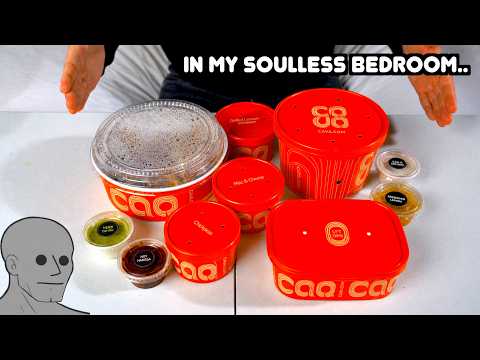
A Korean dosirak sets an immediately difficult benchmark, combining rice, kimchi, bean sprouts, seaweed, fried egg, seafood pancake and glass noodles in a lunchbox designed to be shaken before eating. The physical ritual gives the tasting an entertaining hook, while the discussion of how these tins became associated with students and office workers adds useful context. Against it, the British ploughman’s lunch initially seems almost too familiar, but good cheese, ham, pork pie, bread and pickles make a convincing case for simplicity. The comparison also reveals an important theme: both meals turn assorted components into something customizable and practical, even if their traditions are very different.
The Turkish dürüm round produces one of the clearest examples of how much the quality of the chosen food affects the competition. Ground lamb, peppers, garlic, pul biber, sumac onions and chili sauce in lavash come from a highly praised London Turkish restaurant, while the British challenger is represented by a homemade chicken tikka wrap modeled on a supermarket meal-deal staple. The freshly prepared British version is understandably much better than the packaged product it is supposed to represent, which makes the head-to-head entertaining but not especially controlled. Still, the discussion of portability, cold serving and the importance of convenience does explain why wraps have become such natural lunch food.
Vietnamese mì quảng trộn delivers perhaps the sharpest contrast of the four rounds. Noodles with pak choi, pickles, fish sauce, fish balls, herbs and crispy pork skin are praised for freshness, variety and customization, while tuna pasta salad is openly acknowledged as beige, heavy and largely nostalgic. That willingness to criticize the home contender keeps the competition from becoming pure patriotic cheerleading. It is also revealing that nostalgia still earns the pasta salad respectable scores, demonstrating how personal the judging criteria really are.
Jamaican patties versus Cornish pasties makes for the most historically connected pairing. The presenters describe the Jamaican version as combining a pasty-derived format with Caribbean seasoning before later becoming familiar in British cities through Caribbean migration. The Cornish version then receives an enthusiastic examination of its beef, potato, onion, peppery filling and pastry, along with discussion of its association with miners and the modern protected designation. Some of the historical claims are delivered confidently without sources being established within the presentation, so they work better as conversational context than as definitive food history.
As a tasting show, the format succeeds because the scoring never pretends to be objective. The judges are explicitly asked to rate personal satisfaction and pleasure, and they repeatedly admit that childhood familiarity influences them. That makes the final 32–30 British victory amusing rather than authoritative. The joking recognition that they may have created “rage bait” also shows that everyone understands how absurd it would be to extrapolate a global culinary hierarchy from four carefully selected matchups.
That self-awareness does not completely solve the comparison’s unevenness. Restaurant-made food, homemade versions and mass-market convenience products are mixed together, and several categories involve foods with substantially different cultural contexts. The concluding claim that British lunches have beaten “the rest of the world” is clearly playful, but the sample consists only of dishes associated with Korea, Turkey, Vietnam and Jamaica. More importantly, the closing discussion offers a more interesting observation than the scoreboard: the presenters argue that British lunch culture often prioritizes speed and function while other cultures can place greater emphasis on the meal as a social occasion, though the limited examples here cannot establish such a broad cultural generalization.
Pros
- The four pairings provide substantial variety in ingredients, textures, preparation and lunch traditions.
- Honest acknowledgment of nostalgia and personal preference makes the scoring transparent and keeps the competitive premise lighthearted.
- Dosirak, dürüm, mì quảng trộn and Jamaican patties are given enough ingredient and cultural context to make the tastings more informative than simple reaction segments.
- The presenters have lively chemistry, particularly when debating familiar British foods they recognize are difficult to judge impartially.
- The final discussion moves beyond declaring a winner and considers what different lunch traditions might offer one another.
Cons
- Homemade, restaurant-quality and supermarket-style foods are compared inconsistently, weakening the fairness of several matchups.
- Historical and cultural claims are frequently presented without establishing supporting sources within the piece.
- Nostalgia substantially influences the scores, making the narrow British victory more reflective of the judges than the foods themselves.
- Broad observations about national lunch culture reach beyond what four international examples can convincingly demonstrate.
The playful competition works best as an exploration of why portable foods become culturally meaningful rather than as any serious attempt to identify the world’s best lunches. Uneven comparisons and nostalgia make the final score largely incidental, but energetic tasting, varied dishes and useful cultural discussion turn the journey into an engaging celebration of how much can fit inside the idea of a packed lunch.