Owning an extensive collection of desirable performance cars creates an unusual dilemma when their increasing financial value begins competing with the enjoyment of driving them. Shmee explores this predicament by revisiting three vehicles that have spent several months largely untouched, considering whether their continued presence in the collection is justified. With additional cars arriving and an ambitious property development underway, the discussion offers an engaging perspective on the emotional, financial, and practical responsibilities of automotive collecting.
The presentation establishes a meaningful purpose through Shmee's spreadsheet for monitoring vehicle usage. Identifying cars that have not been driven recently provides a natural framework for the outing, while discussions about servicing, roadworthiness requirements, battery maintenance, and scheduling demonstrate the considerable effort involved in managing such a collection. These practical considerations reveal a less glamorous side of supercar ownership that is frequently overshadowed by impressive specifications and extravagant acquisitions.
The Mercedes-Benz SLS Black Series presents the most substantial financial dilemma. Having reportedly purchased the car for approximately £340,000, Shmee estimates that its current value has more than tripled, potentially allowing a sale to fund several major property improvements. However, the enthusiastic driving experience, distinctive gullwing doors, naturally aspirated V8 engine, and personal memories associated with the vehicle establish a convincing emotional argument for retaining it. The discussion effectively captures how dramatic appreciation can complicate ownership rather than simply enhance its rewards.
The Renault Clio V6 provides an entertaining contrast to the considerably more expensive Mercedes. Shmee's involvement in restoring and modifying the previously neglected vehicle, combined with his nostalgic connection to that generation of Clio, gives the car significance beyond its estimated market value. His observations about its manual transmission, compact dimensions, suspension characteristics, and engaging performance demonstrate why automotive enjoyment does not necessarily increase proportionally with purchase price. The acknowledgment of its poor turning circle, aging interior materials, and outstanding maintenance requirements also provides welcome balance.
The Aston Martin Vantage GT8 introduces another interesting dimension through its extensive driving history and the financial implications of accumulating mileage. Shmee acknowledges that his earlier expectations regarding the narrowing price difference between frequently driven and exceptionally low-mileage examples have not materialized as anticipated. His willingness to recognize this misjudgment strengthens the discussion, particularly when he explains how driving these vehicles has simultaneously created memorable experiences and supported the growth of his automotive content business. The emphasis on manual gear changes, engine character, and road-going usability further reinforces the distinction between owning a collectible and actively enjoying it.
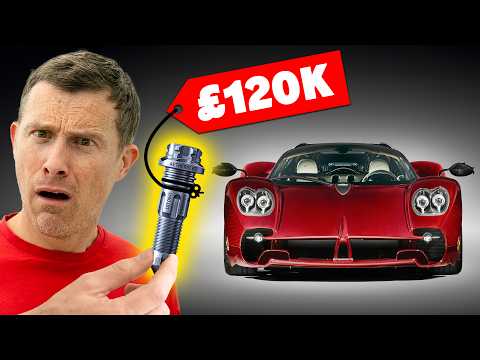
Beyond the individual vehicles, the discussion offers worthwhile insight into collection management and future storage improvements. Experiences with accumulated dust, closely positioned vehicle lifts, temperature control, and battery chargers inform Shmee's plans for a new facility. The conversational chemistry between the presenters keeps these practical observations entertaining, although extended parking sequences, incidental roadside encounters, repeated tunnel accelerations, and the lengthy diagnostic device promotion occasionally weaken the pacing.
The concluding financial discussion is revealing but requires considerable perspective. Shmee openly discusses vehicle financing, negative equity, refinancing his Ferrari SF90, and the subsequent recovery in its estimated value, providing greater transparency than a straightforward celebration of appreciating supercars. Nevertheless, predictions concerning future collector demand, inflation-driven appreciation, and particular vehicles being undervalued remain speculative, while the reported financial gains receive limited scrutiny regarding financing expenses, maintenance costs, and market liquidity. Although the presenters acknowledge that holding depreciating assets can backfire and clarify that their discussion is not professional financial advice, a more systematic comparison of the vehicles would have strengthened the central selling dilemma.
Pros
- The conflict between emotional attachment and financial opportunity creates an engaging foundation for the collection update.
- Driving three substantially different performance cars provides an entertaining comparison of their individual characteristics and ownership appeal.
- The discussion of maintenance schedules, battery chargers, and storage arrangements reveals practical challenges associated with managing an extensive automotive collection.
- Shmee's personal restoration experiences and driving memories establish meaningful context for his reluctance to sell particular vehicles.
- The acknowledgment of inaccurate market predictions and previous negative equity introduces valuable transparency into the financial discussion.
- The natural conversational chemistry and genuine enthusiasm make the driving sequences enjoyable.
- Relating potential vehicle sales to specific property improvements gives the financial decisions a tangible sense of purpose.
Cons
- Repeated tunnel accelerations, parking maneuvers, and incidental tangents occasionally slow the progression of the central discussion.
- The extended diagnostic device sponsorship interrupts the automotive collection update.
- Estimated vehicle valuations and predictions of future appreciation receive limited supporting market evidence.
- The financial comparisons insufficiently account for financing expenses, ongoing ownership costs, and the difference between estimated asset values and realized profits.
- The absence of a structured comparison or definitive selling decision leaves the central question somewhat unresolved.
Shmee delivers an entertaining and unusually personal examination of the responsibilities and emotional complexities that accompany an extensive performance car collection. Although the speculative financial commentary would benefit from stronger supporting evidence and more comprehensive cost comparisons, the driving experiences and candid ownership reflections provide considerable value for automotive enthusiasts. Ultimately, the presentation succeeds in demonstrating why deciding which cars deserve a permanent place in a collection involves considerably more than comparing their market values.