A $1 New York pizza slice immediately gives the challenge a useful baseline because it proves the cheapest stop does not have to be miserable. The pizza itself earns solid marks from the group, but the memorable part is the shopkeeper’s generosity: extra food, a drink, and an initial refusal to accept their tip. That personal interaction becomes an early reminder that service and value do not necessarily rise in proportion to price.
The dessert stop offers a less convincing middle tier. The frozen hot chocolate tastes good enough to disappear quickly, yet the group repeatedly argues that it is essentially a chocolate milkshake rather than what the name led them to expect. Their scoring becomes slightly muddled when one rating is raised partly out of reluctance to criticize the business, but the visit still provides a useful contrast between enjoyable food and an experience that does not completely deliver on expectations.
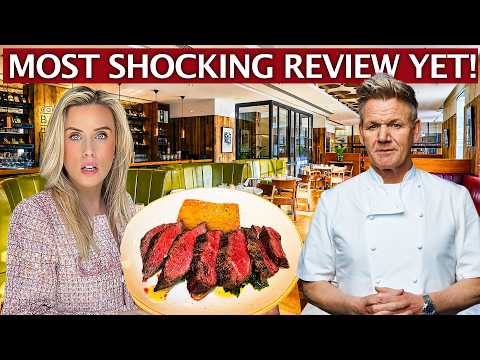
The Grill on 5th is where the price ladder finally produces an unmistakable jump in enthusiasm. The upscale surroundings, visible kitchen, short-rib croquette, expensive mocktail, and especially the roughly £40 wagyu burger create the kind of conspicuous luxury the premise promises. Calling it the best burger they have ever eaten is obviously a personal judgment rather than an objective measure, but their reaction is specific and emphatic enough to make the 10/10 food score feel earned within their own tasting experiment.
Carbone continues that upward trend through presentation as much as flavor. The dessert display, tableside preparation, elaborate surroundings, and several unusually expensive menu items make the restaurant feel substantially different from the earlier stops. Lemon cheesecake and hazelnut cake receive particularly strong praise, while the flambéed banana dessert divides opinion, giving this section more texture than a simple sequence of increasingly ecstatic reactions.
The larger problem is that the advertised price progression never really reaches the scale promised by the premise. There is no clearly demonstrated $10,000 restaurant experience, nor even a detailed accounting showing how any meal approaches that amount. Deposits, individual menu prices, and expensive burgers establish that later restaurants cost substantially more, but they do not support a genuine $1-to-$10,000 comparison. That gap makes the final conclusion about where luxury stops being worthwhile much less rigorous than the setup suggests.
The scoring system also becomes too loose to answer the central question convincingly. Food and service are initially presented as consistent categories, yet later evaluations become compressed or selectively focused on desserts, and the actual total cost of each experience is not methodically compared against the scores. The entertainment remains lively because of the friends’ chemistry, public interactions, running jokes, and exaggerated reactions, but the format works much better as a comedic restaurant tour than as a serious test of whether spending more reliably produces better food.
Pros
- The $1 pizza stop provides a strong value baseline and an unexpectedly memorable service experience.
- Genuine enthusiasm for the wagyu burger and Carbone desserts makes the higher-priced meals feel meaningfully different rather than merely expensive.
- Interactions with restaurant staff and other people add personality beyond straightforward food tasting.
- The contrast between food quality, service, atmosphere, and price gives the challenge a potentially useful framework.
- The group’s humor and chemistry keep the restaurant hopping energetic.
Cons
- The promised $10,000 end of the price spectrum is never clearly demonstrated.
- Prices and scores are not tracked consistently enough to support the final value conclusion.
- Some ratings are influenced by reluctance to criticize rather than purely by the stated criteria.
- Extended jokes, trolling, and side trips occasionally overshadow the restaurant comparison itself.
- Later stops emphasize selected dishes or desserts rather than comparable full meals.
The restaurant tour succeeds as an entertaining demonstration that cheap food can still deliver and that higher prices can buy genuinely memorable dishes and presentation. Its central experiment is far less convincing, however, because the price ladder, scoring, and supposed $10,000 endpoint are never established with enough consistency to prove much about value. The personalities and food reactions carry an enjoyable feature that promises a more rigorous comparison than it ultimately provides.