A six-figure virtual egg somehow dominates the opening stretch before anyone gets near a monster. Stake’s defense of his rare Roblox collectible — bought for what he says was $40,000 and now listed around $90,000 — becomes an extended argument over scarcity, resale value, and whether a small group of owners agreeing on a minimum price actually makes the item worth that amount. Jynxzi and Joe Bart’s disbelief gives the exchange plenty of energy, particularly as they keep separating the asking price from the last actual sale, but the conversation runs long for a session ostensibly built around horror games.
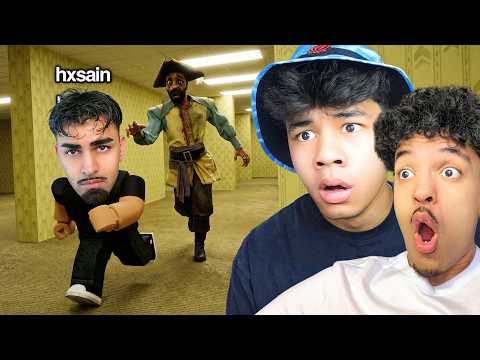
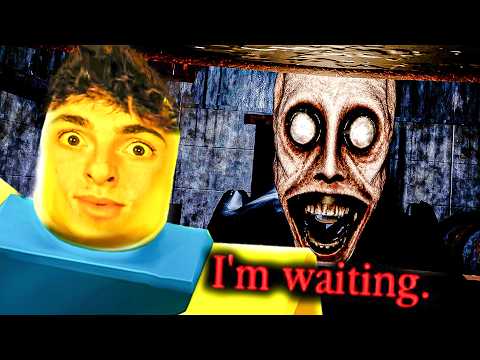
Once the group finally starts playing, proximity chat becomes the central ingredient. Their first game has a simple loop of searching backpacks for colored keys while avoiding a creature capable of appearing in unsettling forms, including one based on Jynxzi. The mechanics themselves are straightforward, but the players’ confusion, shouted warnings, accidental separations, lost keys, and repeated attempts to regroup turn a basic scavenger hunt into a lively cooperative scramble. The personalized monster imagery also produces some of the session’s better reactions because it gives the threat a connection to the people playing rather than relying solely on a generic pursuer.
Monochrome is a more effective horror showcase. Its dark maze, limited stamina, scattered keys, closets, changing lights, and fast-moving enemy create clearer consequences for poor coordination. The group gradually learns to remember escape routes, conserve sprinting, stay close enough to recover dropped keys, and identify safe hiding spots. That progression gives the second major game a stronger arc than the first: early panic eventually becomes functional teamwork, even though closet disputes and wrong turns repeatedly threaten to undo their progress.
The chemistry among the three players carries much of the entertainment. Stake often serves as the guide, while Jynxzi and Joe react to unfamiliar mechanics, question instructions, wander into danger, and occasionally create problems for one another. Some of the funniest moments emerge naturally from that imbalance, such as a supposedly helpful leader walking someone directly toward danger or a player announcing that he found a key without actually picking it up. Their reactions feel spontaneous rather than organized around manufactured scares.
Roblox’s voice-chat moderation becomes an unexpectedly large part of the session, however. Jynxzi repeatedly receives temporary voice restrictions for swearing, interrupting the horror gameplay and eventually sending the group into a Clash Royale detour while they wait. The players also encounter other users apparently shouting racial slurs in public lobbies, which they criticize and attempt to report rather than treating as entertainment. That episode highlights the unpredictable nature of public voice chat, but it also drags the stream away from the horror premise and introduces stretches devoted more to matchmaking and moderation problems than gameplay.
Pacing is consequently the biggest weakness. Between the lengthy virtual-item debate, audio setup, lobby difficulties, voice restrictions, server joining, Clash Royale intermission, and extended discussion about what to play next, the strongest horror material occupies only part of a much broader hangout. The actual rounds work because the players are genuinely engaged with one another and the games produce immediate stakes, but the surrounding downtime makes the experience considerably more sprawling than it needs to be. Even the ending becomes a planning conversation about Doors, The Mimic, A Quiet Place-inspired games, and a possible future group session rather than a strong conclusion to the games already played.
Pros
- The three-player chemistry creates consistently amusing reactions, arguments, mistakes, and improvised teamwork.
- Proximity chat meaningfully enhances the horror by making separation, communication, and audible panic part of the experience.
- Monochrome provides a stronger combination of atmosphere, pursuit mechanics, resource management, and cooperative problem-solving.
- Personalized monster imagery and sudden encounters generate several effective scares without requiring elaborate mechanics.
- The group condemns disruptive players using racial slurs and attempts to deal with the behavior rather than encouraging it.
Cons
- The lengthy Roblox collectible argument delays the central horror premise and becomes repetitive.
- Voice-chat setup, moderation interruptions, server problems, and matchmaking consume substantial time between the better gameplay sections.
- The Clash Royale diversion further breaks the momentum created by the horror games.
- Much of the closing stretch is spent discussing potential future games rather than delivering a satisfying finish to the current session.
The collaboration works best when proximity chat, unfamiliar horror mechanics, and the trio’s contrasting personalities are allowed to collide naturally, with Monochrome producing the session’s strongest combination of scares and comedy. Considerable setup, moderation trouble, tangents, and downtime make the overall experience uneven, but the actual cooperative horror demonstrates why this group could be especially entertaining in a more focused follow-up.