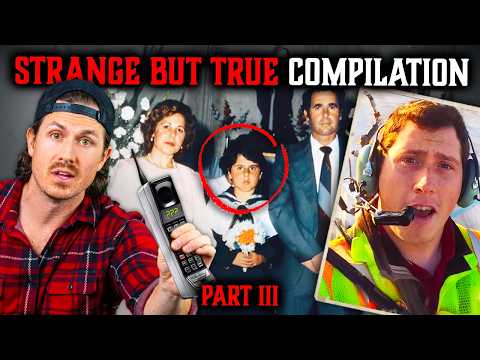
The strongest material here needs very little embellishment. A young driver is stopped for extreme speeding, receives tickets and a warning, then crashes fatally shortly afterward; a mysterious cliffside vehicle disappearance eventually becomes connected to a missing woman; tourists unknowingly film the dumping ground of a serial killer; a catastrophic crowd crush unfolds in Duisburg; and five commercial divers are violently pulled into an underwater pipeline. Each story contains a genuinely unsettling element rooted in real human loss, giving the compilation considerably more weight than the usual collection of supposedly creepy internet clips.
The opening traffic case is especially effective because the police footage creates its own devastating structure. The officer warns Luis about his driving, then realizes at the crash scene that the destroyed vehicle is the same one he stopped minutes earlier. His repeated attempts to process that realization make the episode more affecting than the surrounding commentary, which sometimes drifts into jokes about cars and unsupported speculation about whether the passenger may have encouraged the speeding. The later insistence that responsibility rests with the driver is more grounded, but the speculation about the passenger adds little and risks assigning blame without evidence.
The cliffside Lexus story works as a mystery largely because the video allows uncertainty to remain visible before offering its later development. The initial absence of a recovered vehicle and apparent lack of a matching missing-person connection naturally raise questions, while the eventual identification of Tracy Sinclair and her ownership of a dark green 2009 Lexus give the incident a much stronger factual anchor. However, the suggestion that the crash was intentional because the brakes did not appear to be used remains an interpretation rather than an established explanation, and the casual suggestion of a manic episode from the reacting group goes beyond the evidence presented.
The Cyprus section contains perhaps the compilation's most chilling visual coincidence: travel footage that apparently captured suitcases later associated with a serial killer's victims. The contrast between the tourists' ordinary curiosity about the unusual red lake and the later discovery of bodies gives the footage disturbing retrospective significance without needing supernatural framing. The discussion becomes less disciplined when participants casually assume the lake would dissolve bodies or make broad claims about police conduct and migrant protections without supplying supporting evidence. The account of the killings is powerful enough that these side comments mainly introduce avoidable uncertainty.
The Love Parade disaster is presented more effectively as a systemic tragedy. Footage of crowds compressing and moving almost like a fluid clearly conveys why crowd density can become lethal, while survivor accounts make the human consequences immediate. The explanation traces the competing flows of people, police barriers and restricted ramp access in a reasonably understandable way, but the commentary then reduces a complicated disaster to confident declarations about exactly who was at fault. Even within the video's own account, multiple organizers, officials and operational decisions are involved, so assigning singular responsibility requires more evidence than the reaction provides.
The underwater pipeline incident is easily the most harrowing segment and the one that benefits most from careful explanation. The description of the sudden pressure differential, the divers being pulled into a narrow pipe, Christopher Boodram's escape and the remaining men's prolonged entrapment creates extraordinary tension without relying on paranormal suggestion. The account of rescue decisions afterward is also the video's most serious allegation, making precision particularly important. Claims that the company effectively planned to let the men die, heard banging for days and was ultimately cleared of wrongdoing are presented forcefully, but the compilation does not provide documentation or enough legal context to independently establish the full sequence or responsibility.
Presentation is therefore the video's central contradiction. Nick Crowley's assembled stories provide strong footage, coherent narratives and several genuinely haunting examples of ordinary situations becoming catastrophic, while the reacting hosts offer spontaneous human responses that sometimes mirror what viewers are likely feeling. Yet frequent jokes, interruptions, guesses and confident assertions repeatedly intrude on material involving identifiable victims and complex investigations. The result remains compelling because the underlying cases are so powerful, but it would be substantially stronger with more restraint, clearer sourcing and firmer separation between documented events, reported allegations and speculation.
Pros
- Uses several pieces of firsthand or contemporaneous footage that give the tragedies immediate emotional and evidentiary weight.
- The traffic-stop sequence creates an especially powerful before-and-after account through the officer's own realization at the crash scene.
- The Lexus story develops from apparent mystery into a meaningful later identification rather than leaving the case at pure internet speculation.
- The Cyprus segment effectively demonstrates how ordinary travel footage can acquire disturbing significance after later discoveries.
- Crowd footage from the Love Parade section clearly communicates the frightening physical behavior of an extreme crowd crush.
- The pipeline segment explains the basic pressure-related accident and Christopher Boodram's escape in unusually vivid, understandable terms.
- The hosts occasionally challenge one another's assumptions rather than uniformly accepting every interpretation presented.
Cons
- Frequent jokes and casual interruptions can feel poorly matched to stories involving fatal crashes, murdered children and workers trapped awaiting rescue.
- The passenger in the speeding case is speculated to have encouraged the driver despite no evidence being presented that she did so.
- Suggestions that the Lexus crash was intentional or associated with a manic episode go beyond what the material establishes.
- Several scientific, legal and investigative claims are asserted conversationally without adequate sourcing or qualification.
- The Love Parade discussion becomes overly confident about individual blame despite describing a complicated chain of planning and crowd-management failures.
- The pipeline section makes extremely serious claims about corporate rescue decisions without presenting enough documentation or legal context to evaluate them fully.
- Reaction commentary sometimes repeats or sensationalizes points that the original footage already communicates more effectively.
The compilation succeeds because its most disturbing moments arise from documented human tragedies rather than manufactured horror, and several sequences are genuinely difficult to forget. Strong archival footage and effective storytelling are repeatedly weakened, however, by speculative comments, tonal mismatches and insufficient care around disputed or complex claims. With more restraint and clearer evidentiary boundaries, this could have been an unusually strong piece of real-world dark-internet storytelling.