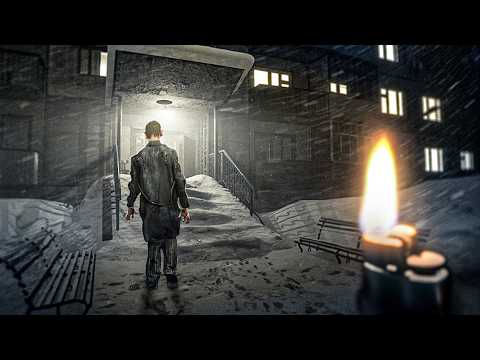
A weekend camping trip with three friends becomes an increasingly disturbing journey through isolated roads, suspicious encounters, and a roadside motel where nothing is quite what it seems. Playing the indie horror game The Wrong Way, the creator brings his trademark humor, exaggerated reactions, and growing paranoia to a story that initially resembles a familiar wilderness survival thriller before developing into something considerably stranger. The combination of believable friendships, ominous warnings, and unsettling environmental details creates an engaging experience that makes excellent use of uncertainty.
The adventure begins with James traveling to Ridgewood for a camping trip with Leo, Miles, and Derek, knowing he must leave early because of his work commitments. The group's playful arguments about food, employment, and the inconveniences of camping establish their personalities before the horror begins. The creator immediately develops amusing opinions about each character, criticizing Leo's questionable judgment while finding Derek's hunger and practical concerns especially relatable. His running commentary adds personality without completely overshadowing the story, although frequent jokes and stream acknowledgments occasionally interrupt otherwise effective conversations.
Much of the early suspense comes from seemingly ordinary interactions that become disturbing through context. A gas station employee advises the group to exercise caution, while another traveler describes abandoned camping equipment, unattended vehicles, and unexplained activity near Ridgewood. These warnings establish an atmosphere of uncertainty without immediately identifying a threat. The creator's increasingly elaborate theories about suspicious strangers and potential killers make the encounters entertaining, even when his assumptions prove premature. His insistence that every unfamiliar person represents a threat becomes a recurring joke that also reinforces the game's central theme of distrust.
The camping sequence provides an unexpectedly effective contrast between friendship and impending danger. Conversations around the fire reveal the group's shared history, individual frustrations, and appreciation for spending time together. The creator gradually warms to Leo after initially dismissing him, making their interactions feel more personal. However, a late-night walk into the forest introduces an uncomfortable confrontation with another group of campers, whose intimidating behavior makes the isolated setting feel genuinely threatening. The creator's exaggerated fear, references to other horror games, and increasingly desperate calls to return to camp supply humor while preserving much of the underlying tension.
The experience becomes more intriguing when James attempts to drive home and encounters a succession of increasingly inexplicable problems. A mysterious stranger helps restart his car, only for another roadside attendant to explain that he has somehow traveled in the opposite direction from his destination. Subsequent engine trouble forces James to abandon his vehicle, and the supposedly helpful gas station later appears deserted. These developments create a compelling sense of disorientation, particularly as familiar locations stop behaving consistently. The creator responds with entertaining speculation about elaborate conspiracies and supernatural possibilities, although the game's suggestion that its events are based on a true story remains an unsupported framing device rather than evidence that the depicted incidents occurred.
The roadside motel provides the adventure's strongest sustained horror sequence. After receiving a room from the apparently accommodating Gerald, James briefly regains enough phone service to discover alarming messages from his friends. Strange noises, suspicious movements, and conversations overheard through the wall gradually reveal that the danger extends beyond the earlier camping encounters. The creator's nervous reactions and attempts to determine whom to trust make this portion especially engaging. Unfortunately, the tension is repeatedly interrupted by lengthy donation acknowledgments, technical difficulties, and an advertising break that leads into an unrelated game. These diversions are understandable within a livestream but weaken the momentum of a narrative that depends heavily on atmosphere.
The final escape sequence represents the clearest weakness in an otherwise enjoyable playthrough. The creator repeatedly struggles with a chase mechanic that appears poorly communicated, particularly when character movement becomes restricted and escape requires precise timing. Multiple failed attempts turn what should be the story's most frightening moment into an exercise in frustration. His increasingly irritated reactions are understandable, especially after the carefully constructed suspense of the preceding sections. The eventual conclusion partially restores the atmosphere through James's account of a police investigation that finds no evidence supporting his experiences, including the revelation that the gas station had reportedly been closed for months. Although the unresolved mystery suits the unsettling premise, the mechanical frustrations prevent the ending from delivering its full emotional impact.
Pros
- The believable friendship dynamics between James, Leo, Derek, and Miles establish emotional investment before the horror intensifies.
- Ominous roadside encounters, abandoned locations, and contradictory directions create an effective atmosphere of isolation and uncertainty.
- The creator's energetic humor, expressive reactions, and evolving suspicions make even relatively quiet story sequences entertaining.
- The motel sequence builds suspense through threatening messages, suspicious behavior, and the gradual realization that seemingly helpful strangers may be involved in something sinister.
- The mysterious conclusion reinforces the story's unsettling atmosphere without providing an overly convenient explanation.
Cons
- Frequent donation acknowledgments, unrelated jokes, and stream interruptions occasionally undermine the game's carefully established tension.
- An extended advertising intermission and unrelated gameplay disrupt the narrative during an important revelation.
- The final chase suffers from unclear mechanics and repeated failures that replace suspense with irritation.
- Some storytelling developments, particularly James's unexplained change in direction and the apparent coordination between suspicious characters, remain insufficiently explained.
- The game's true-story framing is never substantiated, leaving its relationship to any real incident unclear.
The Wrong Way delivers an entertaining indie horror experience that combines convincing character interactions, unsettling locations, and an increasingly mysterious survival story. The creator's personality adds considerable entertainment value, while the motel sequence and unexplained roadside encounters provide the adventure's most memorable moments. Despite disruptive livestream interruptions and a frustrating final escape, the strong atmosphere and engaging reactions make this a worthwhile horror playthrough.