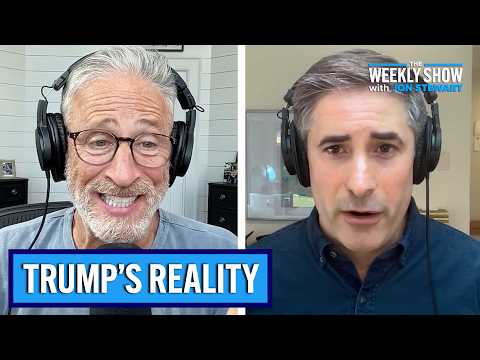
Donald Trump's late-night social media activity provides the opening for an intensely critical examination of his administration's energy policies, relationship with Russia, and handling of public property. The MeidasTouch host interprets Trump's posts as evidence of political anxiety ahead of the midterm elections, moving quickly from provocative social media messages to international energy disputes and controversial actions in Washington, D.C. The presentation is energetic and occasionally informative, although its relentless hostility frequently competes with the substantive issues being discussed.
The discussion of Canadian energy exports offers one of the more coherent arguments. Citing a reported conversation between Trump and Canadian Prime Minister Mark Carney, the host highlights Canada's potential to supply substantial quantities of diesel to the United States while questioning Trump's repeated criticism of Canadian trade relations. The explanation that energy imports contribute significantly to America's trade deficit with Canada provides useful economic context. However, the presentation moves between oil, diesel, daily export quantities, and trade arrangements without consistently distinguishing their implications, making some comparisons less precise than they initially appear.
Russia's proposed diesel exports become the central international controversy, with the host arguing that Trump's arrangement with Vladimir Putin contradicts both his previous sanctions rhetoric and existing American legislation. References to laws enacted in 2017 and 2022 give the criticism a potentially important legal dimension, particularly regarding restrictions on Russian energy imports. Unfortunately, assertions that the arrangement constitutes criminal conduct or treason receive insufficient legal explanation. The host also introduces speculation that Russian diesel shipments could originate in Iran, but the evidence presented establishes a possibility rather than a verified supply chain. These distinctions matter when accusations involve serious violations of federal law.
The Ukraine discussion connects Russian refinery attacks, American energy interests, and Trump's reported frustration with President Volodymyr Zelenskyy. The host argues that Ukraine's strikes against Russian energy infrastructure are a response to attacks on Ukrainian facilities, challenging the administration's apparent preference for restrictions on Ukrainian operations. References to Russian power-grid attacks, competing ceasefire descriptions, and strikes against Yandex data centers create a broader picture of the conflict. Nevertheless, claims about the extent of damage to Russian refineries and the connection between data-center disruptions and election-interference operations are presented with greater certainty than the supporting information warrants.
The East Potomac Golf Course controversy delivers the clearest and most compelling portion of the commentary. Drawing on statements attributed to court proceedings and a filing by the plaintiffs, the host describes a dispute over the removal of hundreds of trees from a public golf course in Washington, D.C. Particularly striking is the allegation that government officials proceeded with extensive tree removal despite judicial instructions concerning advance notice of major changes. The specific references to 529 trees, the timing of the work, and the plaintiffs' objections give this section a stronger documentary foundation than much of the geopolitical commentary. Still, the allegations would benefit from a clearer distinction between what the plaintiffs claim and what the court has formally determined.
The greatest weakness is the presentation's consistently inflammatory delivery. Repeated insults, personal attacks, and accusations involving sexual abuse, military atrocities, and deliberate public harm often overwhelm the underlying political criticism. The host's anger is unmistakable, but repeatedly describing political opponents in degrading terms adds little analytical value and makes the commentary less persuasive to viewers who do not already share his conclusions. Abrupt transitions between energy policy, warfare, alleged election interference, and environmental destruction further weaken the structure, while several important allegations receive less scrutiny than their seriousness demands.
Pros
- The Canadian energy discussion provides relevant economic context by connecting diesel imports, bilateral trade, and Trump's criticism of Canada.
- References to American sanctions legislation raise substantive questions about the legal implications of renewed Russian energy imports.
- The examination of Ukrainian refinery strikes and competing ceasefire proposals introduces important distinctions between different types of energy infrastructure.
- Detailed references to the East Potomac Golf Course litigation, including the reported removal of 529 trees, provide a concrete and potentially significant accountability story.
- The host effectively connects several separate controversies through the broader question of consistency between the administration's stated policies and its reported actions.
Cons
- Persistent insults, profanity, and emotionally charged accusations frequently overshadow the factual arguments and reduce the commentary's credibility.
- Serious allegations of criminal conduct, treason, and deliberate wrongdoing are advanced without sufficiently establishing the relevant legal standards or supporting evidence.
- Speculation about Iranian diesel being resold through Russia and Russian data centers supporting election interference is not adequately separated from verified information.
- Broad claims about the Iran conflict, Russian refinery destruction, and other international developments lack enough sourcing and qualification to support the certainty of the presentation.
- Rapid topic changes, repeated rhetorical questions, and lengthy emotional digressions undermine pacing and prevent several important issues from receiving sustained analysis.
The commentary raises worthwhile questions about energy policy, sanctions enforcement, the war in Ukraine, and the administration's handling of public land, with the East Potomac dispute providing its strongest substantive material. However, excessive hostility, loosely supported allegations, and insufficient distinctions between documented developments and speculation substantially weaken its investigative value. Viewers seeking forceful opposition commentary may appreciate the intensity, but those expecting careful political analysis will find the evidence and presentation frustratingly uneven.