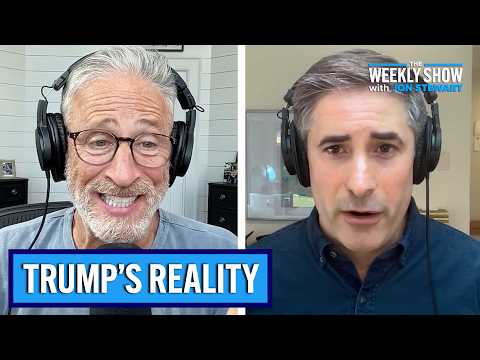
Katie Zachariah's first White House press briefing lasted approximately 14 minutes, included just three questions, and reportedly left several Trump administration officials questioning whether she was prepared for the job. The unusually brief appearance provides the foundation for a sharply critical political commentary examining her performance, controversial social media history, and the apparent dissatisfaction surrounding her appointment. Through news clips, reported insider reactions, and sarcastic observations, the presentation portrays a press secretary struggling to establish credibility almost immediately after taking office.
The opening effectively establishes the central controversy by highlighting CNN reporting that White House officials described Zachariah's debut as unusual and brutal. The host builds on those reactions with pointed humor about the difficulty of making such a poor impression during an introductory appearance. The contrast between the administration's expectations and the reported internal response creates an engaging narrative. However, the suggestion that Trump himself has already turned against his new spokesperson goes beyond what the quoted reporting establishes. Anonymous officials expressing dissatisfaction do not necessarily demonstrate the president's personal position.
The examination of the briefing itself offers some of the commentary's strongest material. Zachariah reportedly delivered lengthy prepared remarks praising Trump before accepting questions from Breitbart, Fox News, and the Daily Mail. CNN's Kaitlan Collins expresses surprise at the unusually limited opportunity for reporters to question the administration, while another journalist describes unsuccessfully attempting to ask when the next briefing would occur. These observations raise legitimate questions about transparency and accessibility, particularly because the administration had publicly promoted the event. The host's sarcastic delivery makes the criticism entertaining without entirely obscuring its substance.
One particularly revealing exchange concerns whether the United States had stopped sharing intelligence with Ukraine. Zachariah responds that she will have to provide an answer later, leaving an important foreign policy question unresolved. The commentary reasonably identifies this as a disappointing moment, although an inability to answer immediately does not independently establish incompetence. Another exchange about her husband, children, and family responsibilities receives attention because of her verbal stumble and lengthy personal response. While these moments illustrate an awkward debut, the presentation occasionally treats nervousness and imperfect delivery as more consequential than the available evidence supports.
The discussion becomes considerably more serious when CNN reporting about Zachariah's deleted social media posts enters the picture. According to the reporting presented, she previously promoted baseless accusations involving prominent Democrats, amplified conspiracy theories associated with Pizzagate, and circulated inflammatory claims about political opponents. The segment provides specific examples involving John Podesta, the Obamas, and other public figures while explaining the real-world danger associated with the thoroughly debunked Pizzagate narrative. This material substantially strengthens the broader examination of her suitability for a position responsible for communicating official government information. Importantly, the allegations described in those posts are presented as unsupported rather than legitimate accusations.
Additional reporting introduces an interesting contradiction between Zachariah's previous political commentary and her new responsibilities. CNN reportedly uncovered deleted posts in which she warned Republicans could face a midterm electoral disaster unless the administration changed direction. The host contrasts those earlier concerns with her enthusiastic public praise of Trump's leadership and economic performance. That tension raises reasonable questions about political messaging and consistency, although changing one's public position or expressing private concerns about electoral prospects does not automatically establish dishonesty. The discussion would have benefited from more consideration of that distinction rather than relying primarily on ridicule.
The closing returns to anonymous White House criticism, including a warning that Zachariah must improve quickly or risk an exceptionally short tenure comparable to Anthony Scaramucci's. This provides an effective conclusion to the narrative established at the beginning, reinforcing the impression that her first appearance created immediate political difficulties. The combination of recognizable news reporting, direct briefing excerpts, and energetic commentary makes the segment accessible and engaging. Nevertheless, its strongly partisan framing, repeated mockery, and willingness to interpret reported dissatisfaction as evidence of Trump's personal rejection reduce its analytical balance. The result is a compelling critique of a troubled public debut that sometimes prioritizes dramatic conclusions over careful distinctions between documented events, anonymous assessments, and speculation.
Pros
- Direct excerpts from Zachariah's first briefing provide concrete examples of her limited engagement with reporters and difficulty answering a significant foreign policy question.
- CNN reporting and journalists' firsthand observations give the discussion a stronger factual foundation than political commentary based entirely on personal opinion.
- The examination of deleted social media posts raises substantive concerns about the judgment and credibility expected of a White House press secretary.
- The contrast between Zachariah's earlier political warnings and her enthusiastic administration messaging introduces a worthwhile question about consistency.
- Energetic narration, sarcastic humor, and well-chosen news segments create an engaging presentation with a clear central narrative.
Cons
- The implication that Trump has personally turned against Zachariah is not conclusively supported by the anonymous criticism presented.
- Repeated mockery of verbal mistakes and nervous delivery sometimes substitutes for a more substantive assessment of her professional capabilities.
- The commentary gives limited consideration to alternative explanations for the abbreviated briefing or the challenges facing someone making a first appearance.
- Anonymous insider assessments are treated as strong indicators of Zachariah's future employment prospects despite the uncertainty surrounding those predictions.
- The strongly partisan tone occasionally blurs the distinction between legitimate criticism, reported concerns, and speculative conclusions.
The commentary delivers an entertaining and frequently substantive examination of a difficult White House press secretary debut, with its strongest material coming from direct briefing excerpts and reporting about Zachariah's controversial public statements. Its legitimate concerns about transparency, judgment, and political credibility are weakened by exaggerated implications about Trump's reaction and an occasionally excessive reliance on ridicule. Viewers interested in sharp political commentary will find plenty to engage with, but those seeking a more measured assessment of the new press secretary's prospects may find the conclusions premature.