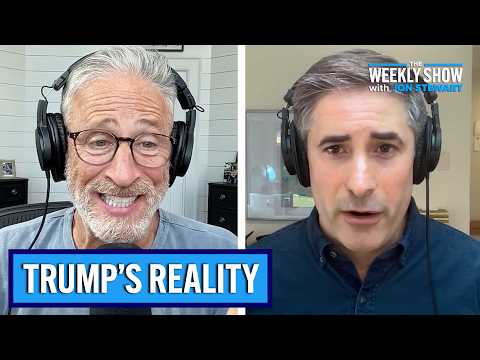
John Bolton’s defense of the U.S.-Saudi relationship is most revealing when he refuses to soften the tradeoff at its center. Speaking about Jamal Khashoggi’s murder and the Trump administration’s response, the former national security adviser argues that foreign policy sometimes requires maintaining strategically important relationships despite conduct that conflicts with American values. Saudi Arabia’s oil role, position in the Islamic world, importance among the Gulf Arab states, cooperation against Iran, and value to U.S. regional power projection form the basis of his case. The interview gains much of its tension from repeatedly testing that position against the obvious question: how far can national interest be separated from accountability for a killing that Bolton himself believes likely involved someone within the Saudi government?
Bolton’s recollection of the administration’s initial response provides the strongest material. He says Donald Trump decided very quickly that the United States would continue supporting Saudi Arabia, even before the circumstances of Khashoggi’s death had been fully established. Bolton thought the administration should wait for more facts and considered the early statement defending the relationship inappropriate, but ultimately agreed with the strategic decision not to ostracize the kingdom. His anecdote about Vladimir Putin later telling him that Russia would sell arms to Saudi Arabia if the United States would not neatly illustrates the geopolitical logic behind his position: moral condemnation does not occur in a vacuum when rival powers are willing to fill the resulting strategic space.
The interview becomes more complicated when responsibility for the murder is discussed directly. Bolton says he believes somebody in the Saudi government was responsible but distinguishes that conclusion from knowing whether the killing was explicitly ordered at the highest level. He recalls advising Mohammed bin Salman to establish the facts quickly while Saudi explanations were changing, and describes King Salman telling Trump that he was appalled and intended to determine what happened. The interviewer presses on the contradiction between seeking facts and effectively deciding in advance that the relationship would survive whatever those facts revealed. Bolton does not really dispute that characterization; his position is that the strategic relationship remained important even under the most damaging assumptions about Saudi responsibility.
Jared Kushner’s unusual role in Saudi policy adds a second layer to the discussion. Bolton describes Kushner as moving between issues without a clearly defined national-security function and says his direct relationship with Mohammed bin Salman could bypass conventional channels, particularly the State Department. At the same time, Bolton minimizes Kushner’s substantive impact during his own tenure and admits that he chose not to challenge the arrangement because Trump would have overruled attempts to constrain his son-in-law. His story about Kushner and Ivanka Trump entering a formal meeting with South Korea’s president uninvited from Bolton’s perspective illustrates how normalized that dynamic had become. It is a candid description of institutional disorder, though Bolton’s claim that Kushner did little of substance sits somewhat uneasily beside his acknowledgment that private conversations could leave senior officials unaware of what had occurred.
The sharpest exchange concerns human rights. Bolton says Trump generally preferred personal relationships and economic transactions to discussions of human rights or broader strategic questions, and he cannot recall Trump raising human rights in the meetings he attended. Yet Bolton also argues that repeatedly delivering predictable talking points can accomplish little and doubts that stronger pressure on Mohammed bin Salman would have changed Saudi behavior. The interviewer challenges that reasoning by suggesting American restraint may have signaled that the crown prince could act without meaningful consequences. Bolton’s answer remains consistent with his broader worldview: diplomatic action should be judged by whether it produces results, not by whether it publicly expresses values. That clarity makes the exchange informative even for viewers who find the conclusion morally inadequate.
The conversation widens substantially when it moves from Khashoggi and Saudi Arabia into Iran, regime change, Gulf security, and the Trump family’s business interests. Bolton argues for overthrowing Iran’s government while criticizing Trump’s preparation and communication surrounding the effort described in the interview. He discusses opposition groups, internal fragmentation, economic problems, ethnic tensions, military pressure, and the risks of chaos after regime collapse. The interviewer pushes back by asking for successful Middle Eastern regime-change precedents, producing a useful argument over whether the possibility of instability outweighs the danger Bolton sees in leaving the existing government intact. However, this extended section also dilutes the original focus, and many of Bolton’s claims about Iran’s internal condition, public sentiment, military developments, and likely political trajectory are presented as his assessments rather than independently established within the interview.
The closing discussion of Trump’s financial interests creates an important contrast with Bolton’s earlier willingness to tolerate unconventional behavior for strategic purposes. Bolton sharply criticizes the second Trump administration’s mixing of public office and private financial interests, saying Trump does not sufficiently distinguish between governmental responsibilities and personal interests and arguing that the situation diminishes the presidency and the United States internationally. That criticism reinforces his earlier description of Trump as viewing diplomacy through personal relationships and individual transactions. It also prevents the interview from reducing Bolton to a defender of everything the administration did: he supports maintaining the Saudi relationship, criticizes how Trump handled Khashoggi, dismisses Kushner’s informal role, faults Trump’s approach to human rights and broader strategy, and condemns the blending of presidential and private business interests.
Pros
- Bolton states the strategic case for maintaining the Saudi relationship clearly, allowing viewers to understand the realpolitik argument without disguising its uncomfortable implications.
- His recollections of the administration’s immediate response to Khashoggi’s murder provide useful insight into the distinction between waiting for facts and deciding that the broader alliance should survive regardless.
- The interviewer repeatedly challenges Bolton on accountability, human rights, Kushner’s informal influence, and the consequences of prioritizing strategic interests over values.
- Bolton’s criticism of Trump’s transactional diplomacy and mixing of public responsibilities with private financial interests complicates the discussion rather than making it a simple defense of the administration.
- The exchange over Iran exposes genuine disagreement about regime change, instability, and how much risk the United States should accept in pursuing geopolitical objectives.
Cons
- The discussion expands so far into Iran, regime change, Trump family finances, and other issues that Khashoggi’s murder eventually becomes only one part of a much broader foreign-policy interview.
- Bolton’s argument that stronger human-rights pressure would have made little difference is asserted more confidently than the conversation can demonstrate.
- His characterization of Kushner as largely insubstantial sits awkwardly beside his acknowledgment that Kushner’s private contacts could bypass senior officials and normal diplomatic channels.
- Numerous claims about Saudi public opinion, Iranian internal politics, regional military developments, and likely geopolitical outcomes are presented through Bolton’s assessment without independent substantiation within the interview.
- The moral implications of accepting continued cooperation even under assumptions of serious Saudi responsibility are pressed repeatedly, but the conversation ultimately reaches an ideological divide rather than resolving that tension.
The interview succeeds because Bolton does not evade the uncomfortable premise of his position: he believes strategic interests can justify preserving a crucial alliance even when grave human-rights concerns demand condemnation, while still criticizing how Trump, Kushner, and the administration handled significant parts of that relationship. Its sprawling turn toward Iran and other controversies weakens the focus, but persistent questioning and Bolton’s unusually explicit realpolitik reasoning make the conversation a revealing examination of the conflict between American power, values, accountability, and transactional diplomacy.