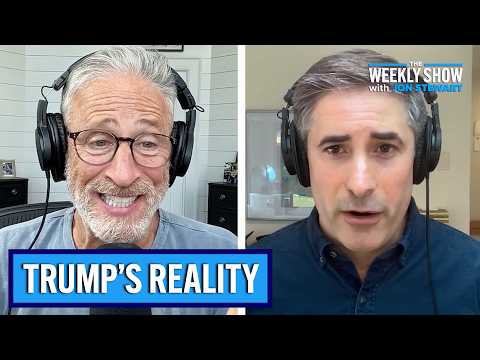
Donald Trump's declining political support, the approaching 2026 midterm elections, and growing concerns about executive power form the foundation of a sweeping discussion about American democracy. The speaker argues that Trump's 2024 victory brought together voters with conflicting expectations, creating a coalition vulnerable to fragmentation once his administration began implementing controversial policies. Rather than treating the current political environment as an isolated crisis, she examines it through the historical patterns of political realignment, concentrated wealth, and democratic resistance. The result is an ambitious conversation that combines contemporary political commentary with substantial historical interpretation.
The opening analysis focuses on how Trump's electoral coalition developed and why the speaker believes it is now weakening. She identifies Elon Musk's financial involvement, health-focused political movements, and male-oriented podcast audiences as important contributors to Trump's 2024 success. Immigration enforcement and Project 2025 become examples of policies she argues were presented differently to different audiences, producing disappointment among voters who did not anticipate their implementation. Her discussion of Republican redistricting efforts in Texas adds an interesting electoral dimension, suggesting that districts designed around temporary voting patterns could become vulnerable as public preferences change. These connections are useful, although several claims about polling, demographic shifts, and the popularity of specific policies are presented without enough supporting data to establish their scale.
Historical comparisons provide some of the discussion's most distinctive material. The speaker connects contemporary Republican politics to the Seven Mountain Mandate, white Christian nationalist movements, and competing visions of democratic versus authoritarian government. She then examines the political upheavals of the 1850s, when opposition to the expansion of slavery helped create the Republican Party, alongside the reform movements of the Progressive Era. Her explanation of the federal census is particularly engaging, especially the example of how historical records can reveal the neighbors and social networks surrounding formerly enslaved people such as Jordan Anderson. These excursions demonstrate how historical research can illuminate political institutions, although comparisons between nineteenth-century political conflicts and modern partisan divisions sometimes suggest stronger parallels than the evidence presented can conclusively establish.
The conversation becomes more urgent when examining Trump's public statements, the administration's military policies, and the war involving Iran. The speaker discusses a reported Nebraska rally statement concerning potential attacks on Los Angeles and San Diego, arguing that Trump's language and the crowd's response reveal troubling political attitudes. She also questions the legality of military strikes against suspected vessels in the Caribbean and eastern Pacific while criticizing Defense Secretary Pete Hegseth's leadership and military personnel decisions. Her explanation of maritime insurance and the economic consequences of insecurity around the Strait of Hormuz is an especially informative detour, showing how military developments can affect international commerce through shipping risks and insurance costs. However, broad assertions about Iran's strategic gains, American military vulnerability, and the administration's legal exposure would benefit from more independent evidence and clearer distinctions between confirmed developments and interpretation.
Concerns about the integrity of the upcoming midterm elections dominate the latter portion of the discussion. The speaker highlights the reported absence of an invitation for international election observers, allegations involving Tina Peters and Cleta Mitchell, and speculation about possible attempts to seize voting equipment. She places these developments within a larger argument about emergency powers and authoritarian political theory, invoking Carl Schmitt's ideas about using exceptional circumstances to concentrate authority. This creates a coherent explanation of why institutional safeguards matter, but the analysis frequently moves from reported proposals to predictions about the administration's intentions. Her suggestion that Trump may attempt to interfere with the election is clearly central to her argument, yet the discussion does not consistently separate documented preparations, legally questionable proposals, and possible future actions. Similar caution is warranted when she interprets Trump's speech patterns as evidence of deterioration or attributes specific ideological motives to military leadership.
The closing section offers a more constructive direction by emphasizing voting, civic participation, and sustained nonviolent political pressure. Rather than encouraging viewers to respond to political anxiety with resignation, the speaker recommends contacting elected representatives, helping inexperienced voters understand ballots and polling procedures, and maintaining public engagement beyond Election Day. Her example of an Iowa political contest decided by six votes reinforces the practical importance of participation. The presentation benefits from a conversational style, historical enthusiasm, and occasional humor, making complicated subjects approachable despite their seriousness. Nevertheless, frequent digressions, repeated criticisms of Republican officials, and a strongly partisan interpretive framework reduce its analytical balance. Democratic politicians and institutions receive comparatively little scrutiny, while several sweeping conclusions about public opinion and political motivations are accepted with limited examination of alternative explanations.
Pros
- Connects Trump's 2024 electoral coalition, immigration policies, Project 2025, and redistricting strategies into a coherent argument about shifting political loyalties.
- Uses historical comparisons involving the formation of the Republican Party, the Progressive Era, and authoritarian political theory to provide a broader perspective on contemporary events.
- Offers engaging historical explanations of census records, maritime insurance, and the relationship between economic institutions and political power.
- Examines important questions surrounding military leadership, election oversight, constitutional authority, and institutional accountability.
- Clearly distinguishes the value of peaceful civic participation from political intimidation or violence.
- Provides practical suggestions for voter engagement, contacting representatives, and sustaining democratic participation beyond a single election.
- Maintains an accessible, conversational presentation that makes complex historical and political relationships understandable.
Cons
- Several polling figures, electoral predictions, and claims about changing voter coalitions lack sufficient supporting data or clearly identified sources.
- Strongly partisan language and repeated negative characterizations of Republican figures limit the discussion's ideological balance.
- Speculation about election interference, presidential motivations, military leadership, and possible future political developments sometimes receives more certainty than the available evidence supports.
- Serious allegations involving military operations, legal violations, and international security are not consistently accompanied by detailed documentation or competing interpretations.
- Historical comparisons occasionally oversimplify important differences between earlier American political crises and contemporary institutions.
- Frequent digressions and lengthy transitions weaken the discussion's organization and occasionally obscure its central arguments.
- Limited examination of Democratic shortcomings or alternative political perspectives makes the presentation more persuasive commentary than balanced political analysis.
This is an intellectually ambitious and often engaging political discussion that uses American history to explain contemporary electoral tensions, institutional challenges, and the importance of civic participation. Its historical examples, economic explanations, and emphasis on nonviolent engagement provide genuine value for viewers interested in understanding the broader forces shaping American politics. However, its strongly partisan framing, insufficient verification of consequential claims, and occasional movement from evidence into speculation prevent it from functioning as a fully balanced assessment of the political landscape.