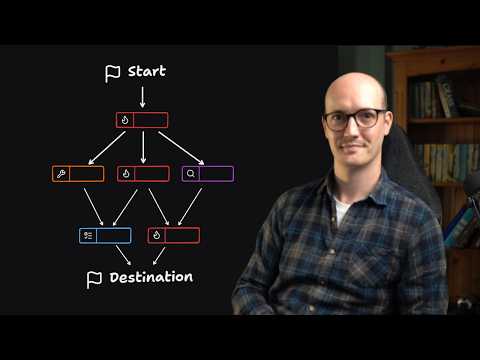
The most useful quality of this guide is its focus on systems that become increasingly important once ordinary exploration and leveling stop carrying progression on their own. Rather than offering another collection of beginner shortcuts, the presentation concentrates on passive resource generation, base efficiency, technology management, expeditions, and specialized production. It also provides an unusually direct summary near the beginning, identifying tower progression, research, and expeditions as the central recommendations before allowing viewers to navigate toward more specific topics.
Several individual tips are explained through practical demonstrations rather than simple instructions. The fishing ponds are framed as passive alternatives to repeated salvaging trips, while pal condensation is shown to improve both work suitability and partner skills. Examples involving carry capacity, hunger reduction, and inherited traits help clarify why duplicate pals should be treated as upgrade material rather than allowed to overwhelm storage. The discussion occasionally becomes improvised or imprecise, but the underlying reasoning is generally understandable.
The connection between party presets and expedition exclusions is especially effective. Favoriting frequently used pals, sorting them within the exclusion menu, and preventing them from being auto-assigned solves a real organizational problem that might otherwise become apparent only after an important worker or breeding pal is temporarily unavailable. Expeditions themselves are presented convincingly as a passive source of spheres, raid materials, civilization cores, and other late-game resources, although exact returns will naturally depend on the missions, pals, server conditions, and progression available to the player.
Research receives some of the strongest coverage because the video explains how its benefits extend across every base rather than affecting only one workstation. Increased expedition rewards, shorter expedition times, faster extraction, reduced crafting costs, bonus-item probabilities, improved crop production, and slower food decay are all tied to specific research categories. The volume of examples demonstrates the system’s breadth, though the segment could have been more concise and better prioritized for viewers deciding which upgrades offer the greatest immediate value.
Base management is handled with similar depth. Work preferences, fixed assignments, and adjustable work intensity are presented as ways to reduce inefficient behavior and align each pal with a defined role. The guide sensibly notes that disabling every secondary task is not always ideal, since some workers need an alternative activity after completing their primary job. Its advice on balancing work suitability against food consumption also adds a valuable efficiency consideration that is easy to overlook when choosing pals based only on their highest skill rating.
The later sections broaden the discussion into resource planning. Conserving technology points until an item is genuinely needed, waiting for weapon and armor schematics where practical, separating bases by purpose, and using the guild chest to move shared materials between locations all support a coherent late-game strategy. Dimensional storage is also presented as a solution for overcrowded pal boxes and cross-save access. Some claims, such as describing the guild chest as the strongest building in the game, are clearly the presenter’s judgment rather than an established conclusion, but the demonstrated convenience supports the enthusiasm.
Salvaging provides a fitting final example because it combines several earlier ideas: optimized party composition, condensed partner skills, suitable mounts, specialized equipment, and selective technology spending. The demonstration shows the types of resources and schematics the activity can provide, while also admitting missed timing inputs and leaving those mistakes in the presentation. That informality makes the guide approachable, but frequent verbal detours, repeated points, menu searching, and unfinished explanations prevent an otherwise substantial collection of advice from feeling fully polished.
Pros
- Focuses on meaningful mid- and late-game systems rather than repeating basic survival advice.
- Connects presets, favorites, and expedition exclusions into a practical organizational workflow.
- Explains research, work preferences, fixed assignments, and food consumption with specific in-game examples.
- Offers a coherent strategy for conserving technology points and using schematics, passive systems, and specialized bases.
- Covers a broad range of interdependent mechanics while providing chapter navigation and an early summary.
Cons
- Frequent repetition, verbal mistakes, and menu searching make several explanations longer and less precise than necessary.
- Some mechanics are described with uncertainty rather than verified, clearly stated behavior.
- The large number of tips receives limited prioritization beyond the opening summary, making it harder to distinguish essential upgrades from optional optimization.
- Several confident judgments are based on the presenter’s playstyle and server setup rather than comparisons with alternative approaches.
This is a substantial and genuinely useful progression guide whose best advice comes from showing how Palworld’s separate management systems reinforce one another. Its loose delivery and occasional uncertainty reduce clarity, but players approaching the midgame slowdown should still find several practical ways to improve resources, organization, and base productivity.