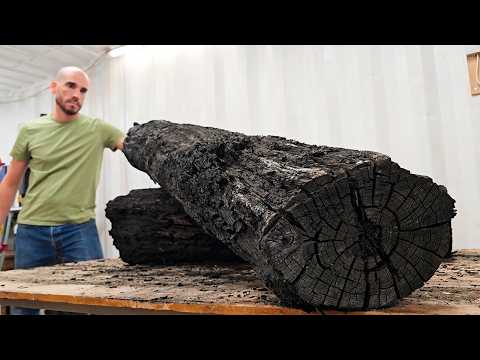
An old ponderosa pine log loaded with concentrated pitch provides the key ingredient for a remarkably simple fire-starting method. Rather than chopping the resin-rich wood into conventional pieces of fatwood, the approach is to run a chainsaw with the grain and collect the long, loose wood “noodles” it produces. The combination is clever: fatwood already burns readily, while the stringy material provides plenty of space for airflow once ignited.
The explanation of why this particular log is useful gives the project more substance than a basic demonstration. Darker sections are identified as wood containing concentrated resin, with the pitch credited for helping preserve portions of the old log while surrounding material has rotted away. The discussion also notes that pine can concentrate resin around damaged areas. These explanations are presented confidently and make intuitive sense within the demonstration, although the more specific biological claims about resin movement and preservation are not independently substantiated here.
Technique is where the presentation becomes especially useful. Cutting parallel to the wood fibers produces long shavings rather than the finer material created by cross-cutting, and the difference is clearly connected to performance: loose noodles allow more air between the pieces, whereas fine sawdust packs together more tightly. The creator also emphasizes that ordinary dry wood can be used when resin-rich pine is unavailable, making the underlying method more accessible even if the premium version depends on finding suitable fatwood.
There is also a worthwhile practical discussion about ripping wood with a chainsaw. The creator pushes back against claims that cutting with the grain inherently damages chains, bars or saws, citing his own long experience doing it with both hardwood and softwood. That is useful firsthand perspective, but it remains anecdotal rather than a detailed examination of chainsaw wear or cutting technique. Given that a chainsaw is central to the method, more explicit attention to safe handling and appropriate equipment would have strengthened the instructional value.
The eventual fire demonstration validates the basic concept convincingly. Only a small amount of the prepared material is needed, and the loose resinous shavings ignite vigorously enough to show why the creator considers them unusually effective. Just as importantly, the limitations are acknowledged rather than hidden: pitchy pine may be difficult to obtain, the noodles are bulky to store, and loose shavings create a mess. Cutting solid fatwood into smaller pieces is suggested as a more compact alternative for vehicles, camping or emergency use.
A playful tone keeps what could have been a very short workshop tip entertaining, particularly through jokes about the smell of resinous pine and its supposed powers as a substitute for cologne. The humor gives the presentation personality, but the fragrance jokes run considerably longer than the underlying point requires. Likewise, the trip up the mountain and storm debris provide some setting without adding much to the core instruction. The result is an engaging demonstration whose central idea is genuinely practical, even if a tighter edit and stronger safety emphasis would make it a better instructional resource.
Pros
- Combining resin-rich fatwood with long chainsaw-produced shavings creates a simple fire starter with both highly combustible material and good airflow.
- The distinction between cutting with and across the grain clearly explains how to produce the desired loose “noodles.”
- An actual ignition demonstration provides practical evidence that a small quantity can start a fire effectively.
- Ordinary dry wood is offered as an accessible alternative when pitch-rich pine is unavailable.
- Storage, mess and availability drawbacks are openly acknowledged, along with a more compact solid-fatwood option.
Cons
- Biological explanations about resin concentration and preservation are presented without supporting evidence beyond observations of the old log.
- The discussion of chainsaw ripping relies mainly on personal experience rather than a detailed treatment of technique, wear or safety.
- Extended jokes about the wood's fragrance add personality but noticeably stretch a straightforward demonstration.
- A process centered on chainsaw use would benefit from more explicit safety guidance.
A smart combination of fatwood and loose, airflow-friendly shavings turns a familiar natural fire starter into a particularly practical homemade version. The demonstration makes a persuasive case for its effectiveness while honestly acknowledging its bulk and mess, though stronger chainsaw safety guidance and tighter editing would improve an otherwise useful presentation.