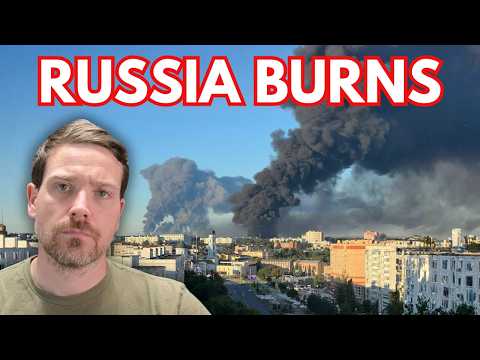
Ukraine's Third Army Corps reportedly reversed months of Russian territorial advances near Lyman through a coordinated offensive combining mechanized assaults, infantry infiltration, electronic warfare, and unmanned ground vehicles. Operation Vivaldi targeted positions held by Russia's 20th Combined Arms Army, particularly its vulnerable bridgehead around the Zherebets River. The presentation examines how Ukrainian forces exploited weaknesses in Russian defenses while questioning whether the territorial gains justified the considerable losses incurred. Rather than accepting either military's official narrative, the analysis attempts to reconstruct the operation through battlefield footage, geolocated strikes, satellite imagery, and competing accounts.
The historical and geographical background establishes why this sector mattered to both armies. Russian forces had spent approximately 18 months expanding their positions toward Lyman, threatening Ukrainian supply routes and potentially creating opportunities to advance toward Izium. By spring 2026, Ukraine's Third Army Corps faced the challenge of protecting critical transportation corridors while defending a broad front against Russian formations. Detailed maps and explanations of Russian operational objectives help clarify the significance of settlements such as Novoselivka, Shandryholove, and Kolodiazi. However, the sheer number of locations, military formations, and directional movements occasionally makes the narrative difficult to follow without close attention to the accompanying maps.
The examination of Ukraine's initial mechanized assault on May 22 provides one of the most informative sections. Ukrainian forces reportedly used reconnaissance teams, mine-clearing robots, explosive-laden unmanned ground vehicles, and electronic warfare to weaken Russian positions before deploying infantry. The analysis considers how disrupting conventional Russian drones may have enabled Ukrainian vehicles to approach defensive positions, although fiber-optic drones continued inflicting losses. Importantly, the presenter acknowledges that several Ukrainian armored vehicles were destroyed and that the available footage does not establish how many vehicles participated or completed successful missions. This willingness to examine battlefield achievements alongside equipment losses adds substance to an otherwise enthusiastic account of Ukrainian tactical innovation.
Small-unit infiltration becomes the central explanation for Ukraine's subsequent territorial gains. Teams reportedly moved through forests, gullies, and tree lines to exploit gaps in Russian defenses, gradually penetrating positions that had previously resisted conventional attacks. The presentation makes effective use of Russian Telegram reports, drone-strike locations, and satellite imagery to reconstruct these movements over several months. Particularly interesting is the examination of satellite-detected craters as potential indicators of changing front lines. Yet the presenter eventually demonstrates why this technique cannot establish territorial control independently: explosions could originate from Russian or Ukrainian artillery, aerial bombs, or explosive unmanned vehicles. This methodological discussion is valuable, although earlier conclusions about Russian positions sometimes sound more definitive than the evidence warrants.
The treatment of competing propaganda claims provides another important dimension. Ukrainian commander Andriy Biletsky's statements about captured Russian personnel receive scrutiny when footage presented alongside a claim of 250 prisoners appears to show approximately 60. The discrepancy raises legitimate questions about what the available images actually verify, although showing fewer prisoners than claimed does not necessarily disprove the larger figure. Russian announcements, flag-raising demonstrations, and disputed territorial claims receive similar skepticism. The presenter also questions whether certain Ukrainian assault footage may have been recorded months before its release, illustrating the difficulty of establishing accurate timelines from selectively published military videos. These observations reinforce the need to distinguish documented battlefield activity from military public relations, even if the commentary sometimes undermines its measured approach with ridicule and exaggerated language.
Casualty estimates and equipment losses introduce a necessary examination of the offensive's human and material costs. The presenter counts reported Ukrainian fatalities and destroyed vehicles from Russian drone footage while considering additional losses attributed to other Russian formations and the Rubicon drone unit. The discussion also examines Ukrainian claims of more than 8,000 Russian casualties and hundreds of prisoners without treating those figures as independently verified. However, combining visually confirmed losses, uncertain strike outcomes, and military-reported totals creates a risk of misleading comparisons. The claim that every destroyed Ukrainian ground robot represents a saved human life is understandable as an argument for unmanned logistics, but it cannot be established for every vehicle lost. The analysis is strongest when it emphasizes the incomplete nature of casualty documentation rather than attempting to derive precise battlefield totals from fragmented evidence.
The concluding strategic assessment complicates the initial portrayal of an overwhelming Ukrainian victory. According to the presentation, Operation Vivaldi substantially reduced Russia's bridgehead, shortened the contested front, and helped protect Ukrainian supply routes around Lyman. Nevertheless, some Russian positions reportedly remained west of the river, while Ukraine faced the challenge of sustaining its gains with limited manpower and reduced vegetation cover during autumn. The possibility that Russia prioritized other operational directions, or even benefited from exhausting Ukrainian forces in a less important sector, offers a useful alternative interpretation. These possibilities remain speculative, but they prevent the analysis from reducing the battle to territorial gains alone. Unfortunately, the lengthy VPN sponsorship near the beginning and frequent jokes about military humiliation interrupt an otherwise detailed presentation, sometimes making a devastating conflict feel unnecessarily sensationalized.
Pros
- Provides extensive geographical and operational context explaining why the Russian bridgehead and Ukrainian supply routes around Lyman were strategically important.
- Reconstructs the offensive through detailed maps, geolocated battlefield footage, Russian military reports, and satellite imagery.
- Explains the coordinated use of infantry infiltration, electronic warfare, mechanized assaults, and unmanned ground vehicles in overcoming defensive positions.
- Critically examines Ukrainian and Russian territorial claims, propaganda releases, and discrepancies between reported prisoner totals and visible evidence.
- Acknowledges the limitations of satellite crater analysis, particularly the difficulty of identifying which military conducted individual strikes.
- Examines Ukrainian personnel and equipment losses rather than presenting territorial gains as an uncomplicated victory.
- Considers whether Russia's changing strategic priorities and Ukraine's manpower constraints could affect the operation's longer-term significance.
Cons
- The opening characterization of an entire Russian army being crushed exaggerates what the subsequent analysis establishes about the scale of Russian losses and remaining positions.
- Frequent jokes, theatrical reactions, and ridicule undermine the seriousness of the casualties and occasionally distract from the military analysis.
- Some conclusions about Russian manpower shortages, command decisions, electronic warfare effectiveness, and territorial control rely heavily on circumstantial evidence.
- Casualty calculations combine independently observable events with uncertain outcomes and unverified military reports, limiting the reliability of the overall estimates.
- The extensive geographical detail and repeated movement between dates, settlements, and military formations sometimes weaken narrative clarity.
- The lengthy VPN advertisement disrupts the opening, while its flight-price comparison lacks sufficient context to establish reliable savings.
- Speculation about a deliberate Russian strategy to exhaust Ukrainian forces is intriguing but receives little direct supporting evidence.
Operation Vivaldi emerges as a significant Ukrainian battlefield achievement whose operational value deserves consideration alongside its substantial and incompletely documented costs. The presentation succeeds through ambitious battlefield reconstruction, useful technical explanations, and a willingness to challenge official narratives from both sides. Although sensationalized commentary, occasionally overconfident interpretations, and uncertain casualty figures diminish its analytical precision, the result remains an informative examination of modern maneuver warfare and the challenges of determining what actually happened on a contested battlefield.