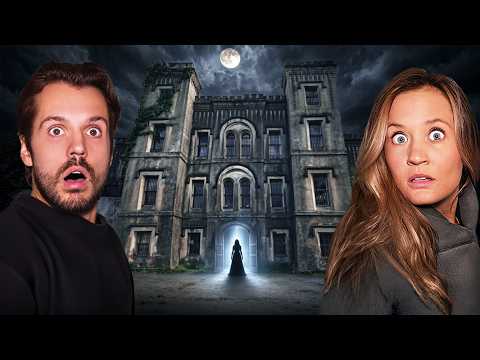
A young woman apparently vanishing from a running car during a routine traffic stop provides an unsettling opening to this collection of mysterious encounters. The officer's confusion, the empty driver's seat, and footage presented from a second camera angle establish an intriguing mystery without offering a convincing explanation. It is an effective introduction to the compilation's central approach: presenting unusual recordings, emphasizing witnesses' reactions, and inviting viewers to decide whether something supernatural has occurred. However, the absence of meaningful verification makes the apparent disappearance more of a provocative mystery than persuasive evidence of paranormal activity.
The encounter inside a Wisconsin church takes the compilation in a noticeably different direction. Deputies respond to a man behaving erratically, claiming to be Jesus Christ, throwing candles, and physically resisting attempts to restrain him. Unlike the opening disappearance, this incident presents a recognizable law enforcement situation involving unpredictable behavior and an escalating confrontation. The footage offers insight into the difficulty officers can face when responding to someone experiencing an apparent behavioral crisis. However, the suggestion of paranormal significance is particularly weak here. Nothing presented establishes a supernatural cause, and the man's behavior alone cannot support conclusions about possession, intoxication, or a specific medical condition.
The haunted-house accounts introduce a more traditional style of paranormal storytelling, particularly through the experiences of a homeowner known as cigarette spaghetti. His discovery of bones, teeth, and a horseshoe concealed inside a basement wall creates an intriguing starting point for subsequent recordings of moving objects, a shadowy figure, apparent flames near a Bible, and a piano key pressing itself. The sequence builds suspense effectively by connecting increasingly disturbing incidents to a single location. Nevertheless, the alleged relationship between the concealed objects and later disturbances remains speculative. Without clearer documentation of the recordings' authenticity or reasonable alternatives, the supernatural interpretation depends heavily on the homeowner's account.
Other domestic encounters rely on smaller details that become disturbing through repeated viewing. A teenager's late-night fall down the stairs attracts attention because viewers notice two unexplained shapes elsewhere in the house, while Raymond's recordings of his ill mother focus on upward-reaching gestures, a nurse's seemingly lifted hair, and a mysterious bulge beneath bedding. Raymond's discovery that his mother's mattress had been refurbished adds an unexpected factual development, but it does not establish a connection to the reported activity. These segments benefit from their ordinary settings and personal perspectives, although shadows, camera limitations, unnoticed movements, and other mundane possibilities receive insufficient consideration.
The account involving Arkansas Boy and his daughter's toy cars offers one of the compilation's more distinctive personalities. Rather than responding with theatrical panic, the father appears unsettled but curious as he watches toys move, questions an alleged spirit called Ghost Malone, and experiments with blessed water and salt after receiving suggestions online. His conversational reactions make the footage entertaining and give the situation an unusually informal atmosphere. Importantly, the narration briefly acknowledges the possibility of an elaborate hoax. That skepticism is welcome, but the segment still treats the apparent responsiveness of moving objects as more significant than the available evidence can justify.
The final investigation follows Terry through a dark, unfamiliar building associated with her partner Josh's previous security work. Her increasing distress, difficulty navigating the corridors, reports of a woman's scream, and apparent sighting of a stationary figure create a sustained atmosphere of anxiety. Josh's involvement through a live video feed adds another perspective, particularly when he reports hearing the same scream. The sequence works because the fear develops gradually rather than through a single dramatic reveal. Yet shared reports of unexplained sounds do not establish a ghostly presence, and the absence of independent investigation leaves important questions about the building, its occupants, and possible sources of the disturbances unanswered.
As a compilation, the presentation succeeds at maintaining suspense through varied settings, extended recordings, and narration that connects individual incidents into coherent stories. Its greatest structural weakness is the mismatch between its police-focused premise and the material actually included. Only the opening traffic stop and church confrontation directly involve law enforcement, while the remaining accounts primarily concern private homes and a paranormal investigation. The repeated rhetorical questions also become predictable, frequently substituting viewer speculation for meaningful evaluation. Ultimately, the compilation is more successful as atmospheric entertainment than as an examination of extraordinary claims, especially when suggestive editing and confident storytelling create impressions that the evidence itself does not establish.
Pros
- Opens with an intriguing apparent disappearance that immediately establishes suspense and encourages close attention to the footage.
- Includes an extended church confrontation that illustrates the unpredictability and practical challenges of a real-world police response.
- Builds effective suspense through the basement discovery, subsequent household disturbances, and the final exploration of an unfamiliar building.
- Features varied witnesses and personalities, particularly Arkansas Boy's relatively casual attempts to communicate with an alleged presence.
- Uses multiple recordings and developing narratives to give several encounters more substance than isolated frightening clips.
- Occasionally acknowledges uncertainty and the possibility of fabricated activity rather than presenting every incident as unquestionably supernatural.
Cons
- The police-focused premise is misleading because most of the compilation concerns household disturbances or independent paranormal investigations rather than law enforcement encounters.
- Provides insufficient authentication, independent corroboration, or technical analysis to establish the reliability of its most extraordinary recordings.
- Frequently implies supernatural explanations without adequately examining ordinary possibilities involving shadows, objects, camera limitations, or human activity.
- Includes a church incident involving apparent behavioral instability without presenting meaningful evidence that anything paranormal occurred.
- Connects unrelated discoveries and events, particularly the basement objects and refurbished mattress, through suggestive storytelling rather than demonstrated causation.
- Relies heavily on repeated unanswered questions and witness reactions, weakening its credibility as an investigation.
This compilation delivers an entertaining assortment of unsettling encounters, with enough variety and atmospheric storytelling to appeal to viewers who enjoy paranormal mysteries. Its strongest moments come from sustained recordings and natural reactions, but weak verification, speculative connections, and a misleading emphasis on police encounters undermine its investigative credibility. As supernatural-themed entertainment, it provides considerable suspense, although viewers seeking convincing explanations or reliable evidence will find the material much less satisfying.