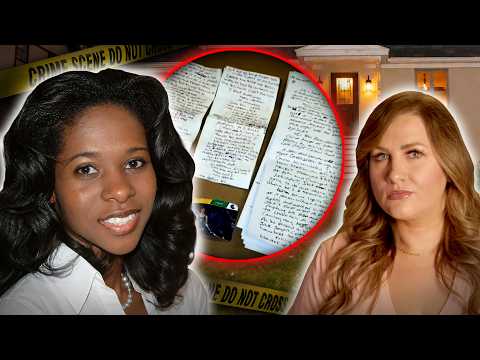
A forgotten blood sample, a series of mistaken Walmart prescription reminders, and a desperate false confession are among the extraordinary circumstances that helped investigators revisit murders that had remained unsolved for decades. Trusty Bro's Halloween special examines four disturbing cold cases, focusing on the unexpected developments that ultimately provided answers for victims' families. Rather than simply recounting violent crimes, the presentation emphasizes how new forensic technology, unusual coincidences, and determined individuals can change the direction of seemingly hopeless investigations. The result is an engaging collection of true-crime stories that balances genuine investigative developments with the narrator's occasionally sensational approach to storytelling.
The murder of University of Oklahoma student Julie Busken provides a particularly effective opening case, demonstrating both the limitations and eventual value of forensic evidence. Following her December 1996 disappearance, investigators struggled to identify a suspect despite collecting more than 200 DNA samples and examining several potential leads. The eventual breakthrough came when DNA collected from imprisoned burglar Anthony Sanchez matched evidence recovered from the crime scene. The narrator carefully establishes the investigative obstacles before explaining how Sanchez's proximity to Busken's apartment, firearm-related evidence, and matching DNA contributed to his conviction. However, the discussion sometimes overstates the certainty of individual forensic findings, particularly when describing DNA as a perfect match without explaining statistical probabilities or the limitations of different types of evidence. Sanchez's conviction and eventual execution also receive little examination beyond the narrator's presentation of the prosecution's case, despite his continued claims of innocence.
The Barbara Brown case introduces a dramatically different route to solving a murder, replacing forensic breakthroughs with an extraordinary psychological reaction. After living for approximately 17 years without confessing, Matthew Gibson reportedly became convinced that mistaken Walmart prescription notifications were connected to a woman he had killed in Arizona. His growing paranoia ultimately prompted him to travel from North Carolina to Arizona and confess. The narrator handles the unusual sequence with humor and disbelief, creating an entertaining contrast between an ordinary automated messaging error and its devastating consequences for someone concealing a violent crime. Nevertheless, the story relies heavily on Gibson's reported interpretation of the messages, and the suggestion that the notifications represented some mysterious connection is more atmospheric than evidential. The relatively brief discussion of his 10-year sentence also leaves important questions about the legal outcome unexplored.
Nicole van den Hurk's murder is arguably the most emotionally affecting investigation because of the extraordinary actions attributed to her stepbrother, Andy. After years without meaningful progress, Andy publicly claimed responsibility for Nicole's death, apparently hoping to force authorities to reopen the investigation. His subsequent arrest, questioning, and release brought renewed attention to the case, eventually contributing to a fresh investigation using improved forensic techniques. The narrator effectively conveys the desperation behind such an extreme decision while acknowledging the considerable legal and personal risks Andy faced. The eventual identification and conviction of a previously convicted violent offender gives the story a powerful resolution. However, the presentation occasionally compresses the complex investigative process into a straightforward narrative of technological progress and family determination, making it difficult to distinguish precisely which developments were decisive.
The discussion of Nicole's killer also illustrates one of the presentation's recurring weaknesses: the narrator's emotional reactions sometimes overshadow a more careful examination of legal outcomes. His frustration with the offender's sentence and previous opportunities for release is understandable, particularly considering the severity of the crimes described. However, the argument becomes a broader condemnation of criminal justice policies without examining the applicable laws, sentencing considerations, or circumstances surrounding previous convictions. Similar reactions appear in the discussions of other offenders, where moral outrage occasionally substitutes for legal context. These moments communicate genuine concern for victims but weaken the otherwise informative approach by encouraging conclusions that the information presented does not fully establish.
The final investigation, involving the 1988 murder of Gail Barrus in Michigan, provides a fitting conclusion by demonstrating how crucial evidence can remain overlooked even when investigators have already encountered the apparent perpetrator. Roger Plato was questioned in connection with other suspected assaults but was fatally shot during a confrontation with detectives, leaving investigators unable to pursue him further. Decades later, renewed examination of another suspect and the accidental rediscovery of Plato's preserved blood sample allowed modern DNA testing to connect him to evidence from the murder. The case effectively reinforces the importance of evidence preservation and systematic reviews of unresolved investigations. It also demonstrates an important distinction that the narration does not consistently maintain: identifying a deceased suspect through forensic evidence is not equivalent to establishing guilt through a criminal trial. The presentation's assertion that the case was conclusively resolved would benefit from more careful acknowledgment of that difference.
Across all four investigations, the narrator demonstrates a talent for constructing accessible, suspenseful narratives around complicated criminal cases. Chronological storytelling helps viewers understand how investigators initially approached each murder, why progress stalled, and what eventually revived the investigation. The variety of breakthroughs prevents the stories from feeling repetitive, while the closing acknowledgment of the victims and their surviving families provides a necessary reminder of the human tragedies behind the unusual circumstances. Still, the lengthy opening sponsorship, occasional jokes surrounding disturbing events, repeated expressions of disbelief, and mid-video engagement request interrupt the otherwise effective pacing. More importantly, the introductory cold-case statistics are presented without sufficient methodological explanation, and the lack of clearly identified sources throughout makes independent assessment of the more extraordinary claims difficult. The presentation succeeds as compelling true-crime storytelling, but its investigative credibility would be stronger with more restrained language and clearer distinctions between established findings, reported accounts, and the narrator's interpretations.
Pros
- Presents four distinct murder investigations with genuinely unusual developments, including forensic breakthroughs, an unexpected confession, a calculated false admission, and rediscovered physical evidence.
- Uses clear chronological storytelling to explain the original investigations, prolonged periods without progress, and circumstances that eventually produced new leads.
- Effectively demonstrates the importance of improved DNA analysis and preserved evidence in revisiting decades-old criminal investigations.
- Gives meaningful attention to Andy's extraordinary efforts to revive the investigation into Nicole van den Hurk's murder, providing a particularly memorable human element.
- Maintains suspense through contrasting investigative circumstances rather than relying on the same explanation for every case.
- Acknowledges the suffering of victims' families and emphasizes that the unusual circumstances surrounding these investigations should not overshadow the seriousness of the crimes.
Cons
- Presents cold-case statistics and some forensic conclusions with excessive certainty, without adequately explaining their sources, methodology, or limitations.
- Occasionally treats reported confessions, forensic associations, and investigative conclusions as more definitive than the evidence described necessarily establishes.
- Emotional criticism of criminal sentencing policies lacks sufficient legal context to support the narrator's broader conclusions.
- Humor, sensational phrasing, and repeated expressions of disbelief sometimes undermine the gravity of the subject matter.
- Sponsorship and audience-engagement interruptions disrupt the pacing, while limited source identification makes several extraordinary details difficult to independently evaluate.
Trusty Bro delivers an absorbing examination of four tragic murders whose investigations took remarkable and often unexpected turns. The accessible storytelling, varied investigative breakthroughs, and attention to victims' families make the presentation worthwhile, particularly for viewers interested in how long-dormant cases can regain momentum. Although greater forensic precision, stronger sourcing, and more measured commentary would improve its credibility, the special remains an engaging reminder that even decades of investigative failure do not always prevent important answers from emerging.