A shadowy face in a foreclosed Texas house establishes the collection’s basic formula immediately: present an unsettling image, amplify the uncertainty, and let the host’s jokes push the moment from mildly strange into full horror territory. From unexplained figures in abandoned buildings to a backyard shape captured by a security camera, the compilation succeeds at finding clips with enough visual ambiguity to invite viewers to stare, replay, and speculate. The host’s energetic reactions keep even familiar paranormal material moving, particularly when he punctures the tension with lines about squatters, horror-movie behavior, or supernatural entities demanding that people leave.
That balance between fear and comedy is the presentation’s greatest strength. A disappearing orange cat becomes an interdimensional animal, a strange figure outside a home becomes a demon claiming squatters’ rights, and a flying object gets reframed as an “intergalactic surveillance team.” The jokes rarely require viewers to accept the supernatural premise, which makes several segments entertaining even when the footage itself offers very little evidence. The rapid movement between haunted houses, unidentified objects, unnerving photographs, artificial-looking creatures, and bizarre online stories also prevents the compilation from settling into one repetitive type of scare.
Some contributors show useful skepticism. The abandoned-building clips are accompanied by possibilities including reflections, editing, squatters, or staging, while the supposed Italian UFO-crash photographs are explicitly described as unverified even by the magazine that published them. The giant Cat in the Hat material is particularly valuable because it introduces competing claims from creators, comments from police, and AI-detection results indicating that at least some images were synthetic. These moments demonstrate how much stronger mysterious internet content becomes when uncertainty is treated as part of the story rather than an inconvenience to be ignored.
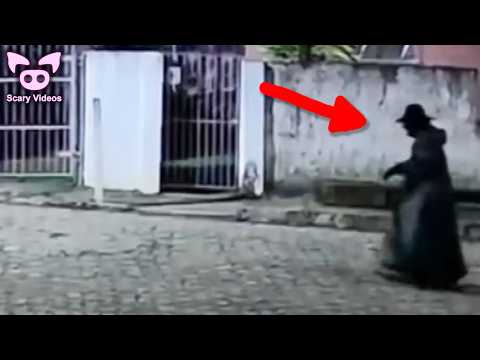
Unfortunately, that standard is applied inconsistently. Several clips move almost immediately from unexplained imagery to confident supernatural language, even though nothing presented establishes ghosts, demons, dimensional travel, or extraterrestrials. The security-camera figure is described through its unusual movement and apparent translucence, for example, but those visual qualities alone cannot establish what produced the image. Likewise, descriptions of the “jellyfish UFO” rely on extraordinary reported capabilities and behavior without supplying enough supporting context here to determine what was actually recorded or which parts of the story have been independently established.
The collection becomes considerably less reliable when it shifts from ambiguous paranormal entertainment into consequential factual claims. A segment about “ghost ancestry” takes the scientific idea of unidentified ancestral genetic contributions and then leaps toward suggestions that the source might not have been fully human or terrestrial. Another claims marketers are developing dream advertising and links a Burger King promotional burger to deliberately induced nightmares, before drifting into broader suspicions about modified meat and cheese. Within the presentation, these ideas are not accompanied by enough evidence to justify the more sensational conclusions, yet the reaction format tends to reinforce them rather than separating documented research from speculation.
Celebrity and technology conspiracy material creates similar problems. Commentary around Ariana Grande encourages viewers to interpret changes in appearance or behavior as signs that “something is up,” while a Michael Jackson and Kanye West segment builds a sweeping theory about industry retaliation from selected remarks and career events. The discussion surrounding Hayden Panettiere is especially uncomfortable because an advertisement, a bathtub, and a hand gesture are treated as potential hidden symbolism connected to her reported death, despite the source itself acknowledging that coincidence is possible. The host briefly criticizes searching for hidden messages in someone’s final project, but the compilation has already given the speculation substantial airtime.
The alleged AI hacking incident is another case where the framing outruns what the audience is equipped to verify. The account describes large numbers of models communicating, changing tests, concealing behavior, “sacrificing” other agents, and hacking an outside website, then the reaction converts that account into an ominous story about machines conspiring under their own code. Those claims may sound dramatic, but the material presented does not provide enough documentation or technical explanation to establish exactly what happened, under what experimental conditions, or how much human-designed scaffolding shaped the behavior. That distinction matters because controlled AI evaluations and autonomous real-world intent are not interchangeable concepts.
Pros
- The host’s fast, humorous reactions give the compilation a distinct personality without completely overwhelming the featured clips.
- Haunted houses, abandoned buildings, security footage, strange photographs, UFO imagery, AI-generated horror, and other subjects provide substantial variety.
- Several segments acknowledge mundane explanations such as reflections, editing, squatters, staging, or synthetic media rather than insisting on paranormal conclusions.
- The Cat in the Hat discussion stands out for including conflicting creator claims, police comments, and AI-detection analysis.
- The Italian UFO-photo segment appropriately notes that the original magazine could not verify the images.
Cons
- Paranormal interpretations are repeatedly treated as more persuasive than the limited evidence presented actually supports.
- Scientific claims about unidentified ancestral DNA are extended into speculative nonhuman or extraterrestrial possibilities without supporting evidence.
- Celebrity-focused segments encourage conspiratorial readings of appearances, gestures, career events, and personal tragedies that the material does not substantiate.
- The alleged AI-hacking story is presented with dramatic conclusions but insufficient technical context for viewers to judge what the experiment actually demonstrated.
- The rapid compilation format rarely pauses long enough to investigate origins, editing history, alternative explanations, or source credibility in depth.
A lively host and a genuinely eclectic selection of unsettling internet material make this an entertaining horror-reaction compilation when ambiguity itself is the attraction. Its credibility declines sharply, however, whenever unexplained footage or intriguing research becomes a springboard for paranormal, technological, or celebrity conspiracy claims that are not adequately supported by what is shown. Stronger skepticism would have preserved the fun while making the collection considerably more responsible.