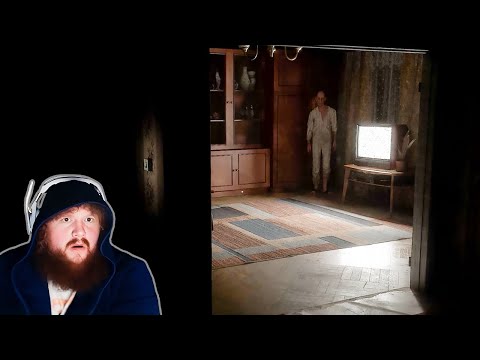
Yellow residue glowing under ultraviolet light in a newly rented bathroom sets the tone immediately: something ordinary becomes disturbing once context disappears. From there, the compilation moves quickly through unsettling security footage, alleged paranormal encounters, strange skies, unidentified objects, folklore, cursed dolls, unexplained reflections, Mars imagery, and supposed UFO symbolism in historic paintings. The rapid escalation gives the episode plenty of variety, but it also means plausible explanations and extraordinary claims often sit side by side with little separation between them.
The host’s biggest strength is his ability to puncture the more breathless clips with comedy. A suspicious figure rocking inside a parked car becomes someone “buffering in real time,” an alleged airborne object is compared to a trash can, and the apocalyptic pink sky over China is treated as an alien invasion sponsored by Barbie. These reactions keep the material entertaining and prevent the compilation from becoming relentlessly grim. The humor also occasionally functions as useful skepticism, particularly when the host dismisses elaborate numerology surrounding Dolly Parton as little more than late-night pattern hunting.
Some segments are noticeably stronger because they acknowledge ordinary explanations. The unusual red sky is paired with an atmospheric-scattering explanation involving sunrise, moisture, and approaching storm clouds. The distorted face captured during an investigation at The Cage is presented alongside possibilities such as lighting, camera artifacts, or facial movement. A strange object photographed by the Curiosity rover is likewise discussed as potentially being a sensor artifact rather than immediately declared extraterrestrial. Those moments demonstrate that the format can remain eerie without pretending that ambiguity itself proves something supernatural.
That restraint disappears in several other sections. A woman allegedly standing for hours despite supposedly being unable to stand is presented largely as paranormal horror without meaningful medical or contextual information. The Cambodia factory footage jumps from vague moving shapes to speculation about lingering entities and accumulated negative energy. The strange voice heard during coverage of Queen Elizabeth II’s funeral escalates even further into Princess Diana, reptilian claims, and shapeshifting imagery, none of which receives credible supporting evidence. The host sometimes mocks these narratives afterward, but the underlying clips are still given substantial airtime before their factual weaknesses are addressed.
Robert the Doll is one of the better storytelling segments because the legend is clearly framed as a legend rather than demonstrated fact. The history recounted includes stories of movement, voices, misfortune, apology letters, and visitors supposedly suffering after disrespecting the doll, but the presentation generally attributes these claims to owners, visitors, or folklore. That distinction matters. The resulting story remains creepy while leaving room for viewers to recognize that repeated anecdotes and displayed letters show belief in the curse, not proof that a curse exists.
The weakest material comes when visual ambiguity is treated as evidence of increasingly elaborate conclusions. A face apparently visible inside a car could plausibly involve reflection or perspective, which the host himself suggests, while a Mars image is interpreted by another commentator as potentially resembling a probe or UFO despite also conceding imaging artifacts. The closing discussion of medieval and Renaissance paintings is even more speculative, repeatedly interpreting traditional religious imagery as spacecraft because shapes resemble modern UFO depictions. Questions about what painters “must have seen” are presented rhetorically, but resemblance alone cannot establish that the artists were documenting extraterrestrial craft.
As entertainment, the episode succeeds through momentum, strong clip selection, frequent reactions, and a good instinct for finding images that provoke an immediate response. As an investigation of unexplained phenomena, it is much less consistent. The best passages distinguish folklore, speculation, optical ambiguity, and natural explanations; the weaker ones rely on ominous narration, social-media testimony, and pattern recognition without enough effort to verify what viewers are actually seeing.
Pros
- The compilation offers substantial variety, moving between security footage, folklore, alleged hauntings, unusual weather, unexplained images, and historical artwork without lingering too long on one subject.
- The host’s jokes frequently provide useful skepticism and keep sensational material from becoming excessively self-serious.
- Several segments explicitly acknowledge natural, technical, or photographic explanations rather than treating mystery as automatic evidence of the paranormal.
- Robert the Doll is presented effectively as a collection of legends and reported experiences rather than as conclusively proven supernatural activity.
- The pacing and reactions make even weaker mystery clips consistently watchable.
Cons
- Extraordinary claims involving ghosts, shapeshifting, curses, alternate dimensions, and extraterrestrials are often given more dramatic attention than their supporting evidence justifies.
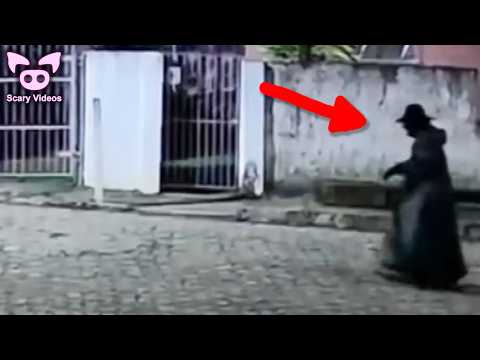
- Some clips lack enough context to evaluate crucial claims, particularly the supposedly immobile caretaker patient and several security-camera incidents.
- The Queen’s funeral segment escalates from an unexplained audio anomaly into unsupported Princess Diana and reptilian conspiracy speculation.
- Ambiguous imagery from Mars and historical paintings is repeatedly interpreted through UFO assumptions that are not established by the visuals themselves.
- Comedy sometimes substitutes for deeper analysis when a more careful examination of editing, reflections, camera artifacts, or source reliability would be more informative.
The compilation is strongest as a fast, funny tour through internet mysteries rather than a serious attempt to determine what actually happened in each clip. Its willingness to mention mundane explanations improves several segments, but that skepticism is applied too inconsistently to balance the more sensational paranormal and UFO claims. As creepy entertainment it works well; as evidence-based investigation, it remains decidedly uneven.