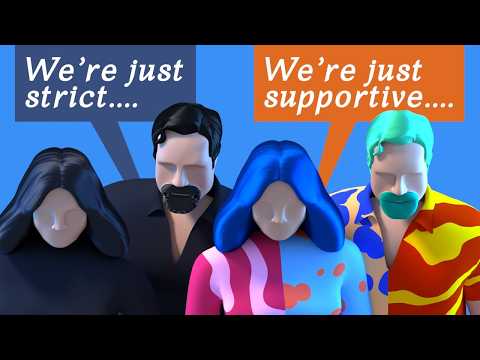
The appeal of this examination of parenting trends on social media comes from its focus on the tension between celebrating children and respecting the people around them. Rather than simply criticizing parents or defending every complaint about modern parenting, the video looks at a range of viral examples involving education choices, public behavior, and expectations placed on strangers.
A major strength is that the discussion often recognizes the difference between children behaving naturally and parents failing to set boundaries. The video repeatedly acknowledges that young children will make noise, have tantrums, or become excited, while questioning situations where adults appear to ignore disruptive behavior in public spaces. This distinction gives the commentary a stronger foundation than simply mocking children for being children.
The section on alternative education highlights one of the video’s broader themes: disagreements about parenting philosophies. The criticism of interest-led learning is presented from the perspective that children need exposure to basic skills and structured learning, although the discussion does not deeply explore the variety of homeschooling approaches or the evidence behind different educational methods. The point is more about frustration with perceived extremes than a complete analysis of education.
The video is also effective when discussing the way some parents frame ordinary interactions online. Examples involving children saying hello to strangers, requests for special treatment, or assumptions that others should accommodate their children are used to examine how personal pride can become entitlement. However, some reactions occasionally lean toward assuming the worst intentions from parents rather than considering that some posts may simply represent awkward attempts to share positive experiences.
The strongest parts of the presentation come from moments where the creator separates reasonable requests from demanding behavior. The discussion of family parking spaces and public courtesy, for example, recognizes that some accommodations exist for practical reasons while still criticizing the attitude that strangers automatically owe parents special consideration. This balanced approach helps avoid turning every parenting-related disagreement into a simple argument about whether parents or non-parents are right.
The commentary style is energetic and heavily driven by humor, which keeps the large collection of examples engaging. At times, though, the fast pace and sarcastic reactions make the analysis feel more like a collection of internet disagreements than a deeper look at why these conflicts happen. A more structured discussion of parenting pressures, social media incentives, and changing expectations could have added more context.
The video ultimately works best as a critique of online parenting culture rather than parenting itself. Its strongest arguments are aimed at performative posts, public entitlement, and situations where children’s behavior becomes content instead of an opportunity for guidance. While some conclusions are based on limited clips and the creator’s interpretation of events, the broader discussion raises legitimate questions about boundaries, responsibility, and the way social media rewards controversy.
Pros
- Distinguishes between normal child behavior and situations where parents fail to provide guidance or boundaries.
- Examines how social media can encourage performative parenting and entitlement.
- Balances criticism of parents with acknowledgment that children naturally make mistakes and create challenges.
- Uses humor and relatable examples to make discussions about public behavior accessible.
Cons
- Some judgments rely heavily on interpreting short viral clips without full context.
- The discussion could provide more nuance about different parenting and education approaches.
- The rapid, comedic format sometimes limits deeper exploration of the issues being criticized.
This is an entertaining look at how parenting disagreements become amplified through social media, especially when everyday moments are turned into public statements. While some arguments would benefit from more context and less assumption about individual motives, the video succeeds at highlighting the importance of balancing children’s needs with consideration for others.