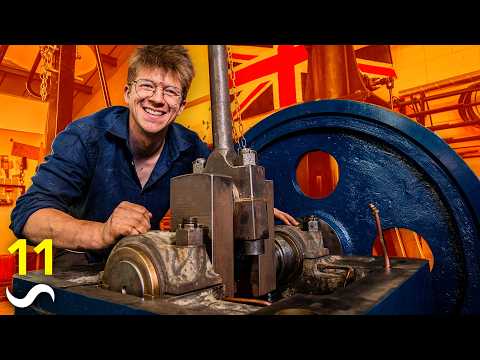
Removing decades of neglect from a 1958 Massey Clear Space power hammer reveals the difficult reality behind ambitious restorations: making something look clean is only the beginning. The project moves beyond surface improvements as the focus turns to hidden wear, seized components, and the difficult decisions required before the machine can ever return to service.
A major strength of this episode is the attention given to inspection rather than simply rushing toward a finished product. The crankshaft, bearing surfaces, and journals receive careful examination, with measurements used to determine the amount of wear present. While some conclusions about what can safely be reused come from consultation and personal judgment rather than formal engineering documentation, the process shows a genuine attempt to understand the condition of the machine before rebuilding it.
The restoration also benefits from the creator’s willingness to show setbacks and uncertainty. Removing parts such as tapered pins, the treadle, and other seized components becomes a long battle involving heat, drilling, lifting equipment, and persistence. Instead of presenting restoration as a straightforward transformation, the episode captures the frustration, improvisation, and problem-solving that often define work on old machinery.
The mechanical details provide some of the most interesting moments. Discovering features such as the deeply drilled oil passage and examining the simple bronze bearing design gives viewers a closer look at how older industrial equipment was constructed. The episode succeeds at making these discoveries feel meaningful, even for viewers who may not have extensive knowledge of power hammers.
Safety and preparation are treated with a mixture of seriousness and humor. Heavy lifting, sharp edges, awkward access points, and working beneath a large machine all create real hazards, and the project does show some awareness of those risks through careful positioning and support. However, the casual tone occasionally moves quickly past the full complexity of working around extremely heavy machinery.
The presentation remains engaging because the restoration is supported by personality, teamwork, and a strong sense of community. Help from neighbors and friends becomes an important part of the process, turning what could have been a solitary mechanical project into a shared effort. The humor and emotional investment make the lengthy disassembly process entertaining rather than purely technical.
The episode’s main limitation is that it is largely focused on taking the machine apart rather than demonstrating completed restoration progress. Viewers looking for a finished power hammer or detailed repair solutions will have to wait, as many major decisions about machining, grinding, and rebuilding remain unresolved. Still, the careful documentation of problems provides a strong foundation for the future stages of the project.
Pros
- Provides a detailed and honest look at the challenges of restoring a large industrial machine, including mistakes, uncertainty, and difficult decisions.
- Shows impressive mechanical investigation through inspections, measurements, cleaning, and disassembly of complex components.
- Maintains an engaging balance of technical work, humor, and teamwork throughout a demanding restoration process.
- Highlights the craftsmanship and engineering behind older machinery through close examination of its construction and design.
Cons
- Much of the episode focuses on disassembly, leaving the actual repairs and restoration results for future installments.
- Some decisions about component condition and reuse rely on personal judgment and outside advice rather than clearly documented technical standards.
- The casual approach to heavy machinery hazards sometimes provides less detail about safety procedures than the situation deserves.
This installment succeeds as a compelling look at the difficult middle stage of a major restoration, where patience and problem-solving matter more than quick visual progress. The power hammer’s revival remains uncertain, but the careful inspection and determined effort make the journey itself worthwhile.