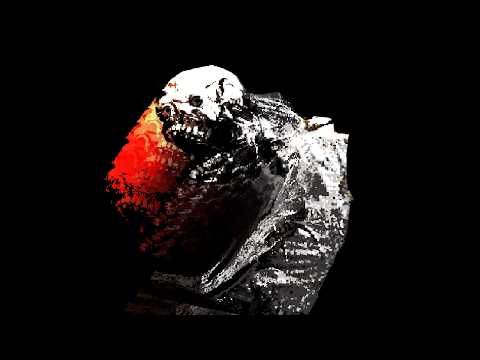
A row of upright bricks tips forward a little at a time, then collapses backward once the last brick has room to fall. The team tries it with real bricks before recreating it digitally, where the row disappears flush into the ground. That final click gives the challenge’s return to basics a concrete purpose. A movement you can understand at a glance still has room to surprise you.
The brick render also gets the clearest explanation of how to make a loop. The camera returns to a matching view after passing four rows, but the ground still jumps at the cut because its texture changes. Seeing why the first attempt fails makes the fix easy to follow. The artist has to match the texture’s repeat to the camera’s travel, a small adjustment that lets the eye stay on the falling bricks.
Sam’s skating elf takes a similarly practical route to a more whimsical result. An attempt to simulate tearing pulls apart the wrong parts of the wrapping paper, so he starts with two pieces and lets the skate push them apart. Keeping the paper flat ahead of the blade preserves the familiar pleasure of scissors gliding through a sheet. The little wobbles in the elf’s foot, drawn from Sam acting out the skating himself, give the cut some personality.
Shane’s fingerboard routine builds its rhythm through sound as much as polished animation. He studies tricks, films his own hands, and records sounds with objects including a baseball bat and a piece of wood. The judges pick up on the bounce and momentum in the hand, which gives their enthusiasm some substance. Shane mentions leaving a few issues in the finished render, though, and the screening passes without identifying any of them.
Dean’s robot and shape sorter gives the judges a different kind of payoff. The changing angles let viewers recognize how the same block can fit three different openings, and a slight slowdown as it slips through sells the snug fit. One judge spots the shavings the robot leaves behind and wants it to sweep them up, a funny and specific objection in a contest devoted to visual closure. The recurring jokes about the shape’s name do less for the sequence, especially once the render has made the idea clear.
The judges are at their best when they point out details worth watching again, like the brick row coming into focus just before the cascade. As a competition, the ending is looser. Smooth looping gets named as a criterion, but there’s little comparison of how well the entries loop, and Griffin’s preference for Dean’s render leads into a call for viewers to choose in the comments. The hardware promotion also breaks up the build segments, while a second plug for the keying tool takes over the closing moments.
Pros
- The real brick demonstration makes the backward cascade easy to understand before the digital version adds a flush finish.
- The ground texture fix explains why a camera loop can still produce a visible cut.
- The wrapping paper sequence shows how a simpler simulation can produce a more convincing bend and separation.
- The fingerboard build gives sound design enough attention to show what the recorded impacts add to each trick.
- The judges notice small details such as the resistance of the block and the elf’s unsteady foot.
Cons
- The hardware promotion interrupts the builds, and the keying tool gets another plug at the close.
- The shape-name jokes keep going after the puzzle is clear.
- The fingerboard screening leaves Shane’s mention of known issues unresolved.
- The judging gives smooth looping little comparative attention before handing the decision to viewers.
The workshop footage makes these short renders worth lingering over because it shows how much judgment goes into getting a single movement right. The competition could use a firmer finish, but the four entries offer enough variety to make choosing a favorite part of the fun.