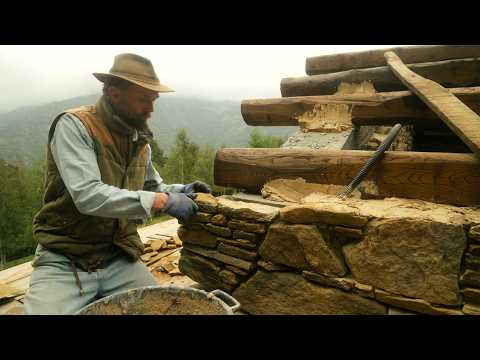
The video explores a region often reduced to simple stereotypes by focusing instead on everyday interactions with the people who call Southwest Virginia home. Its greatest strength is the creator’s willingness to arrive without a fixed narrative and allow conversations to shape the journey, creating a portrait that is more personal than a typical travel documentary. Rather than presenting Appalachia as only a story of hardship, the video highlights the complexity of a place where economic struggles exist alongside strong community ties, traditions, and pride.
The early encounters with local residents set the tone for the entire journey. Conversations with longtime residents reveal a deep sense of faith, family loyalty, and connection to the area, while also showing the realities of aging communities and declining opportunities. These moments work because they feel focused on individual experiences rather than treating the region as a single stereotype. The warmth between the people featured becomes one of the strongest elements of the presentation.
The video also examines the impact of the coal industry’s decline, connecting disappearing jobs and shrinking towns to broader economic challenges. Some explanations about the causes of these changes come from residents’ personal perspectives rather than a fully researched economic analysis, so they should be viewed as local viewpoints rather than definitive conclusions. Still, the conversations effectively show how closely employment, identity, and community history are connected in the area.
One of the more successful parts of the video is how it challenges assumptions about politics, culture, and daily life. The creator begins with expectations about the region but repeatedly finds that reality is more varied, with residents expressing different opinions and experiences. This approach avoids turning Appalachia into a political symbol and instead emphasizes that communities are made up of individuals with their own perspectives.
The exploration of Appalachian traditions adds another layer to the story. Discussions of bluegrass music, regional language, family customs, and self-sufficiency provide valuable cultural context and demonstrate why residents feel their home deserves to be understood beyond economic statistics. These sections are especially effective because they show pride in local identity without ignoring the serious issues facing many communities.
The presentation occasionally leans into dramatic framing, particularly when discussing poverty, drugs, and abandoned areas. While these issues are genuinely part of the conversations shown, some broader claims about crime, demographics, or community conditions are based largely on personal observations and individual accounts. A deeper examination using additional sources or historical context would have strengthened the balance between storytelling and analysis.
Overall, the video succeeds because it prioritizes human connection over sensationalism. The informal style, spontaneous conversations, and willingness to challenge initial assumptions make the journey engaging, even when some topics could benefit from more nuance. It serves less as a comprehensive examination of Appalachia and more as a personal travel experience built around the voices of the people encountered along the way.
Pros
- Creates a human-centered portrayal that moves beyond common Appalachian stereotypes.
- Features genuine conversations that highlight community, family, faith, and local traditions.
- Shows both economic struggles and cultural strengths without reducing the region to one story.
- Effectively captures the importance of personal connections in documentary-style travel content.
Cons
- Some social and economic claims rely primarily on personal opinions and observations rather than broader evidence.
- The discussion of complex issues like poverty, drugs, and industry decline could use more historical and analytical context.
- The dramatic travel style occasionally emphasizes hardship more than the full complexity of the region.
This is an engaging and respectful look at a part of America that is often misunderstood. While it is not a complete analysis of the region’s challenges, it succeeds as a personal exploration that highlights the humanity, traditions, and resilience found in the communities visited.