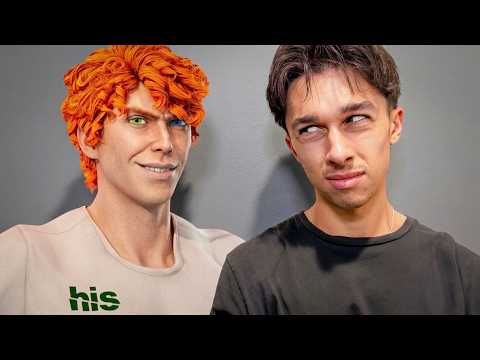
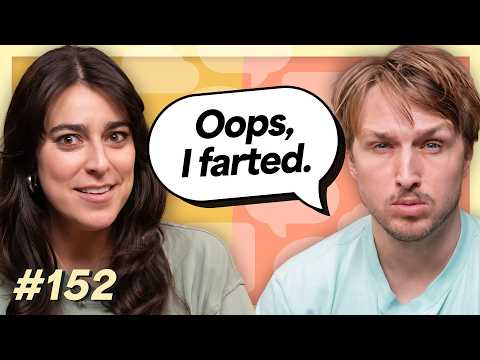
Andrew Santino’s return from Scotland immediately becomes an argument over whether he went at all, establishing the kind of deliberately unreliable storytelling that drives much of the comedy. Bobby Lee and Santino rarely allow an anecdote to proceed uninterrupted; Scotland turns into jokes about pizza, travel delays and regional food before the conversation veers toward European wildfires, migration and a raccoon with short spine syndrome. That instability is largely intentional, and the hosts remain remarkably good at converting minor misunderstandings into extended comic exchanges.
The strongest stretches come from subjects that give their chemistry something concrete to work against. Santino’s enthusiasm for The Odyssey, Lee’s determination to watch Moana first, and their increasingly fabricated account of Moana characters build into a sustained bit rather than a sequence of unrelated punchlines. Their later discussion of concerts works similarly, moving through Death Cab for Cutie, the Pixies, the Smiths, Talking Heads, Rush, Metallica and the Sphere while revealing genuine differences in how they approach nostalgia and live entertainment. Even when the conversation wanders, the disagreement gives it momentum.
Personal material also supplies some of the funnier and more revealing moments. Lee describes managing seven animals, including a dog temporarily left in his care, while the discussion of cats failing to recognize one another after veterinary visits turns an ordinary pet behavior into a paranoid fantasy about replacement cats and surveillance. A crew member’s absence because of his dog's veterinary problem becomes another improvised interrogation. These segments work because the absurdity grows naturally from recognizable situations rather than requiring a predetermined premise.
There is considerably less discipline when the conversation touches factual subjects. A documentary about Marilyn Monroe prompts Santino to declare that she was murdered and that a cover-up was obvious, but nothing presented in the discussion establishes that conclusion. Claims about hostility toward tourists in Hawaii, extreme temperatures, cloning, migration, politics and international affairs similarly arrive through remembered headlines, jokes or quick searches without enough context to determine their accuracy. The casual format does not require investigative rigor, but the hosts sometimes move from comic speculation to confident assertion without signaling the difference clearly enough.
The same looseness affects discussions of health and aging. The group jokes about sexual desire, bodily changes, digestive habits, an injured toenail and Lee’s account of serious dental problems, producing deliberately graphic humor that will either fit the audience’s expectations or become exhausting depending on tolerance for the show’s style. Some health-related explanations are pulled up during the conversation, but comedy remains the priority. Anyone tempted to treat these exchanges as practical medical information would be giving them more authority than the presentation supports.
Structurally, the nearly constant improvisation creates both the show’s personality and its biggest limitation. Running jokes about allegiance, crew members, the “coward’s door,” Moana, extreme white adventurers and the oppressive studio heat repeatedly resurface and give the hour an internal vocabulary. Yet lengthy sponsor interruptions and several conversations that circle the same premise make the pacing uneven, while provocative jokes involving ethnicity, gangs, politics and stereotypes occasionally depend more on escalation than construction. For an audience already invested in the personalities, the unpredictability is the attraction; for newcomers, it can feel like being dropped midway into a collection of private references.
Pros
- Santino and Lee have strong improvisational chemistry, repeatedly turning mundane disagreements and misunderstandings into sustained comedy.
- The Moana and Odyssey running joke develops particularly well and gives the otherwise loose conversation a memorable recurring thread.
- Discussions of pets, travel, concerts and comedy-club etiquette provide relatable foundations for the more absurd material.
- Recurring callbacks give an extremely free-form conversation more cohesion than its constant topic changes initially suggest.
- Genuine enthusiasm for movies, music and live performance adds personality beyond the insult comedy.
Cons
- Historical, political, environmental and medical claims are sometimes stated confidently despite receiving little or no substantiation within the discussion.
- The Marilyn Monroe murder assertion is presented as an obvious conclusion rather than clearly separated as Santino’s interpretation.
- Extended bodily-function humor becomes repetitive and may overwhelm stronger conversational material.
- Frequent tangents, interruptions and abrupt subject changes make the presentation uneven and occasionally difficult to follow.
- Multiple sponsor segments significantly interrupt the conversational momentum.
- Some stereotype-based and deliberately provocative jokes rely more heavily on shock and escalation than on developed premises.
The hosts remain funniest when a small disagreement evolves into an elaborate shared fiction, with their movie arguments, pet stories and entertainment nostalgia providing plenty of opportunities for that chemistry. The loose format also encourages unsupported claims, repetitive gross-out material and tangents that could benefit from tighter editing, but its unpredictability remains central to the experience. For viewers already comfortable with the show’s deliberately chaotic sensibility, the comic rapport outweighs the structural messiness.