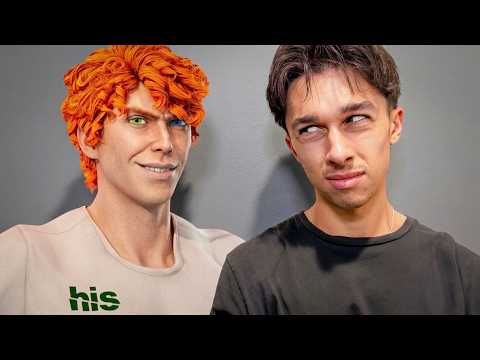
Giving Shayne, Amanda, and Tommy five secret phrases each creates a deceptively simple challenge: continue a normal podcast while slipping bizarre statements into the conversation without being caught. The format works because the phrases are written around each person's established mannerisms while remaining just suspicious enough to trigger paranoia. Amanda has to suggest bringing Vanessa Lachey onto the show, claim she would never let the others babysit Cole, announce an unpleasant fart, praise an impression of herself, and repeat that someone is "so corny." Tommy faces declarations about quitting music, moving back to Florida, becoming Cole's godfather, joining reality television, and shaving his head rather than returning to brunette hair. Shayne receives similarly awkward lines about being the greatest of all time, teaching Cole a Boston accent, measuring himself, reading the Bible, and playing center. Knowing the phrases in advance lets the audience participate from the opposite side of the game, watching for opportunities while the players distrust almost everything they hear.
The strongest decision is allowing genuine conversation to continue underneath the challenge rather than constructing every topic around the secret lines. Tommy's discussion of the "Prom Line" music video becomes the episode's most substantial subject, covering the song's evolution from a deliberately goofy idea into a larger production, his pitch deck, the director, the 2000s-inspired aesthetic, Amanda's blank Sims-like character, Angela's role, and ideas that had to be reduced because of production limitations. His original concept of a computer virus generating a prom date and gradually replacing people with versions of Tommy is specific enough to make the behind-the-scenes discussion worthwhile on its own. That authenticity also strengthens the game because phrases such as Tommy claiming he may be finished making music sound especially alarming in the middle of a sincere conversation about how much he enjoyed creating it.
Amanda and Shayne find some of the funniest ways around phrases that would otherwise be obvious. Amanda turns "I love when you do an impression of me" into a natural response after requesting an impression, only for Shayne to simultaneously hide "I could play center" inside his impression of her. Amanda later maneuvers a discussion of Jessica Simpson's reality television behavior into the fart phrase and uses an existing conversation about Vanessa Lachey to disguise another assignment. Shayne's center line is particularly effective because he technically says his phrase while attributing it to Amanda, exposing how loose interpretation of the rules can become part of the comedy. At its best, the challenge rewards conversational misdirection rather than simply waiting for a convenient topic.
Tommy takes the most deliberate approach by planting topics that can eventually support his phrases. A discussion of reality television leads naturally into his claim that he would love to be cast on a reality show, while the conversation about hair color gives him enough cover to say he would rather shave his head than return to being brunette. His attempt to suggest moving back to Florida is less successful because the sudden emotional shift sounds suspicious immediately. That contrast is important to the format: a phrase does not need to be inherently absurd to fail; it only needs to sound unlike something that person would sincerely say at that moment. The others consequently start analyzing tone, repetition, eye contact, topic changes, and even ordinary wording, generating false accusations that are often as funny as successful attempts.
The game also benefits from how quickly it contaminates the entire podcast. Innocent comments such as "cool things are on the way," repeated references to having "lots to do," questions about teaching Cole karate, bizarre pop-culture tangents, and spontaneous jokes become potential traps simply because everyone knows five planted statements are waiting. The discussion moves through boy bands, Jessica Simpson and Nick Lachey, the "Khia asylum," PinkPantheress, reality competition shows, hair dye, horror movies, old music-video conventions, Michael B. Jordan, and assorted personal stories without ever fully escaping the suspicion. The resulting looseness fits Smosh Mouth's conversational identity, and Tommy's presence works particularly well because he can move between genuine creative discussion and absurd deadpan claims without changing the overall rhythm of the show.
That looseness is also the episode's main weakness. The challenge has rules and a winner, but keeping track of successful phrases becomes increasingly messy as players forget what has been caught, reveal phrases after delays, debate whether wording counted, or exploit technicalities such as Shayne reading one of his assigned lines while discussing the assignments themselves. Amanda burns through much of her material relatively early, while other phrases require increasingly conspicuous conversational setups later. The show openly acknowledges some of this, including the danger of finishing all five phrases halfway through the recording. For a comedy podcast, rigorous competitive integrity is hardly essential, but a clearer running tally and firmer definition of what constitutes successfully "slipping" a phrase would make the eventual result easier to follow and give each attempt more weight.
The episode's other limitation is structural interruption. Zocdoc and Fabletics sponsorships divide a conversation whose humor depends heavily on maintaining suspicion and momentum, and several tangents continue long after their connection to the game has disappeared. The hollow pillow becomes an extended visual joke that audio listeners can only experience through description, while conversations about pop stars, old reality television, hair colors, and horror sometimes become entertaining side discussions rather than serving the central challenge. Yet the episode largely survives those detours because the game changes how every tangent is heard: even when nothing is being attempted, the possibility that someone is manufacturing the entire conversation for one ridiculous sentence keeps the others—and the audience—watching for the setup.
Pros
- Revealing all 15 secret phrases to the audience creates immediate dramatic irony and lets viewers actively judge each conversational setup.
- Shayne, Amanda, and Tommy are given phrases tailored well enough to their personalities that believable statements and obvious traps remain difficult to distinguish.
- Tommy's detailed discussion of developing and filming the "Prom Line" music video gives the episode substantial behind-the-scenes material beyond the game itself.
- Amanda and Shayne simultaneously hiding phrases during the impression sequence is an especially effective example of improvisation and misdirection.
- Tommy's reality-TV and hair-color setups demonstrate how naturally a prepared phrase can emerge from an otherwise genuine conversation.
- False accusations become part of the entertainment as the players grow suspicious of ordinary comments, tone changes, repetition, and strange tangents.
Cons
- Scoring becomes difficult to follow as phrases are revealed at different times and the players debate which attempts were caught or successfully completed.
- Allowing phrases to be hidden inside impressions, quoted while discussing the game, or reached through deliberately planted topics makes the standard for a successful attempt inconsistent.
- Amanda uses much of her material relatively early, reducing some of the competitive tension later in the episode.
- Several tangents drift considerably from both the challenge and the more substantive discussion of creative projects.
- The hollow-pillow sequence depends heavily on a visual gag, making that stretch less effective for the audio audience.
- Multiple sponsorship segments interrupt a format whose strongest comedy comes from sustained conversational suspicion.
The secret-phrase challenge succeeds because it does not replace the normal Smosh Mouth conversation so much as infect it, turning sincere discussions about music, reality television, pop culture, hair, family, and creative work into possible setups for absurd statements. The scoring and rules become loose enough that the competition matters less than advertised, but Shayne, Amanda, and Tommy compensate with strong chemistry, clever misdirection, useful behind-the-scenes discussion of "Prom Line," and the escalating paranoia of never knowing whether a ridiculous comment is genuine or planted.