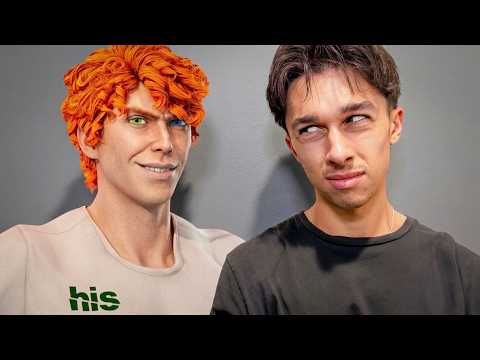
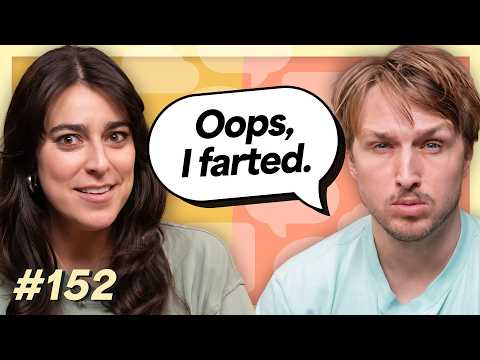
Knowing the answer is only half the challenge when everyone else is actively trying to make the wrong choices sound convincing. The group plays Gullible by presenting one true answer alongside two invented alternatives, then forcing the opposing team to distribute tokens according to which possibilities they believe. Rory joins the regular cast for a game that begins with trivia about Scottish law, Pulp Fiction, Queen Elizabeth II, and Nintendo before shifting into personal facts about the players themselves. The actual competition is loose enough to collapse almost immediately, but that instability becomes part of the entertainment as confident deductions repeatedly prove less reliable than jokes, half-remembered facts, and the desire to trick friends.
The first round demonstrates both the potential of the format and how quickly the rules can go wrong. Asked what it is illegal to be drunk while in charge of in Scotland, the clue-giving team accidentally writes three genuine possibilities instead of one truth and two lies. The opposing players nevertheless debate an onion stand, boys' education, and a cow as though the round were functioning normally, spreading their tokens while trying to read the other team's faces. Discovering that the question was constructed incorrectly should undermine the game, yet the conversation is funny enough that everyone simply resets and continues. That establishes the episode's priorities early: competitive integrity is useful when available, but comedy takes precedence.
Later trivia rounds work better because the choices create plausible uncertainty. Pulp Fiction's original title produces a prolonged debate among “Black Mask,” “A Man Confused,” and “Wake Him Up,” with players trying to reason from the movie itself while the clue-givers struggle not to reveal anything through their reactions. Queen Elizabeth II being a trained mechanic becomes another effective prompt because fencing and piloting sound just plausible enough to generate discussion, including tangents about The Crown and the Queen's death. Nintendo's 1889 founding is particularly well suited to the game because the date sounds absurdly early for a company now associated with video games, allowing confidence about 1989 to become its own trap.
The betting mechanic adds useful stakes even when everyone is still learning how it works. Players initially misunderstand whether they need to use every token, what happens when they wager incorrectly, and whether going all-in could immediately end the game. Once understood, distributing chips creates an amusing conflict between certainty and self-preservation. The teams can hedge across answers, but personalities quickly interfere with sensible risk management as players double down, move chips based on facial expressions, or talk themselves out of choices they previously liked. A promised brunch and dinner eventually give the competition a tangible consequence, though the exact arrangement becomes nearly as confusing as the rules themselves.
Switching from outside trivia to personal facts is the episode's strongest adjustment because knowledge of the cast becomes part of the strategy. Tommy's former pet is presented as a choice among a chinchilla, sugar glider, and prairie dog, leading Angela to become convinced she remembers hearing about the prairie dog before. Questions about names such as “Julie,” “Girl,” and “Rue” allow the team to interrogate the story rather than merely guess from general knowledge. Courtney's sibling names work similarly because a large family full of names beginning with C makes Casey, Colin, and Conrad all sound possible. These rounds turn the game into a test of memory, familiarity, and how convincingly friends can exploit what others think they know.
Rory's round unexpectedly gives the episode its most personal moment. The choices involve whether Rory's father worked with Steve Jobs, is alive, or is also named Rory, eventually leading Rory to explain that his father died when Rory was young and that childhood circumstances left room for a long-running fantasy that he might secretly still be alive elsewhere. Rory then reveals that his father did work at NeXT, connecting the fact back to Steve Jobs. The group allows the story to remain sincere without abandoning the episode's tone, and the moment demonstrates why personal trivia can produce something more memorable than ordinary fact questions. It also briefly shifts Rory from guest participant into someone viewers learn something meaningful about.
The final round exposes the downside of abandoning objective facts entirely. Angela is asked whether she would hypothetically prefer to be a mechanic, fencer, or pilot, but the answer is effectively created by choosing one during the game rather than revealing an established fact. The opposing team constructs elaborate arguments about acting skills, helping people, fear of flying, and Shakespeare, only for Angela to select pilot and acknowledge that the preference was essentially decided moments earlier. Even the cast recognizes the problem, comparing the round to guessing a number someone is thinking of. It produces funny discussion, but as a competitive conclusion it makes the victory feel arbitrary rather than earned.
That looseness is representative of the episode as a whole. Conversations wander through standardized-test scores, movies, British royalty, pets, dyslexia, websites for checking upsetting movie content, meals, old Smosh marketing, and whatever else a clue happens to provoke. Players interrupt one another, forget rules, alter the format, and occasionally spend longer discussing an answer than playing the actual game. A stricter version of Gullible could create sharper bluffing and more satisfying strategic victories, but it would also lose some of the spontaneous chemistry that makes this version enjoyable. The game provides prompts; the cast's ability to turn those prompts into increasingly ridiculous conversations supplies most of the entertainment.
Pros
- The combination of invented answers and token betting gives players reasons to bluff, read reactions, hedge their guesses, and confidently talk themselves into bad decisions.
- Trivia involving Pulp Fiction, Queen Elizabeth II, and Nintendo produces choices that sound plausible enough to encourage genuine debate rather than simple guessing.
- Switching to personal facts makes familiarity among the cast strategically relevant and creates stronger opportunities for interrogation and misdirection.
- Rory's story about his father adds an unexpectedly sincere moment without feeling disconnected from the personal-fact format that prompted it.
- Tommy's pet and Courtney's sibling rounds show how specific memories can become both advantages and vulnerabilities when friends are trying to deceive one another.
- The group's improvisational chemistry keeps mistakes, rule confusion, and extended tangents entertaining even when the formal competition temporarily falls apart.
Cons
- The opening round accidentally uses three true answers, immediately demonstrating that the game's setup and rules are not being managed particularly carefully.
- Players repeatedly misunderstand betting, scoring, and the meal wager, making the competitive state harder to follow than the simple premise should require.
- Frequent tangents substantially outweigh strategy, so viewers interested primarily in the bluffing game may find the episode unusually unfocused.
- Personal rounds work best when revealing established facts, making the final hypothetical preference noticeably weaker because Angela effectively chooses the correct answer during the round.
- Ending on an arbitrary question undermines the satisfaction of determining a winner and prompts the cast itself to question whether the round was fair.
Gullible works less as a tightly constructed trivia competition than as an excuse for friends to weaponize memories, invent plausible nonsense, and overanalyze one another's behavior. The personal rounds improve the concept considerably, while Rory's contribution adds both comedy and an unexpectedly meaningful story, but inconsistent rules and an arbitrary final question keep the game from delivering a satisfying competitive finish. The structure may be messy, yet the cast's chemistry ensures that being wrong is usually more entertaining than being right.