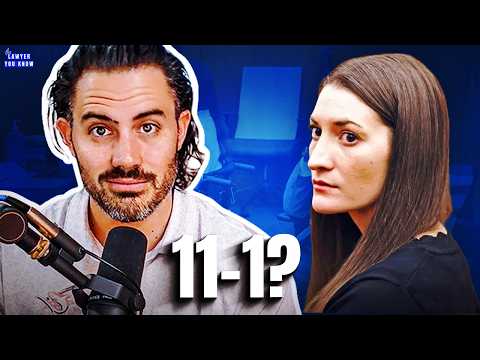
Dr. Zizel’s conclusion gives the defense its clearest articulation yet of what it says was happening in Lindsay Clancy’s mind at the time her children were killed: in his opinion, she had bipolar disorder with postpartum psychosis, could not conform her behavior to the law, and did not appreciate the wrongfulness of her actions. Peter Tragos wisely treats that opinion as consequential evidence rather than an automatic answer. His repeated question—whether jurors actually believe the expert’s explanation—keeps the analysis centered on the factual dispute the jury ultimately has to resolve rather than simply deferring to credentials.
The breakdown is particularly useful when separating ordinary functioning from the defense’s theory of psychosis. Zizel testifies that someone experiencing psychosis can still drive, use a computer, attend an appointment, remember a doctor’s recommendation, build a snowman, text about dinner, and perform other familiar activities. Tragos identifies the prosecution’s strongest response: if intellectual functioning remains intact and Clancy could carry out familiar tasks, jurors may wonder what that means for her capacity to understand wrongfulness. He also notices a potentially important distinction that the testimony could have developed more carefully—evidence that she could not control her conduct appears stronger to him than evidence that she did not understand it was wrong.
The Commonwealth’s cross-examination supplies several legitimate reasons to scrutinize Zizel’s conclusion. Clancy reportedly did not describe a male command voice in her earlier medical encounters, and Zizel acknowledged that she had not heard voices since the killings. The prosecution also raises his extensive contact with Clancy, his friendship with Kevin Reddington, his admission that he cares about her, and a public appearance made before he had reviewed much of the material later incorporated into his assessment. Tragos is fair in recognizing these as potentially useful attacks on objectivity while also explaining Zizel’s response that empathy and rapport do not inherently prevent an independent forensic evaluation.
Some of the prosecution’s other tactics receive deserved skepticism. The prolonged attention to Beachbody, medication counts, birthdays, hospital activities, and whether Clancy appeared relatively functional on particular days does not always establish what the Commonwealth seems to want it to establish. Tragos does a good job distinguishing evidence that might create an emotional impression from evidence that directly resolves criminal responsibility. His treatment of the proposed McLean Hospital witness is similarly measured: he finds her credible but agrees with the judge that her experience ending well before Clancy’s admission gave her limited ability to establish conditions during the relevant period, particularly when staffing and programming records could address those questions more directly.
The discussion of the previous day’s “mortal sin” controversy is more debatable. Tragos criticizes Reddington for reportedly declining to seek a mistrial, arguing that a motion could have protected an appellate issue even if the defense wanted the trial to continue. That record-preservation concern is a useful piece of legal analysis. His further suggestion that intentional prosecutorial misconduct might have supported a mistrial with prejudice and potentially terminated the prosecution, however, is presented with more confidence than the limited procedural information discussed here can sustain; whether double jeopardy would actually prevent retrial would depend on the governing law and the specific findings surrounding the conduct.
The format remains both a strength and a weakness. Tragos is unusually willing to acknowledge uncertainty, correct misconceptions about the burden of proof, reject unsupported theories implicating Patrick Clancy, and tell viewers when he does not know an answer. At the same time, frequent viewer questions, commentary about prosecutors’ personalities, likes and memberships, repeated speculation about how particular moments “felt,” and lengthy reactions to relatively minor trial details make the presentation substantially longer and less disciplined than the core legal analysis requires. His own opinions are generally identified as opinions, but occasionally his confidence about prosecutorial misconduct or likely legal consequences runs ahead of the supporting analysis shown.
Overall, the coverage succeeds because it identifies the genuinely difficult questions rather than pretending the expert testimony settles them. The command-hallucination account, the timing of when voices were reported, Clancy’s preserved everyday functioning, Zizel’s relationship with the defense, and the distinction between understanding wrongfulness and being unable to conform conduct all give jurors meaningful issues to weigh. Tragos increasingly leans toward believing the defense has generated substantial reasonable doubt, but he still leaves room for the Commonwealth’s rebuttal experts to alter that assessment, which is an appropriate limitation at this stage of the trial.
Pros
- Closely examines Zizel’s ultimate opinion while making clear that expert testimony still depends on whether jurors find the underlying explanation credible.
- Identifies meaningful prosecution points, including the timing of reported command hallucinations, preserved intellectual functioning, Zizel’s relationship with the defense, and his early public comments.
- Repeatedly clarifies that the Commonwealth retains the burden of proof rather than requiring Clancy to prove psychosis beyond a reasonable doubt.
- Draws a useful distinction between inability to appreciate wrongfulness and inability to conform conduct to the law.
- Rejects unsupported speculation about Patrick Clancy rather than allowing audience theories to substitute for evidence.
- Provides a balanced explanation of why the judge could find the proposed McLean witness credible while still excluding her testimony as insufficiently material.
Cons
- The argument that the earlier religious questioning might have supported a mistrial with prejudice and barred retrial needs substantially more Massachusetts-specific legal analysis before such an outcome can be treated as realistically available.
- Frequent audience questions, promotional interruptions, and discussion of comparatively minor evidentiary disputes make an already complicated analysis unnecessarily sprawling.
- Commentary about the prosecutors’ demeanor and perceived frustration sometimes shifts attention from the evidentiary strength of their arguments to subjective impressions of the lawyers.
- Several medical and psychological questions are explored through legal and lay interpretation without independent clinical expertise, making the careful attribution of Zizel’s opinions especially important.
Day 16 produces important evidence for the insanity defense while also exposing vulnerabilities the Commonwealth can legitimately challenge, particularly around the reported command hallucination and the expert’s relationship with the defense. Tragos is at his best when separating those evidentiary questions from unsupported speculation and reminding viewers where the burden of proof lies, though tighter presentation and greater caution around the mistrial analysis would strengthen the coverage considerably.