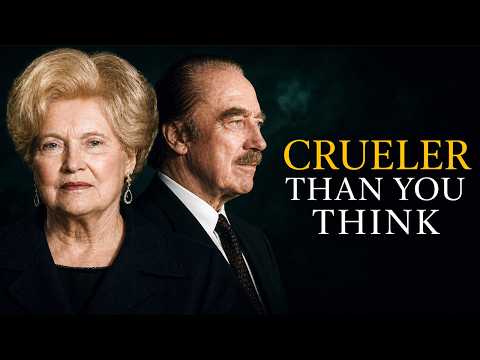
The most revealing portions of this conversation are the ones in which Mary Trump discusses the family system she personally experienced: money as a substitute for affection, relationships treated as transactional, Donald Trump receiving exceptional financial support from his father and younger generations learning to associate proximity with material reward. Her perspective as both a relative and clinical psychologist gives those observations unusual texture, especially when she describes how wealth, approval and humiliation became intertwined. The discussion is less convincing when those experiences are extended into sweeping diagnoses of the entire family or offered as explanations for present-day political behavior without separating firsthand knowledge from interpretation.
The central argument is that Donald Trump is confronting pressures he cannot easily escape: mortality, declining political effectiveness, economic problems, foreign-policy consequences and controversies that the speakers believe are accumulating rather than disappearing beneath the next news cycle. Mary Trump interprets this through his fear of death, need for self-perpetuation and alleged inability to imagine a world beyond himself. That is an interesting psychological framework, but it remains analysis rather than established fact, and the conversation frequently presents assertions about his health, cognition, psychiatric condition and motives with greater certainty than the material here can substantiate.
That problem becomes particularly noticeable in the discussion of aging. The speakers compare Donald Trump with Fred Trump, who Mary says developed serious Alzheimer's disease, and point to forgetfulness, repetition, impulsivity, paranoia and sleepiness as evidence of decline. Observing changes in public behavior is legitimate, but statements about untreated psychiatric disorders, cognitive assessments, serious concealed physical ailments and parallels with Alzheimer's move into medical territory without records, examinations or independent evidence being presented. Mary occasionally signals interpretation with phrases such as "I think," yet the overall conversation often collapses the distinction between behavioral observation and diagnosis.
The family material is stronger because it contains specific personal history. Mary describes her grandfather's use of money as a measure of worth and argues that Donald's relationships with his children remain fundamentally transactional. She and Sydney Blumenthal then interpret Don Jr., Eric, Ivanka Trump and Jared Kushner primarily through self-enrichment, branding and access to presidential power. The conversation offers a coherent thesis about inherited values and incentives, but its language becomes intensely moralized—calling relatives "monstrous," describing enrichment as theft or plunder and assuming motivations that are not independently demonstrated here. That makes the discussion vivid, but also reduces the analytical distance that might have helped viewers distinguish documented conduct from familial judgment.
A similar imbalance shapes the political sections. Blumenthal and Trump discuss presidential immunity, January 6, classified documents, Iran, tariffs, USAID, the economy and alleged profiteering, but the episode supplies little sourcing or countervailing context for claims that range from legal interpretation to assertions involving deaths, corruption and billions of dollars. Some statements concern matters that could be checked through court records, financial disclosures or government data, yet those materials are not developed within the presentation. Instead, the hosts generally begin from shared conclusions and reinforce each other, producing something closer to an advocacy conversation than a careful evidentiary examination.
The White House Correspondents' Dinner discussion is more effective because it focuses largely on observable performance. They analyze Trump's repetitive joke-telling, insults, inability to read the room and reliance on familiar routines, using these moments to argue that his public persona has become less controlled and less effective. Even here, however, aesthetic criticism quickly becomes evidence for psychological and neurological conclusions. The recurring contemptuous descriptions—"decrepit," "windbag," "washed-up vaudevillian" and similar characterizations—may appeal to an audience already sharing the speakers' politics, but they crowd out the more useful question of what specific behavioral changes can actually be established.
The final discussion of masculinity illustrates both the episode's thematic coherence and its tendency toward overreach. Trump connects the administration's rhetoric about testosterone and military toughness with insecurity, misogyny and performative cruelty, while Blumenthal raises allegations against Pete Hegseth and briefly notes his denial. The speakers are right to identify allegations as allegations in that instance, but surrounding claims about sexual violence, masculine insecurity and the motives of millions of supporters are treated much more expansively. The result is a forceful political and familial interpretation with genuine firsthand insight at its core, weakened by diagnostic certainty, unsourced factual claims and a conversational structure that rarely challenges its own assumptions.
Pros
- Mary Trump's firsthand descriptions of money, approval and family hierarchy provide the episode's most distinctive and credible material.
- The discussion connects personal family dynamics with broader questions about power, inheritance, loyalty and political behavior in a clear thematic arc.
- Several moments distinguish allegations from proven facts, particularly when Blumenthal clarifies the status of accusations against Pete Hegseth.
- The analysis of Trump's repetitive humor and difficulty reading an audience is grounded more directly in publicly observable behavior than many of the episode's broader psychological claims.
Cons
- Medical and psychological conclusions about Donald Trump's cognition, psychiatric condition and physical health are presented without clinical evidence sufficient to establish them.
- Numerous political, economic, legal and financial assertions are stated confidently without documentation or meaningful sourcing within the episode.
- The hosts frequently infer the motives of Trump family members and political figures rather than clearly separating known conduct from interpretation.
- Highly contemptuous language and near-total agreement between the speakers make the conversation feel more prosecutorial than analytical.
- Personal family knowledge is sometimes extended too readily into sweeping conclusions about contemporary policy, corruption and the behavior of millions of political supporters.
Mary Trump's firsthand account of the Trump family's relationship with money and approval gives this conversation material that an ordinary political panel could not provide. Its usefulness declines when psychological interpretation becomes diagnosis and shared political conclusions substitute for evidence, leaving a compelling insider perspective wrapped in a notably one-sided and insufficiently sourced argument.