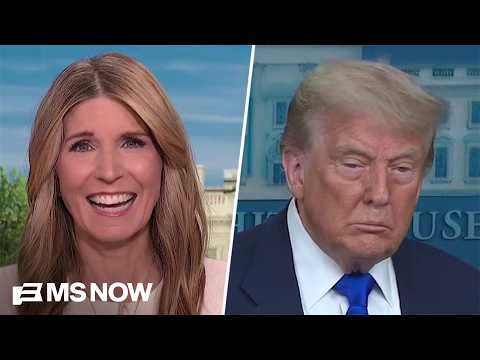
Concerns surrounding Natalie Harp’s influence inside Donald Trump’s orbit form the central focus of this political discussion, which examines questions about access, information flow, and the unusual dynamics surrounding presidential aides. The conversation frames Harp as a uniquely influential figure who allegedly controls much of the information reaching Trump, while also exploring the broader political reaction from both supporters and critics. The strongest parts of the discussion come when it examines how power operates behind the scenes rather than simply focusing on personal speculation.
The segment spends considerable time analyzing reports that Harp delayed obtaining a security clearance despite her close proximity to the president. If accurate, that raises legitimate questions about White House procedures and oversight. However, many of the broader characterizations about her relationship with Trump rely heavily on interpretation and political commentary rather than independently established conclusions, making it important for viewers to separate confirmed reporting from partisan framing.
The discussion is most effective when it moves beyond the personal drama and examines what the situation could represent institutionally. The hosts argue that concentrating access to a president through a single aide creates potential vulnerabilities, particularly when that person influences what information is presented and who can communicate with the president. That concern is more substantive than the attention given to rumors and insults exchanged between political commentators.
The analysis of conservative media reactions and figures such as Scott Jennings provides an interesting look at how political messaging battles unfold. The discussion suggests that some defenses of Harp may also serve broader career or party interests, though those motivations are interpretations rather than proven facts. The commentary is energetic and often entertaining, but its tone sometimes overwhelms the distinction between criticism, humor, and evidence.
The conversation also expands into questions about the future of Trump-era politics, including Democratic primary trends and whether opposition to Trump remains enough of a political identity. This section provides useful context by arguing that candidates may need to present broader policy visions rather than simply define themselves against a former or current president. The shift away from the Harp controversy makes the episode feel more like a wide political analysis than a narrowly focused investigation.
The interview with Iowa Senate candidate Josh Turek adds a different perspective by focusing on campaigning, bipartisan appeals, personal experience, and voter concerns. Turek’s discussion of disability representation, rural outreach, and economic issues gives the episode a more grounded look at how candidates attempt to connect with voters. While the interview is largely favorable toward the candidate, it provides a clearer example of political storytelling based on personal background and policy priorities.
Overall, the episode succeeds as a lively political conversation with strong commentary and a wide range of topics. Its weaknesses come from relying on speculation and sharp partisan framing in places where more careful sourcing and separation between allegations and conclusions would strengthen the analysis. The result is engaging for viewers already familiar with the political landscape, but less convincing as a standalone examination of the controversy.
Pros
- Examines broader questions about presidential access, information control, and White House oversight rather than focusing only on personal drama.
- Provides useful political context about changing Democratic strategies and the limits of opposition-based messaging.
- Includes a detailed candidate interview that highlights campaign strategy, voter outreach, and personal experiences.
Cons
- Some claims and interpretations about personal relationships and motivations go beyond what is firmly established.
- The highly partisan tone occasionally reduces the distinction between reporting, opinion, and speculation.
- The wide range of topics limits the depth given to the central controversy.
An energetic political discussion that offers strong commentary on power, messaging, and election strategy, but it is more persuasive as analysis than as a definitive examination of the controversy itself. The episode works best when exploring institutional questions and voter concerns, while its more personal claims require additional caution and verification.