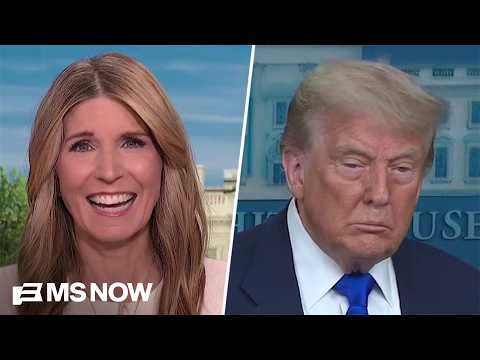
The video delivers a forceful political speech centered on a broad argument that Donald Trump’s leadership represents a continuation of deeper problems in American government. Rather than focusing on a single issue, the presentation connects foreign policy, economic frustration, healthcare concerns, campaign finance, and accusations of corruption into one larger message about institutional reform. The result is a passionate piece of political commentary designed to persuade viewers who already share many of its concerns.
The speaker’s strongest moments come when discussing the consequences of political decisions on ordinary people. The speech repeatedly returns to examples involving rising costs, healthcare struggles, and frustration with economic inequality, creating an emotional connection between national debates and everyday experiences. Those arguments are presented as a call for systemic change rather than simply opposition to one political figure.
The discussion of the Iran war forms the most intense section of the presentation, with the speaker challenging the administration’s explanations and questioning the justification and progress of the conflict. However, many of the specific allegations about military outcomes, government motives, and individual actions are presented from a partisan perspective and are not independently examined within the video. Viewers looking for a complete understanding of the situation would need additional sources and perspectives beyond the speech.
The video also expands its criticism to questions of presidential conduct, financial conflicts, and the influence of money in politics. The argument that corruption and wealthy interests affect government decision-making is a long-running political debate, and the speech uses that theme effectively to broaden its appeal. At the same time, some claims about specific individuals and events are delivered as accusations rather than carefully developed investigations.
One of the more interesting elements is that the speaker does not frame the problem as belonging only to one party. The discussion of campaign finance, lobbying, and the impact of wealthy donors attempts to position the issue as a structural problem that predates the current administration. This gives the speech more depth than a simple attack message, even though its overall tone remains strongly partisan.
From a presentation standpoint, the speech is energetic and carefully structured around repeated themes, emotional examples, and calls to action. The speaker uses a rally-style approach that is effective for motivating supporters, but the intensity sometimes comes at the expense of nuance. Complex policy questions are often reduced to moral arguments, leaving less room for exploring competing explanations or acknowledging uncertainty.
Overall, the video succeeds as a passionate political argument with a clear point of view and strong rhetorical momentum. Its effectiveness depends heavily on whether viewers are persuaded by its framing, as it prioritizes advocacy over balanced analysis. Those seeking a persuasive campaign speech may find it compelling, while those looking for a neutral examination of the issues will find important context missing.
Pros
- Connects multiple political issues through a consistent argument about government accountability and reform.
- Uses relatable economic and healthcare examples to explain why national policies matter to everyday citizens.
- Raises broader questions about campaign finance and political influence beyond one individual figure.
- Delivers a passionate and organized presentation with a clear persuasive purpose.
Cons
- Many major allegations are presented without sufficient supporting evidence or opposing viewpoints within the presentation.
- The highly partisan tone limits its usefulness as an objective analysis of complex political issues.
- Some policy discussions are simplified into emotional arguments rather than detailed examinations.
This is a powerful example of political advocacy built around frustration with leadership, inequality, and institutional problems. Its strongest qualities are its energy and ability to connect separate issues into a larger message, but its limited perspective means viewers should seek additional context before forming conclusions.