A father vanishing into a cloud of yellow smoke, a faceless figure haunting an English bridge, and a mysterious woman apparently reviving a lightning-strike victim provide the unsettling foundation for this Halloween collection. Bringing together five previously featured stories with newly edited presentations, the narrator delivers a mixture of paranormal mysteries, disturbing disappearances, and real-world tragedy. The familiar storytelling formula remains effective, using detailed settings, ordinary characters, and carefully timed revelations to transform seemingly routine situations into increasingly frightening experiences.
The opening account follows Rhevilino, a Brazilian father who reportedly disappeared in 1962 after his family encountered a strange figure inside their remote shack and heard threatening voices outside. His son's description of floating cylindrical objects producing yellow smoke introduces an extraterrestrial possibility, while the discovery of Rhevilino's skeleton inside a rocky crevice six months later gives the story a disturbing conclusion. The narrator builds suspense particularly well by emphasizing the family's isolation and the father's attempts to reassure his frightened children. However, the account provides little verifiable documentation or investigative context, leaving the extraordinary circumstances dependent on reported recollections rather than independently established evidence.
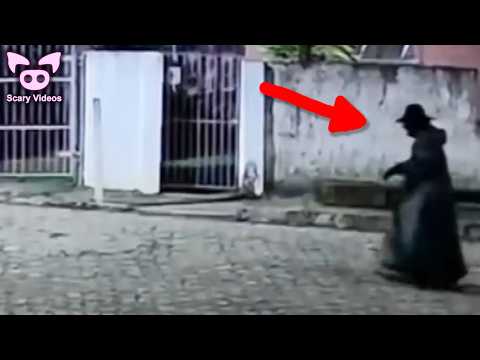
The second story, involving security guards and police officers investigating an allegedly haunted bridge in South Yorkshire, demonstrates the collection's strongest use of misdirection. Two guards initially report seeing a cloaked figure that appears transparent under a flashlight, only for police constable Dick Ellis to discover what seems to be an ordinary plastic covering construction equipment. That rational explanation makes the subsequent encounter with a reportedly faceless man outside the police vehicle considerably more unsettling. The narrator also connects the sightings to alleged fatal accidents and speculation about a disturbed burial site, although no evidence establishing a supernatural cause or even confirming the suspected gravesite is presented. The distinction between reported experiences and demonstrated facts becomes especially important as the story moves toward its paranormal interpretation.
An abandoned settlement in the Ontario wilderness provides a different kind of suspense, replacing overt supernatural imagery with the uncomfortable possibility that apparently deserted buildings might still have occupants. A family exploring the houses discovers furniture, clothing, and other possessions seemingly abandoned in place, before the father takes an expensive fur coat. The appearance of an elderly woman watching from an upstairs window changes the atmosphere from curiosity to guilt and eventually fear, particularly when another figure appears nearby. The account benefits from its gradual escalation and the moral complication introduced by the father's decision to take property that did not belong to him. Nevertheless, the possibility of actual residents, trespassers, or other ordinary explanations receives limited examination before the story settles into mystery.
The fourth selection is considerably darker because it centers on the murder of a young Japanese student, Miyako, who disappeared after leaving her workplace in 2009. Her plans to finance an exchange program in Russia establish an emotionally affecting portrait of a young woman whose future was violently taken away. The account details the discovery of her remains, a lengthy investigation, and the eventual identification of a suspect through previously overlooked information and disturbing photographic evidence. It then introduces an alleged disembodied voice during a television report and a fatal vehicle incident involving the suspected killer and his mother. These events create a striking narrative connection, but the suggestion that Miyako's spirit caused the crash remains speculation. The supernatural framing also risks overshadowing the victim and the criminal investigation, while the graphic descriptions occasionally feel more sensational than necessary.
The final story offers a change in emotional direction through the account of Robert Davidson, who reportedly suffered cardiac arrest after being struck by lightning on an Indiana highway in 1980. According to the narration, emergency responders encountered an unexplained ambulance failure before a woman dressed in black appeared, performed an intense religious ritual, and seemingly disappeared after Davidson resumed breathing. The subsequent connection to a historical Methodist campground provides an intriguing local-history element and gives the collection an ending built around possible supernatural intervention rather than violence. Still, the presentation does not establish that the woman's actions caused Davidson's recovery, nor does it adequately explore medical explanations for his return of spontaneous circulation or mechanical explanations for the ambulance failure.
Across all five selections, the narrator demonstrates a consistent ability to establish locations, introduce characters, and withhold pivotal information until the moment of greatest dramatic effect. The conversational delivery makes complicated sequences accessible, while the alternating themes prevent the collection from becoming entirely repetitive. The re-edited format is presented as a fresh experience for returning viewers, although the narration itself provides no meaningful basis for judging how substantially the material differs from earlier versions. The main weakness is a recurring tendency to build compelling supernatural implications from incomplete evidence, sometimes treating unverified details as reliable foundations for the mystery. Despite that limitation, the combination of atmospheric storytelling, escalating tension, and varied subject matter makes the collection well suited to extended Halloween viewing.
Pros
- Features five distinct stories spanning mysterious disappearances, alleged hauntings, an abandoned settlement, a criminal investigation, and an unexplained recovery.
- Builds suspense through detailed environmental descriptions, gradual revelations, and carefully structured narrative twists.
- Uses the bridge investigation's apparent rational explanation to create an especially effective reversal when another disturbing encounter occurs.
- Gives the Japanese murder case emotional weight through the victim's personal ambitions and the investigation into her disappearance.
- Maintains an accessible, conversational storytelling style that makes the lengthy collection easy to follow.
- Balances tragic and frightening material with a final account centered on an apparently miraculous survival.
Cons
- Provides limited independent documentation for several extraordinary incidents, making their factual reliability difficult to assess.
- Frequently emphasizes paranormal explanations without sufficiently examining plausible alternatives.
- The Japanese murder story's supernatural revenge interpretation risks distracting from the established criminal tragedy and its victim.
- Some graphic descriptions and repeated expressions of shock make the presentation unnecessarily sensational.
- Claims about unexplained deaths, supernatural encounters, and miraculous recovery lack the supporting evidence needed for stronger conclusions.
This Halloween collection delivers five engaging and often genuinely unsettling stories through atmospheric narration, effective suspense, and memorable twists. Its entertainment value is considerable, especially in the bridge and abandoned-settlement accounts, but its tendency to favor supernatural interpretations over careful evidentiary examination limits its credibility. As a seasonal storytelling experience rather than a rigorous investigation of unexplained events, it remains an enjoyable and consistently absorbing compilation.