A stranger quietly sitting among a group of college friends gives the opening story an immediately unsettling premise. The storm, power outage, crowded cabin, and gradual realization that an unfamiliar man has blended into the group create a strong escalation from ordinary weekend getaway to home-invasion nightmare. Finding Jordan tied up provides an effective explanation for how the intruder supposedly avoided detection, while the barricaded bedroom and eventual confrontation push the story into much more overt horror. The climax becomes somewhat excessive, however, with gunshots, a knife-wielding attacker, and nine people fighting him at once piling spectacle onto a setup that was scarier when the threat remained mysterious.
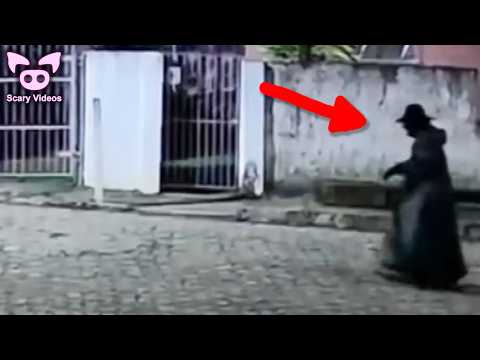
The second account takes a very different approach, beginning with relationship drama before introducing an unexplained visitor outside the narrator's home. The long discussion of an ex, a cousin accessing the narrator's account, and their reconciliation initially seems disconnected from the horror element, but that mundane detail does make the sudden appearance of an abnormally tall figure feel more disruptive. The description of its height relative to the air-conditioning unit and its featureless black appearance supplies a memorable image without overstaying the encounter.
That story is also appropriately unresolved. Nothing presented establishes what the figure actually was, and the narrator declines to photograph it, leaving only a frightening personal account rather than evidence of a supernatural creature. That ambiguity works well for horror, although viewers looking for substantiation have little to evaluate beyond the narrator's recollection. The playful conversation with the cousin also briefly undercuts the tension at the precise point when the encounter is supposed to feel most threatening.
The account involving Erica de Sousa and her uncle Paulo is tonally different because it is presented as a real criminal case rather than a personal scary story. Its disturbing centerpiece is the allegation that Erica brought Paulo to a bank and attempted to secure a loan while he was already dead, with employees becoming suspicious when he remained unresponsive. The narration adds specific details involving the shopping center, surveillance footage, the loan amount, paramedics, reported cause of death, and Erica's arrest, giving this section a more documentary structure than the surrounding tales.
Those details are delivered with considerable certainty, however, without sources being shown or discussed here, so claims about the investigation, autopsy, surveillance conclusions, Erica's mental health, and the precise sequence surrounding Paulo's death should be understood as the account presented by the video rather than independently demonstrated facts. The section nevertheless avoids turning the situation entirely into a macabre punchline. Providing some background on Paulo and describing his recent hospitalization gives the deceased man an identity beyond the shocking circumstances at the bank.
The final story returns firmly to paranormal territory with a narrator waking at 3:22 a.m., seeing enormous spider-like shadows, and being temporarily unable to move. The imagery is vivid, particularly the mirror, glowing clock, rapid movement, and yellow eyes, but the reported paralysis also leaves room for non-paranormal interpretations that the story does not explore. The mother's subsequent claim about another person seeing similar spider-shaped figures before an alleged possession supplies a creepy closing connection, yet it remains anecdotal rather than evidence that the collectibles attracted anything demonic.
Across all four stories, variety is the collection's greatest asset: an apparent intruder, an unexplained figure, a disturbing alleged crime, and a paranormal bedroom encounter prevent the format from becoming monotonous. At the same time, presenting everything beneath a "true" label creates an evidentiary problem because firsthand recollections, supernatural interpretations, and a purportedly documented criminal case do not carry the same level of verification. The storytelling succeeds primarily through atmosphere, escalation, and memorable imagery rather than through demonstrating that every extraordinary detail happened exactly as described.
Pros
- The cabin story builds tension effectively by allowing the intruder to hide in plain sight before revealing the missing friend.
- The four accounts offer enough variety in setting and type of threat to keep the collection from feeling repetitive.
- Specific visual details, including the towering figure and spider-like shadows, create memorable horror imagery.
- The Paulo and Erica account includes substantially more concrete chronology and case detail than the personal supernatural stories.
- Several stories preserve uncertainty rather than providing forced explanations for unexplained events.
Cons
- The "true" framing gives very different kinds of claims similar weight despite major differences in available support.
- Paranormal interpretations are presented without meaningful consideration of ordinary alternative explanations.
- The cabin climax becomes less convincing as increasingly dramatic action is stacked onto an initially effective premise.
- Relationship details in the second story delay the central frightening encounter without contributing much to its resolution.
- Important factual claims in the alleged Brazilian criminal case are presented without visible sourcing or verification.
Atmosphere and narrative variety make this an entertaining horror collection, with the stranger-in-the-cabin setup and the more detailed bank case providing its most effective material. Its supernatural stories work better as unsettling personal accounts than as evidence of paranormal events, while the broad "true" framing would benefit from clearer distinctions between documented claims and unverifiable experiences.