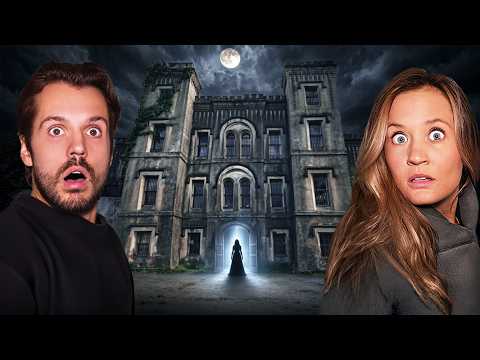
The Kalogeras sisters turn their family home into a makeshift paranormal investigation, armed with ghost-detecting equipment, flashlights, and an enthusiastic determination to confront whatever might be hiding inside. What begins as a supposedly serious examination of unexplained activity quickly becomes a chaotic mixture of sibling arguments, exaggerated reactions, inappropriate jokes, and improvised horror scenarios. The central entertainment comes less from discovering supernatural activity than from watching the group attempt to maintain an investigation while constantly distracting one another.
The opening establishes the deliberately ridiculous atmosphere through threats to eliminate imaginary ghosts, jokes about mysterious noises, and an elaborate attempt to invent the mansion's haunted history. Rather than presenting a credible historical background, the sisters create increasingly absurd stories involving family personalities, embarrassing habits, and fictional supernatural incidents. Their willingness to undermine their own premise makes the introduction entertaining, although the extended joking delays the actual investigation and establishes that paranormal authenticity is not the production's primary concern.
The investigation becomes more engaging when the group begins exploring individual bedrooms and testing their equipment. Flickering lights generate genuine excitement, while a phone-based electromagnetic field detector supposedly identifies dangerous activity in one of the rooms. These moments create opportunities for suspense, particularly when the participants appear uncertain about what their devices are indicating. However, the equipment receives little meaningful explanation, and claims about electromagnetic readings, spirits, and supernatural entities are treated casually. Neither the flickering lights nor the phone readings establish paranormal activity, and the investigation never develops a reliable method for distinguishing unusual occurrences from ordinary environmental or technical explanations.
The group's personalities provide much of the entertainment. Their constant teasing, exaggerated fear, and competitive attempts to frighten one another create a lively atmosphere that rarely feels rehearsed. One participant's insistence that an unexpected scare must have involved a ghost becomes particularly amusing because the others openly question his explanation. The recurring jokes about ghostly encounters, bedroom discoveries, and increasingly absurd investigative techniques reinforce the group's natural comedic chemistry. Unfortunately, the frequent interruptions also prevent potentially interesting moments from developing into sustained suspense.
A more intriguing element emerges when the sisters briefly discuss an earlier paranormal experience associated with Sam and Colby. One sister admits that she avoids thinking about that experience and has never watched the footage, suggesting that the memory remains genuinely unsettling for her. This moment introduces a degree of personal vulnerability that contrasts sharply with the surrounding comedy. Unfortunately, the discussion receives little exploration before the group returns to joking and investigating other rooms. A more focused examination of what she remembers, without assuming a supernatural explanation, could have provided the investigation with greater emotional substance.
The room-by-room exploration offers some variety, moving between bedrooms, hallways, bathrooms, and darker areas of the house. The use of flashlights, walkie-talkies, a ghost-catching prop, and a frightening projection creates an accessible homemade ghost-hunting atmosphere. Sudden noises and unexpected appearances occasionally generate convincing reactions, but the group frequently acknowledges its own exaggerations or reveals ordinary explanations. The presentation therefore works better as a paranormal-themed comedy than as a genuinely frightening investigation. Its loose organization also produces repeated conversations, overlapping shouting, and stretches where the central objective becomes difficult to follow.
By the conclusion, the participants have encountered plenty of suspicious sounds, supposed equipment responses, and opportunities to scare one another, but nothing that convincingly establishes the mansion as haunted. Even the group eventually acknowledges that the house might simply contain no ghosts. The ending continues the improvisational humor rather than offering a structured examination of the reported activity or a meaningful summary of the investigation's findings. That approach suits the personalities involved, but it leaves viewers expecting a substantial paranormal mystery with relatively little evidence to consider.
Pros
- The Kalogeras sisters demonstrate entertaining chemistry through spontaneous teasing, exaggerated reactions, and playful disagreements throughout the investigation.
- Exploring the family's actual living spaces gives the ghost-hunting premise a personal quality that distinguishes it from a conventional haunted-location visit.
- Flickering lights, unexpected noises, and sudden scares occasionally create effective moments of suspense amid the comedy.
- The improvised haunted-house backstory and ridiculous ghost-hunting techniques provide memorable humor without requiring viewers to take the supernatural premise seriously.
- The brief discussion of an earlier unsettling paranormal experience introduces a more personal dimension that could interest viewers beyond the comedy.
Cons
- Electromagnetic readings, flickering lights, and other supposed paranormal indicators receive no credible testing or explanation, leaving the supernatural claims unsupported.
- Constant interruptions, overlapping conversations, and repetitive jokes frequently undermine the investigation's momentum.
- The excessive sexual humor, profanity, and crude references may alienate viewers expecting a more atmospheric or family-friendly ghost-hunting experience.
- Potentially interesting subjects, particularly the sisters' earlier frightening experience, are introduced without sufficient development.
- The investigation lacks a consistent methodology and concludes without a meaningful assessment of the alleged haunting.
The Kalogeras sisters deliver an energetic and frequently amusing haunted-house adventure that succeeds primarily because of their playful personalities and unpredictable interactions. While occasional scares and unusual occurrences provide entertaining moments, weak investigative methods and relentless comedic distractions prevent the supernatural premise from becoming particularly convincing. Fans of personality-driven group comedy will likely enjoy the chaos, but viewers seeking serious paranormal evidence or sustained horror may find the experience underwhelming.