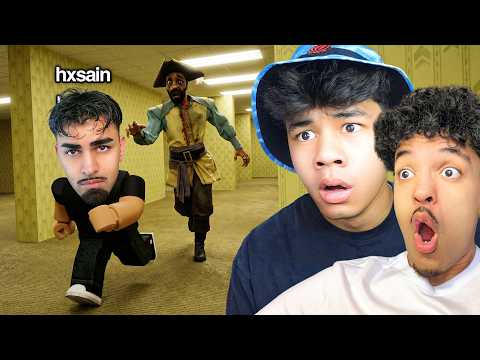
The most effective idea here is the contrast between familiar Roblox environments and horror elements concealed inside them. The opening game initially resembles an ordinary slap-tower experience, complete with disappearing stairs and invisible platforms, before leading the group through a hidden house and toward a ritual-like room. That gradual discovery gives the first section a genuine sense of escalation, particularly once the strange figure begins tracking the players and touching it apparently separates everyone into individual darkened games.
Having multiple players involved makes that opening sequence energetic, but it also illustrates the video's biggest presentation weakness. Nearly every unsettling development is accompanied by shouting, repeated declarations of fear and overlapping reactions. The group chemistry produces some funny exchanges, especially the reluctance to raise the game volume and the joking fear that accepting a request from "Bob" will compromise an account, but the constant noise leaves relatively little opportunity for the game's own atmosphere to do the work. Even the strange music near the end is quickly overwhelmed by reactions.
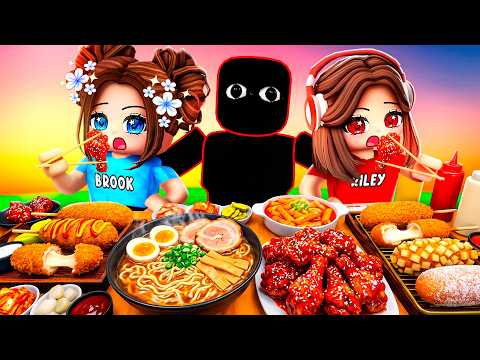
The second game has a stronger structure because its horror develops from the player's choices. The host visits a Fluttershy-inspired character who initially behaves warmly, then deliberately chooses hostile dialogue options because he has been told that doing so reveals the frightening side of the game. Throwing her plush toy, insulting her belongings, rejecting the friendship and criticizing her lemonade creates a clear cause-and-effect progression rather than relying exclusively on unexplained scares. His repeated acknowledgment that he would not normally behave this way also makes the cruelty feel like an experiment with the game's branching interactions rather than an attempt to make the character's later behavior seem completely unprovoked.
There is an amusing tension in how patiently the character initially absorbs those insults. Instead of transforming immediately into a monster, she responds with disappointment, tries to continue the visit and eventually appears willing to let the player leave. That restraint is more effective than the video's repeated predictions of imminent death because it allows uncertainty to build. The bathroom detour finally changes the atmosphere: boarded windows, a basement, flickering lights and increasingly accusatory messages turn the previously cheerful house into something much more openly threatening.
The payoff is grotesque without being particularly sophisticated. Messages describing the host as a bad friend lead to the character confronting him over his behavior, followed by a "discipline" sequence involving an electric chair. The revelation that giving her flowers could supposedly have prevented the outcome provides an intentionally absurd punch line after the darker imagery. Ending on the earlier friendship photo is similarly effective in a morbidly comic way, transforming an initially cute souvenir into a reminder of how badly the visit ended.
Calling either experience among the most disturbing games ever is considerably stronger than what is actually demonstrated. The video shows ominous imagery, isolation, jump-scare anticipation, an apparent ritual setting and a cartoon character electrocuting the player, but much of the tone remains comedic throughout. The host even repeatedly announces when he expects a scare, counts down before choices and talks over suspenseful moments. That makes the episode accessible as horror-comedy, but viewers looking for a genuinely oppressive or deeply disturbing Roblox experience may find the framing more extreme than the material.
As entertainment, the episode works best when the games are allowed to surprise the players rather than when everyone tells the audience how frightened they should be. The hidden entrance and abrupt transition of the first game are intriguing, while the second game's gradual shift from awkward hospitality to punishment provides the more complete narrative. Both sections benefit from spontaneous reactions and playful group commentary, but greater restraint around the actual scares would have made the unsettling moments substantially stronger.
Pros
- The first game's concealed route creates an effective transition from ordinary Roblox gameplay into something ominous.
- Group banter adds humor and gives the opening exploration an energetic social dynamic.
- The second game provides a clearer horror progression in which deliberately hostile choices contribute to the eventual punishment.
- The cheerful house gradually becoming restrictive and threatening is more effective than an immediate jump scare.
- The friendship photo and flowers reveal give the grim ending an appropriately absurd comedic edge.
Cons
- Frequent shouting and overlapping reactions repeatedly compete with the games' own horror atmosphere.
- The "most disturbing" framing substantially oversells material that is presented primarily as horror-comedy.
- Repeated predictions of jump scares and countdowns before choices reduce uncertainty.
- The first game ends shortly after its most intriguing transition, leaving its strange setting comparatively unexplored.
The episode finds entertaining horror in turning harmless-looking Roblox spaces and characters into increasingly sinister experiences, with the second game's deteriorating friendship providing the stronger payoff. Its humor and group chemistry are lively, but relentless anticipation and exaggerated reactions frequently weaken scares that would benefit from silence and uncertainty. As a comedic Roblox horror showcase it is enjoyable, even if the disturbing reputation promised by the framing never fully materializes.