The promise of buying an Italian home for the price of a coin survives the investigation, but only after the appealing headline is stripped of nearly everything that makes it sound easy. Traveling through the Sicilian towns of Sambuca and Mussomeli, the group finds both genuine €1 properties and evidence that the programs can attract newcomers to struggling communities. They also discover dangerously deteriorated buildings, substantial renovation requirements, extreme differences between individual projects, and inexpensive conventional properties that complicate the value proposition. The resulting answer is more interesting than simply declaring the scheme legitimate or fraudulent: €1 can sometimes buy the property, but it cannot buy the finished Italian home implied by the viral fantasy.
Bringing Stefan along as the designated skeptic gives the trip a useful counterweight to the group's natural enthusiasm. Rather than simply touring picturesque villages and celebrating cheap real estate, the episode repeatedly asks whether isolation, limited amenities, renovation expenses, and the practical realities of ownership undermine the concept. His attitude also evolves in unexpected directions. He becomes more impressed by the communities while sometimes preferring dilapidated historic properties to renovated alternatives, particularly because he values original character. That makes him more than a convenient antagonist whose only purpose is to be proven wrong.
Sambuca provides the first important challenge to expectations. The town initially appears quiet enough to support the image of a dying rural village, but conversations with residents and newcomers reveal renovation activity, social life, businesses, and enthusiasm for the community. A foreign homeowner describes purchasing properties for far more than €1 and explains how renovation expenses can climb dramatically depending on ambition. The group therefore starts separating two different questions that viral coverage often merges: whether these towns can be attractive places to live and whether the €1 purchase price accurately represents what participation actually costs.
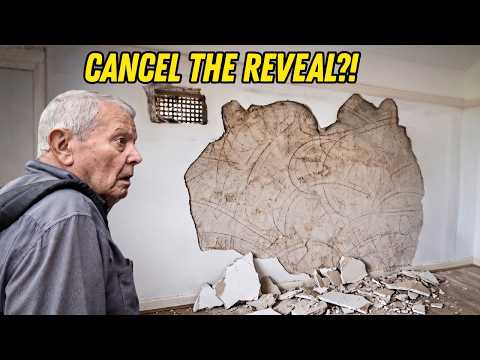
The strongest evidence arrives in Mussomeli, where the group finally tours actual €1 properties. These are not charming villas waiting for paint and furniture. One has structural concerns serious enough that visitors are warned not to enter part of an upper room, while mold, deterioration, missing or unsafe surfaces, and the apparent need for extensive reconstruction quickly drain the group's enthusiasm. This is where the investigation works best because the condition of the property answers a question that abstract discussions of renovation budgets cannot. A nominal purchase price can be genuine while still representing only the smallest part of the financial and practical commitment.
Samar's experience then provides the most persuasive case for why the program can nevertheless work. He describes combining several properties, including two acquired for €1 and others costing a few thousand euros, with the entire acquisition totaling around €8,000. His project includes extensive space, historic elements, a substantial view, and plans for community gardens, while he performs renovation work himself. His story does not establish what a typical buyer should expect, but it demonstrates that the headline price is not purely fictional and shows the kind of buyer for whom the opportunity makes more sense: someone prepared to accept major work, uncertainty, and a long-term connection to the community.
The episode becomes more valuable when it looks beyond individual houses to the reason these programs exist. Locals describe renewed renovation, employment, businesses, foreign residents, community activities, and social spaces in towns that had been losing population and economic activity. The conversations with older residents and newcomers give the revival effort a human dimension that a purely financial investigation would miss. At the same time, claims about population changes, historical causes, foreign-resident numbers, infrastructure investment, and the broader success of the schemes are generally presented through narration or individual testimony rather than systematically documented evidence, so they are best understood as the picture assembled by this particular visit rather than a comprehensive assessment of Italy's programs.
The video's main weakness is that its investigation sometimes competes with the broader Yes Theory travel format. Stefan's health scare becomes a substantial detour, the TripAdvisor sponsorship and boat excursion interrupt the housing investigation, and the group's digital-detox retreat search introduces another objective alongside determining whether €1 homes are worthwhile. More importantly, the episode never develops a detailed buyer's cost model covering renovation requirements, taxes, professional fees, deadlines, permits, guarantees, ongoing ownership expenses, or differences between municipalities. For viewers considering an actual purchase, those omissions matter. As a travel investigation, however, the episode succeeds because its conclusion becomes less certain as the evidence accumulates: the houses are real, the opportunity can work, the towns can benefit, and yet the proposition is far less effortless than the viral price suggests.
Pros
- Touring genuine €1 properties reveals their physical condition far more effectively than discussing the scheme only through headlines or promotional material.
- Stefan's skepticism provides a useful counterweight and changes naturally as he encounters both attractive communities and difficult renovation projects.
- Samar's experience offers a concrete example of someone acquiring €1 homes and attempting to turn multiple neglected properties into a substantial residence.
- The episode examines community revival, local social life, newcomers, businesses, and renovation activity rather than judging the programs solely by purchase price.
- The conclusion preserves the distinction between a legitimate €1 sale and the much larger cost and effort required to create a usable home.
Cons
- Important financial and legal details such as taxes, fees, permits, renovation deadlines, guarantees, and ongoing ownership costs are not examined systematically.
- Broader claims about demographic revival, foreign residents, infrastructure investment, and program success rely heavily on narration and individual accounts rather than detailed supporting evidence.
- Stefan's medical emergency, the sponsored boat excursion, and the separate search for a digital-detox location interrupt an otherwise focused investigation.
- Exploring only two towns cannot establish how representative their experiences are of the roughly 80 Italian municipalities the video says have launched similar schemes.
The €1 price turns out to be neither a simple scam nor the effortless property bargain suggested by viral posts. Genuine houses can apparently be acquired at that price, and the episode finds compelling signs that attracting committed newcomers can help struggling Sicilian communities, but severely deteriorated properties and potentially substantial renovation costs make the buyer's willingness to rebuild far more important than the purchase price itself. By allowing its early optimism to erode rather than forcing a triumphant conclusion, the video delivers an entertaining and reasonably balanced investigation, even though prospective buyers would need much more financial and legal research before treating it as practical guidance.