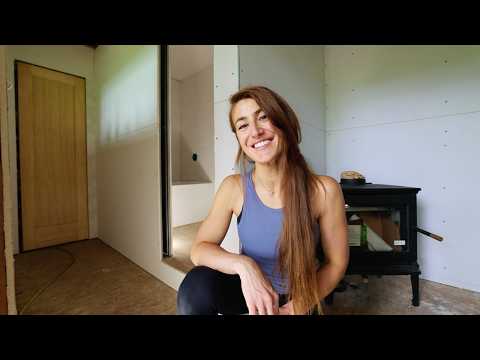
Flood recovery gives the renovation a meaningful foundation beyond ordinary decorating. Flooring is still being replaced, missing ductwork exposes an opening to the outside, rooms are being reconfigured, and a former open loft is gradually becoming a more private sleeping space. That combination of repair and redesign makes the progress satisfying because the cabin is not simply receiving a cosmetic refresh; its owners are trying to make it functional again while also correcting choices that no longer suit their family.
The flooring work provides some of the clearest hands-on renovation material. Underlay goes down, vents have to be located and routed through the laminate, the wood stove complicates the layout, and the discovery of a badly deteriorated return duct creates an unexpected repair problem. The presentation does not attempt to become a formal installation tutorial, but it shows enough of the process, tools, mistakes, and improvisation to make the work feel tangible rather than reducing the renovation to before-and-after reveals.
Reconfiguring the interior also produces more consequential design decisions than the decorating alone might suggest. Combining two cramped rooms creates a larger bedroom, but sacrificing a bedroom leads to the plan to enclose the loft with antique windows and tongue-and-groove boards. The reasoning is easy to follow: guests already sleep upstairs, yet the open loft offers little privacy and allows noise to travel freely. Closing it in therefore addresses both bedroom count and usability while also changing the appearance of the main living space.
Color becomes the more playful half of the project. Blue-painted millwork, wainscoting, cream wall samples, striped wallpaper, vintage windows, a possible green sandstone countertop, and plans for a large locally connected artwork all mark a deliberate departure from the family's previous preference for safer neutral interiors. The uncertainty surrounding those choices is actually useful to the presentation. Rather than pretending every decision has been professionally resolved in advance, the couple repeatedly test ideas, disagree about details, reconsider installation order, and admit when they simply do not know whether something will work.
Much of the personality comes from allowing family life to interfere with the construction. A young child paints, learns to remove screws with a drill under supervision, catches frogs, eats a first roasted marshmallow, and repeatedly changes what work can realistically be attempted. The section in which a falling level strikes one parent after construction noise upsets the child is a particularly vivid reminder that an active work site and small children require care. The video acknowledges those difficulties, although scenes involving power tools and children inevitably make the project's chaotic working environment feel less relaxed than the lighthearted editing sometimes suggests.
That domestic chaos also keeps the pacing lively, but it can make the renovation feel scattered. The narrative jumps among flooring, painting, loft framing, wallpaper, family visits, swimming, meals, lumber delivery, sponsorship, and various unfinished jobs. The humor and conversational chemistry hold these pieces together reasonably well, yet viewers primarily interested in seeing a single project completed may find the constant switching frustrating. Even the wallpaper section becomes an extended sequence of measuring, adjusting, teasing, correcting earlier trim choices, and debating whether imperfections matter.
The ending wisely refuses to manufacture the polished reveal the week's work cannot support. The wrong stain derails the planned tongue-and-groove installation, the room remains unfinished, and the hosts openly acknowledge that renovation with small children has made their timetable unrealistic. That candor produces a more convincing sense of progress than forcing an artificial transformation would have. By the end, the cabin still looks like a construction project, but new flooring, painted architectural details, wallpaper, loft framing, and clearer design direction make the claimed emotional shift toward a home feel earned.
Pros
- Flood recovery and redesign give the renovation meaningful practical stakes rather than reducing it to decoration.
- Flooring, vent cutting, duct problems, framing, painting, wallpapering, and loft work provide a varied look at genuine hands-on renovation.
- The decision to enclose the loft follows a clear functional need for privacy and replacement sleeping space.
- Design uncertainty is presented openly, including changed opinions, imperfect measurements, installation mistakes, and a failed stain choice.
- Family interactions add warmth and make the limitations of renovating with young children unusually visible.
- Refusing to fake a completed reveal gives the ending credibility and reinforces how much work remains.
Cons
- Frequent switching among unrelated renovation jobs, family moments, and side activities makes the overall project progression somewhat fragmented.
- Several installation sequences run longer than their practical information warrants, particularly the extended wallpaper work.
- The lighthearted presentation can occasionally underplay the complications of combining an active construction environment with small children.
- Because so many projects remain unfinished, viewers looking for a substantial final transformation receive only an interim payoff.
A convincing renovation diary succeeds less through a dramatic reveal than through the accumulating evidence that a damaged cabin is becoming usable, personal, and lived-in again. Its loose structure and unfinished projects occasionally dilute the momentum, but the mixture of practical rebuilding, uncertain design decisions, family disruption, and candid setbacks makes the progress feel unusually authentic.