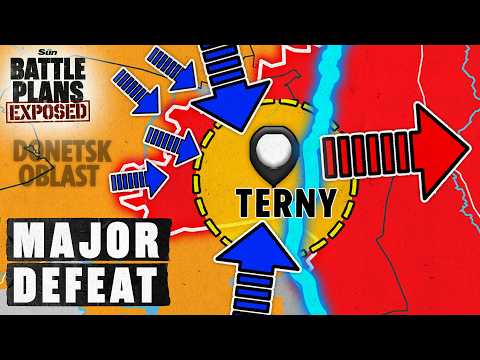
Orikhiv emerges as the first test case in an argument that Russia is increasingly trying to turn infiltration, air power and pressure on Ukrainian logistics into territorial gains. The analysis reconstructs movements through flag raisings, drone strikes, artillery footage and suspected supply routes, then uses those observations to argue that Ukrainian positions south of the city could become increasingly difficult to sustain. There is useful attention to uncertainty here: the presenter acknowledges when only two Russian soldiers are visible, labels a supposed drone-command position suspicious, and describes the battle as only beginning rather than declaring Orikhiv lost.
That caution, however, competes with much stronger predictions than the presented evidence can comfortably support. A destroyed bridge, possible pontoons, Russian strikes and small-unit infiltrations can illuminate battlefield conditions without establishing that Ukrainian forces will soon have to abandon large sections of a city. The same distinction matters throughout the presentation: geolocated soldiers can demonstrate presence at a particular place and time, but presence does not automatically establish durable territorial control. The presenter frequently attacks pro-Ukrainian mapping for using grey zones, yet the fluid infiltration warfare he documents is precisely the kind of environment in which control can be difficult to classify cleanly.
Kupiansk receives the most methodical treatment. Rather than relying on a single recent incident, the presenter says he has plotted five months of evidence for Russian and Ukrainian presence, distinguishing the relatively static struggle inside the city from developments along the east bank of the Oskil River. The discussion of a possible Russian supply route, Ukrainian counterattacks north of Kupiansk and the limits on Russian manpower creates a more complicated picture than the video's headline framing might suggest. Notably, the presenter concedes that neither side has achieved a decisive result inside Kupiansk and credits Ukrainian forces with successful advances around Vovchansk-area positions described in the presentation.
Kostiantynivka is treated much more conclusively, with the presenter estimating Russian control at 66 percent of the urban area, Ukrainian control at 8 percent and the remainder as grey zone. He uses numerous claimed geolocations to explain Russian infiltration through industrial districts, pressure from multiple directions and Ukrainian efforts to prevent encirclement. Yet these percentages are presented with a degree of precision that the underlying battlefield ambiguity does not necessarily justify. Recent outside reporting has likewise described intense fighting and Russian infiltration around Kostiantynivka, but assessments have differed over the extent and durability of Russian control, underscoring why such exact territorial figures should be treated as the presenter's assessment rather than settled fact. Critical Threats +1
Dobropillia provides an especially important check on the video's tendency toward inevitability. The presenter documents Russian reconnaissance groups, glide-bomb attacks, attacks on logistics and repeated appearances around settlements south and east of the city, calling the broader maneuver one of Russia's best-executed operations of the war. But he ultimately acknowledges that Ukraine still controls Dobropillia and that Russian activity inside it consists of infiltration rather than established conquest. Contemporary assessments similarly reported Russian infiltration attempts alongside Ukrainian-held positions, while other reporting documented Ukrainian territorial gains elsewhere in northern Donetsk Oblast during the same period. Critical Threats +1 That broader context makes the prediction of four strategic cities falling before 2027 considerably less certain than the presentation implies.
The biggest editorial weakness is the tone. Terms such as “cannon fodder,” jokes about Colombians as an “infinite meat deposit,” mockery of Ukrainian and pro-Ukrainian sources, and repeated sarcastic characterizations make the analysis entertaining for viewers already receptive to the presenter’s style, but they also undermine confidence in his neutrality. Russian claims are sometimes challenged—most usefully when the presenter asks for evidence of alleged Colombian casualties or rejects Russian claims that Dobropillia has already fallen—but Ukrainian claims and mapping organizations receive far more sustained ridicule. The result is an unusual mixture of detailed open-source battlefield reconstruction and openly partisan commentary.
The lengthy supplement advertisement is an even sharper departure from the otherwise map-driven presentation. Claims about bone marrow, stem-cell production, healing, cocoa flavanols and the effects of the advertised product move well beyond what the presentation itself establishes, while a personal rotator-cuff story and a brief reference to a large study do not demonstrate that taking the promoted supplement produces the sweeping regenerative effects suggested. As a piece of war analysis, the presentation is at its best when it maps observable evidence, distinguishes confirmed positions from suspected ones and admits where Russian advances have stalled. Its weakest moments come when those observations are converted into confident forecasts, exact control percentages or sweeping judgments without equivalent evidence for the additional inference.
Pros
- Extensive use of claimed geolocations, drone footage and mapped positions gives the battlefield discussion unusually specific supporting detail.
- The Kupiansk section distinguishes tactical Ukrainian successes, Russian positions and broader operational objectives rather than portraying every sector as a straightforward Russian advance.
- The presenter occasionally challenges Russian claims and explicitly acknowledges uncertainty where evidence is incomplete.
- Discussion of infiltration, drone interception, logistics and small-unit tactics provides useful insight into why conventional front lines can poorly represent modern urban fighting.
Cons
- Predictions that Ukrainian positions will inevitably collapse often go beyond what the localized evidence presented can establish.
- Territorial-control percentages are expressed with questionable precision in battles characterized by infiltration, isolated positions and extensive grey zones.
- Persistent mockery of Ukraine, Ukrainian soldiers and pro-Ukrainian sources makes the analysis feel partisan even when the underlying mapping is detailed.
- The presentation does not systematically test its battlefield interpretation against competing explanations or independent assessments.
- The supplement advertisement makes broad medical and regenerative claims without presenting evidence sufficient to establish the promised effects.
- The title's implied near-term outcome is substantially more certain than the mixed and frequently fluid battlefield picture described in the analysis itself.
Detailed mapping and a willingness to examine individual strikes, infiltrations and supply routes make this a substantive battlefield presentation, particularly around Kupiansk and Orikhiv. Its usefulness is weakened by partisan ridicule, overconfident territorial forecasts and a tendency to turn evidence of Russian presence or pressure into conclusions about eventual Ukrainian collapse. The result is informative as one interpretation of a rapidly changing front, but its predictions deserve considerably more caution than its confident delivery suggests.