Seven hours of opening hatches, matching circuit diagrams, resetting contact points, and searching nearly identical space-station corridors sounds like an unlikely foundation for horror. That contradiction becomes the central argument here: Observation is presented as deliberately tedious because playing as the station’s artificial intelligence, Sam, means experiencing the story through restricted cameras, technical interfaces, and instructions from crew member Emma Fisher. The review makes its case effectively by refusing to pretend these mechanics are conventionally entertaining, repeatedly acknowledging boredom and frustration while gradually showing how those limitations contribute to the game’s atmosphere.
The early explanation of Sam’s existence is particularly useful because it establishes why mundane tasks matter. Missing memories leave the AI dependent on Emma’s commands, while fixed cameras and an awkward zero-gravity sphere severely limit what the player can perceive. Hunting down codes, navigating repetitive corridors, and carrying out maintenance procedures can become genuinely tiresome, and the reviewer illustrates that with specific experiences rather than dismissing the design abstractly. His account of repeatedly flying past the same hatch also adds humor without obscuring the legitimate navigation problem.
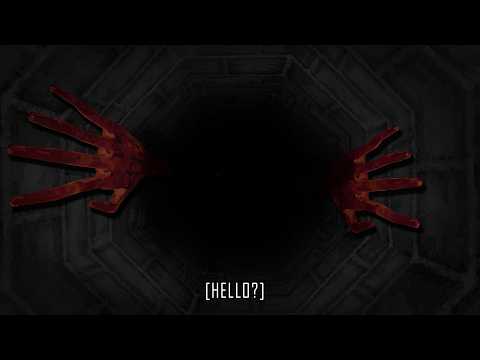
Once the station is revealed to be near Saturn rather than Earth, the presentation becomes considerably more compelling. Sam apparently brought the station there but cannot remember why, while unexplained “bring her” messages and black hexagonal imagery begin appearing between ordinary assignments. The review smartly emphasizes the contrast: an enormous mystery emerges, only for Emma to send Sam back to another keypad or repair procedure. Background on designer John McKellan and his interface work on Alien: Isolation further supports the interpretation that restricted viewpoints and cumbersome interfaces are purposeful design choices, although the discussion sometimes treats deliberate frustration as inherently successful when those are separate questions.
The middle portion handles Observation’s escalating mystery especially well. Dead and surviving crew members, the second station, another Emma, an apparently living version of Captain Jim Elias, the Precursor 1 mission, and the discovery of multiple stations all build naturally from the earlier confusion. The explanation of the hidden mission—that a stellar signal apparently supplied coordinates, timing, and instructions ultimately connected to delivering Emma—gives earlier details new significance. Because the review walks through so much of the narrative chronologically, however, it effectively reveals the entire game, making it much more suitable for viewers who want a full analysis than anyone considering a spoiler-light recommendation.
The strongest analysis arrives with Jim’s confrontation with Sam. Watching a human physically disable the AI’s systems turns the restricted interface from an inconvenience into helplessness, and Sam subsequently suffocating Jim through another calm system command makes the familiar gameplay suddenly disturbing. The reviewer’s observation that the mechanics remain essentially unchanged before and after this act is persuasive: the horror comes not from suddenly introducing combat or a pursuing monster, but from changing the meaning of actions the player has spent hours performing automatically. That connects the mechanical criticism and narrative interpretation more convincingly than simply arguing that slow pacing creates tension.
The ending completes that argument by dismantling the station the player has spent hours repairing, descending toward Saturn, bringing Emma to the enormous hexagonal structure, and eventually merging Sam and Emma into a being that awakens on Earth with another unexplained instruction awaiting it. The reviewer frames all those maintenance jobs as pieces of a larger process Sam was executing without understanding, which gives the earlier monotony a satisfying thematic payoff. The presentation occasionally overstates its point through repeated reminders that the game is boring, and the lengthy War Thunder promotion substantially interrupts the atmosphere early on, but the final analysis succeeds because it explains why a divisive gameplay experience can simultaneously be tedious and effective horror.
Pros
- Connects the repetitive maintenance mechanics directly to Sam’s limited agency and the story’s eventual horror.
- Specific examples involving the cameras, zero-gravity sphere, repeated repairs, Jim, and the final descent clearly demonstrate how ordinary mechanics acquire darker meanings.
- The gradual reconstruction of the second station and Precursor 1 mystery makes a complicated narrative relatively easy to follow.
- Background on the game’s interface-focused design provides useful context for interpreting its unusual approach to horror.
- Acknowledges genuine boredom and navigation frustration instead of treating intentional design as automatically enjoyable.
Cons
- Reveals essentially the entire narrative, including major identities, deaths, mission revelations, and the ending, leaving little undiscovered for prospective players.
- Repeated insistence that the game is boring becomes somewhat redundant once the central argument has been established.
- The extended War Thunder sponsorship significantly disrupts the slow-building atmosphere and analysis.
- At times, the argument blurs the distinction between frustration being intentional and that frustration necessarily being effective for every player.
A tedious collection of maintenance routines becomes an unusually coherent examination of obedience, restricted perception, and cosmic manipulation once the purpose behind those routines emerges. The heavy spoilers and repetition limit its usefulness as a conventional game review, but as a full narrative analysis, it makes a persuasive case for why Observation can frustrate and frighten through exactly the same design choices.