The strongest part of this reaction is the tension between wanting the paranormal clips to be genuine and repeatedly finding reasons not to trust them. Full-body apparitions, towering figures in old photographs, unexplained shadows, security-camera silhouettes, moving toys, mysterious hands, and disembodied voices all get an enthusiastic first reaction before the hosts start testing alternative explanations. That push and pull gives the compilation more personality than a simple parade of supposed ghost evidence, because almost every scare becomes a small argument over whether it deserves belief.
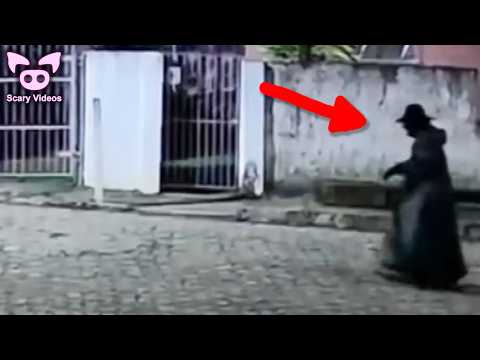
The hosts are especially effective when something within a clip complicates the obvious skeptical explanation. A figure passing through a gate becomes more interesting because the gate apparently does not move; an apparent child’s hand beneath a door raises questions because they cannot see corresponding feet or a shadow; an animal staring toward a strange background figure adds another detail for them to consider. None of those observations establishes paranormal activity, but the hosts generally treat them as reasons for curiosity rather than proof. Their frequent admissions that they are not camera, editing, or Photoshop experts are important, particularly when compression, staged footage, manipulation, or ordinary technical behavior could plausibly account for what they are seeing.
That caution is not always consistent. Several moments move quickly from “this looks strange” to personal theories about how ghosts manifest, how much energy they might possess, why spirits could interact with children or toys, or why short voices might supposedly be easier for them to produce. Those ideas are presented through personal experience and belief rather than demonstrated evidence, and the distinction is not always emphasized as strongly as it could be. The repeated percentage judgments—70/30, 50/50, 90 percent believable—are entertaining shorthand for gut reactions, but they should not be mistaken for meaningful assessments of authenticity.
The best material often comes from the hosts challenging suspiciously cinematic construction. They notice when someone appears conveniently positioned to leave empty space in the frame, question dramatic reactions that feel performed, wonder whether doors or objects could have been manipulated with strings, and reject clips that seem to escalate too perfectly. One staircase sequence earns praise for its horror-movie staging while still being dismissed as likely fake. That willingness to appreciate a clip as effective entertainment without treating it as convincing evidence is one of the reaction’s more balanced instincts.
Personal stories add considerable character, although they also pull the video away from evaluating the clips themselves. Tales about an old building later revealed to have been a morgue, a child describing a little girl in a room, strange experiences at the Winchester Mystery House, malfunctioning toys, baby-monitor interference, and previous ghost investigations reinforce the hosts’ enthusiasm for the subject. Some of these digressions are genuinely funny or creepy, but others run long enough that the original footage becomes secondary. The humor is similarly relentless, turning frightening faces, mysterious figures, children’s toys, Benadryl-induced sleep, and haunted rooms into recurring bits that sometimes diffuse the tension the compilation has just created.
The accidental cat-ball activation in the room is easily the video’s most effective unscripted moment. It occurs immediately after a discussion about haunted toys, producing the kind of coincidental timing that naturally unsettles the hosts and fits the episode almost too well. Their attempt to test it again, locate the dogs, inspect where the ball was positioned, and discuss possible vibration gives the moment more immediacy than the submitted clips because their own surprise is part of what the audience is watching. Even here, however, the cause remains unresolved, and the video wisely ends with uncertainty rather than claiming that the event confirms a haunting.
Overall, the presentation succeeds because the chemistry is lively and the hosts rarely respond to strange footage in exactly the same way. One may lean toward belief while another searches for mundane explanations, and both are willing to change positions depending on the clip. The downside is that repeated enhancing, percentage estimates, “I choose to believe” verdicts, and long tangents eventually create a loose rhythm rather than a focused examination of purported evidence. Viewers seeking rigorous paranormal analysis will not find it here, but as an informal reaction built around scares, skepticism, jokes, and personal ghost stories, it remains consistently engaging.
Pros
- Strong chemistry turns a long compilation of paranormal clips into an energetic back-and-forth rather than a repetitive sequence of scares.
- The hosts regularly consider staging, editing, camera behavior, timing, reflections, wind, and other non-paranormal explanations.
- Several clips receive useful visual scrutiny, particularly when small details complicate an obvious explanation.
- Personal stories and the unexpected cat-ball activation give the episode distinctive moments beyond the submitted footage.
- The video frequently acknowledges uncertainty instead of presenting every unexplained image or sound as confirmed paranormal evidence.
Cons
- Personal beliefs about ghost behavior, energy, children, toys, and manifestations are sometimes discussed with more confidence than the evidence supports.
- Percentage-based authenticity judgments are subjective impressions rather than meaningful verification.
- Long anecdotes and recurring jokes occasionally overwhelm the footage being evaluated.
- Repeated reactions such as enhancing images, assigning odds, and choosing to believe become formulaic across the lengthy compilation.
- No clip receives the kind of source verification or technical analysis necessary to determine whether it documents anything paranormal.
This is a lively paranormal reaction driven more by chemistry, instinct, and storytelling than investigation, with the hosts at their best when enthusiasm collides with skepticism and a supposedly convincing clip still gets challenged. The analysis cannot establish the authenticity of the footage, and personal ghost theories sometimes outrun the evidence, but the combination of creepy imagery, comic detours, reasonable doubts, and one remarkably well-timed incident in the room makes the episode entertaining without requiring viewers to accept its supernatural possibilities as fact.