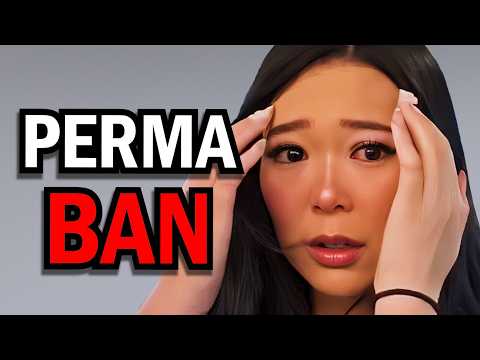
Sombr’s concert behavior provides the most substantial foundation for the criticism here. The account of the Washington, D.C. show describes an audience dominated by young teenagers while the performer mixed meme-driven humor with vulgar remarks, a dating-show segment involving minors calling exes, and the widely criticized “bark for me” interaction followed by a “daddy” comment. By extensively presenting the concertgoer’s own account, the discussion gives viewers enough detail to understand why an adult fan could find the performance uncomfortable rather than merely asserting that Sombr had become controversial.
His response to that criticism becomes an equally important part of the case. Rather than directly engaging with the concerns about sexualized humor around a young audience, Sombr focused on the critic being 25, complaints about body-shaming, and his belief that anyone familiar with his online personality should know what to expect. The analysis reasonably identifies that omission as significant, particularly because Sombr himself acknowledged having younger fans. At the same time, the presentation is careful enough to note that nothing described establishes predatory conduct, drawing an important boundary between questionable judgment and the much more serious accusations some commenters were willing to anticipate.
The harassment that followed exposes another worthwhile dimension of celebrity-fandom dynamics. Megan’s account of threats and continued attention from Sombr’s supporters is paired with criticism of how his social-media activity could direct more attention toward her, while opening act Devon Gabriela is presented as an example of someone attempting to cool the conflict. The argument that management should have handled the controversy more responsibly is plausible within the material presented, although the narration sometimes shifts from criticizing what happened to assigning responsibility without establishing exactly who controlled each decision.
The discussion becomes considerably shakier when it turns toward Sombr’s family background. His parents’ professional success, his privileged upbringing, his artistic education and his father’s celebrity-adjacent event work establish that he had advantages many aspiring musicians lack. They do not, by themselves, demonstrate that family connections secured his Warner deal, imprint or chart success. To its credit, the video eventually acknowledges precisely that problem and notes his years of making music before his breakthrough, but phrases such as “the proof” of nepotism growing give internet speculation more evidentiary weight than the information actually supports.
The alleged team-operated fan accounts offer a more interesting examination of modern music marketing, particularly because the argument goes beyond simply calling manufactured promotion embarrassing. Unique access, promotional material and third-person presentation are cited as signs that supposedly organic fan pages may have been connected to Sombr’s operation, while the broader criticism concerns marketing designed to cultivate parasocial investment. Yet the presentation never firmly establishes who operates each account or how directly Sombr controls the strategy. Calling the practice “devious” and connecting it to minors’ willingness to participate in his concert behavior therefore pushes a plausible concern into a causal argument that the evidence shown cannot fully demonstrate.
Structurally, the piece is strongest when it complicates its own case. Sombr is repeatedly given meaningful counterarguments: wealth does not automatically equal nepotism, team marketing is not necessarily artist-directed, offensive concert behavior does not establish predatory intent, and his career has continued to flourish despite online hostility. Those concessions prevent the profile from becoming a straightforward takedown. They also expose a tension in the framing, however, because the promised narrative of “decay” sits awkwardly beside an ending that describes rising streams, awards, collaborations, an expanding fan base and major industry support. The actual story is less about career deterioration than a widening divide between internet ridicule and professional momentum.
Pros
- The concert controversy is reconstructed in enough detail to make the central criticism understandable rather than relying on vague references to backlash.
- Sombr’s response is examined specifically, including what he addressed and the more serious concerns he left unanswered.
- The discussion distinguishes inappropriate behavior from unsupported accusations of predatory intent.
- Counterarguments concerning management responsibility, privilege, nepotism and artist-controlled marketing add useful nuance.
- The contrast between intense online ridicule and continued commercial success complicates a simplistic cancellation narrative.
Cons
- The nepotism section sometimes treats circumstantial advantages and internet suspicion as stronger evidence of direct career intervention than the material establishes.
- Alleged team-operated fan accounts are discussed with considerable certainty despite limited proof of their ownership and Sombr’s personal involvement.
- The suggested connection between parasocial marketing and minors participating in provocative concert interactions is more speculative than demonstrated.
- Loaded descriptions occasionally push the presentation toward villain-building even when the surrounding analysis acknowledges substantial uncertainty.
- The decay-oriented framing conflicts with the account’s own evidence that Sombr’s career and industry standing continued to grow.
The most persuasive material concerns Sombr’s handling of a young audience and his poorly targeted response to legitimate criticism, while the broader attempt to explain his success through nepotism and covert marketing rests on less secure ground. A willingness to entertain counterarguments gives the piece welcome balance, but tighter evidentiary standards and less predetermined framing would make its strongest criticisms considerably more convincing.