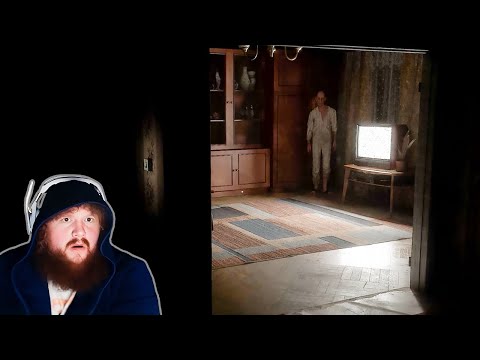
A scripted American Horror Story scene involving Kim Kardashian and Emma Roberts opens the collection with an ominous interpretation: fictional depictions of sacrifice for fame are treated as possible “truth in plain sight.” The presenter is entertainingly incredulous, but the leap from deliberately provocative horror fiction to suggestions about real Hollywood behavior is unsupported. His jokes about wealthy celebrities keep the segment playful, yet the underlying conspiracy framing is much stronger than the evidence warrants.
That mixture of comedy and speculation defines much of the episode. A falling leaf becomes amusing largely because the presenter immediately dismisses it before spotting an apparently odd car reflection, while surveillance footage of an unidentified animal attack provides a more tangible mystery. The supposed “second moon” clip then leads into skepticism about the Apollo landings, but the argument that humanity would already have commercial development on the Moon if the landings occurred is presented rhetorically rather than supported with evidence. These rapid shifts are energetic, though they regularly substitute jokes and suspicion for investigation.
An ancient-civilization segment offers a welcome change because the featured material attempts to explain how industrial societies could leave geological traces, including atmospheric pollution, ocean sediments, and agricultural genetics. The presenter accepts its broad conclusion before moving into a much wilder claim that Himalayan salt could represent petrified giant flesh. Claims about enormous biblical giants, petrified Titans, and wordplay involving “Himalayan” are offered without persuasive evidence, making the contrast between the two segments especially stark. His humorous admission that he struggles with basic practical tasks gives the commentary personality, but it does not resolve the factual gap between intriguing speculation and demonstrated history.
Dreams containing advertisements produce one of the more interesting contemporary mysteries. The account itself includes reasonable possibilities such as coincidence, remembered advertising, stress, and sleep deprivation, but the presenter subsequently asserts that devices are listening to conversations and serving related advertising without establishing that explanation here. Similarly, the floating data-center segment contains detailed claims about wave-generated power, seawater cooling, satellite communication, and future deployment, yet these claims are largely passed along rather than independently scrutinized. His concern about potential environmental consequences is understandable as a question, but no evidence is provided to determine what those effects would actually be.
The compilation becomes substantially less credible when unusual body movements and visual artifacts are connected to shapeshifting or reptilian theories. Footage involving a strangely positioned leg and Angela Merkel’s eyes may look unusual in the presented clips, but appearance alone cannot establish supernatural biology, and the episode offers no serious process for excluding injury, perspective, compression, lighting, or other ordinary explanations. To his credit, the presenter sometimes responds with mundane possibilities—particularly by comparing the leg footage to an injury he witnessed—but he also repeatedly entertains extraordinary interpretations without demanding corresponding evidence.
A remote-ranch account of a large metallic aerial object closes the mystery material on a more effective note because the story retains genuine uncertainty instead of resolving it through a definitive claim. The described rings, unusual movement, recurring lights, and alleged high-speed departure make for an intriguing anecdote, while the lack of corroborating evidence prevents the account from establishing what was actually observed. The presenter’s conversational confusion over the phrase “reverse hourglass” is funny, but the broader compilation would benefit from more of that skeptical questioning being directed toward its biggest paranormal and conspiratorial assertions.
The extended closing message about a viewer named Bethany dramatically changes the tone. Her reported two weeks of sobriety prompts sincere encouragement, a prayer, and a personal reflection on faith, success, money, and the kind of influence the presenter wants his channel to have. Viewers primarily interested in mysterious clips may find the lengthy devotional ending disconnected from the main format, but it also feels considerably more personal and purposeful than the preceding collection of unexplained footage. Whatever viewers make of the presenter’s religious beliefs, his response to the viewer’s message is clearly framed as encouragement rather than another mystery to sensationalize.
Pros
- The presenter’s self-deprecating humor and conversational reactions give a familiar mystery-compilation format a distinctive personality.
- Several clips genuinely invite questions without requiring a paranormal explanation, particularly the unidentified animal footage and remote-ranch aerial account.
- The ancient-civilization segment briefly introduces evidence-based reasoning about what an industrial society could leave in the geological record.
- The closing response to Bethany is unusually personal and compassionate, giving the episode an earnest emotional dimension beyond its mystery content.
Cons
- Fictional scenes, visual anomalies, and anecdotes are repeatedly used to entertain conspiracy or paranormal explanations without sufficient supporting evidence.
- Moon-landing skepticism, petrified-giant claims, reptilian suggestions, and assertions about devices listening to conversations receive little meaningful factual scrutiny.
- Potential ordinary explanations for strange imagery are inconsistently investigated before extraordinary possibilities are introduced.
- Frequent subscription appeals and tangents interrupt an already loosely connected collection of topics.
- The lengthy devotional conclusion, while sincere, is structurally detached from the mystery-focused material that occupies most of the episode.
Personality, humor, and an unexpectedly heartfelt closing give the collection more character than a straightforward parade of strange clips. Its biggest weakness is evidentiary: intriguing footage and anecdotes too often become springboards for extraordinary theories without enough scrutiny to separate genuine mysteries from speculation. As entertainment it remains lively, but viewers looking for rigorous explanations will find many of its biggest claims inadequately supported.