Nine years of delays have made Tesla's next-generation Roadster one of the automotive industry's most elusive promises, but its latest unveiling gives enthusiasts something extraordinary to discuss. Carwow's Mat Watson examines a radically redesigned electric supercar equipped with compressed-air thrusters, powerful suction fans, and performance ambitions that challenge conventional ideas of what a road car can accomplish. His enthusiastic presentation captures the excitement of Tesla's demonstrations while acknowledging that turning an experimental spectacle into a production vehicle presents an entirely different challenge.
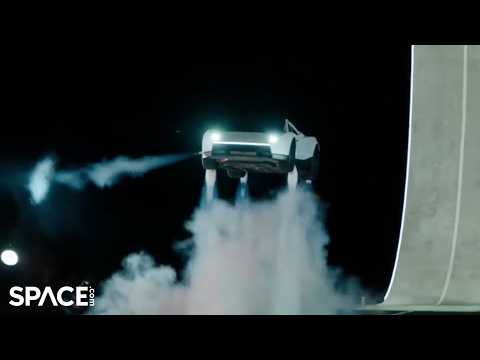
The most sensational feature is the SpaceX-inspired propulsion system, which Watson explains uses directional nozzles and compressed air to launch the car into the air. Tesla's demonstrations reportedly included jumping eight metres from flat ground, flying over other vehicles, and performing a barrel roll. Watson describes a system capable of expelling 250 kilograms of air at the speed of sound, generating thrust he compares to an F-18 fighter jet engine. These extraordinary claims make for fascinating viewing, although the presentation offers limited independent evidence about the conditions, engineering limitations, or repeatability of the demonstrations.
Acceleration provides another major talking point, with Tesla claiming a remarkable 0–60 mph time of 0.81 seconds using four rear-facing thrusters. Watson strengthens this discussion by comparing the figure with established electric performance benchmarks and his own experience accelerating to 60 mph in approximately 1.4 seconds in the McMurtry Spéirling prototype. Importantly, he acknowledges that Tesla's claimed result requires verification before it can be accepted as a definitive record. His familiarity with extreme-performance vehicles adds credibility to the comparison, even as his excitement occasionally makes the reported achievement sound more conclusive than the available evidence supports.
The Roadster's suction-based downforce system receives similarly enthusiastic coverage, particularly Tesla's demonstration of the vehicle driving and parking almost 70 feet above the ground. Watson explains the claimed 4.7 tonnes of suction force before considering whether the Roadster's considerable apparent weight might compromise its cornering performance. His comparison with the lighter McMurtry, which he says can generate approximately 3G of lateral acceleration against Tesla's claimed 2G, introduces some welcome technical skepticism. Rather than automatically accepting Musk's ambition to dominate every track record, Watson recognizes that straight-line acceleration and sustained cornering performance involve different engineering challenges.
Beyond the performance figures, the exterior and interior examination provides a useful look at Tesla's dramatic design departure. Watson compares the angular bodywork with the Lamborghini Countach, identifies familiar styling influences in the butterfly doors, and highlights the integrated seats, yoke steering wheel, touchscreen, and enormous adjustable rear wing. Particularly interesting is his observation that different vehicles appear throughout the presentation, with variations in wheels and apparent chassis construction. His suggestion that the flying demonstration cars may have been substantially lightened is plausible speculation rather than established fact, but it raises an important question about how closely these experimental machines resemble the eventual production Roadster.
The final performance ambitions push the discussion into even more speculative territory. Watson reports Tesla's claimed 230 mph capability alongside Musk's proposed 380 mph production target, comparing that extraordinary goal with rival hypercars and existing speed records. The prospect of attempting a Snake River Canyon jump adds another element of automotive showmanship. However, proposed achievements receive considerably more attention than the engineering evidence needed to establish their feasibility. Questions surrounding aerodynamic stability, propulsion capacity, sustained operation, safety, and the practical differences between a purpose-built stunt vehicle and a road-legal production car remain largely unexplored.
Watson's greatest strength is his ability to make complicated automotive technology entertaining without abandoning skepticism entirely. His energetic delivery, humorous observations, and first-hand performance comparisons keep the presentation engaging, while his examination of the differing prototypes and Tesla's repeatedly postponed deadlines prevents it from becoming purely promotional. Nevertheless, the discussion would benefit from deeper scrutiny of the compressed-air system's limitations, passenger safety, regulatory approval, and the feasibility of Tesla's latest 2028 production target. His closing enthusiasm is understandable, but the distinction between spectacular demonstrations and a commercially viable flying supercar deserves greater emphasis.
Pros
- Watson's energetic narration and humorous observations make an extraordinarily ambitious automotive unveiling accessible and entertaining.
- Clear explanations of the compressed-air thrusters, suction fans, and extreme acceleration claims provide useful technical context.
- Comparisons with the McMurtry Spéirling and other performance cars help establish the scale of Tesla's claimed achievements while introducing meaningful skepticism about cornering performance.
- The examination of exterior styling, interior features, and differences between demonstration vehicles adds substance beyond the headline-grabbing stunts.
- Acknowledgment of Tesla's repeated production delays and the need to verify acceleration claims provides some necessary balance.
Cons
- Extraordinary flight, acceleration, suction, and top-speed claims lack independent verification or sufficiently detailed testing evidence.
- The practical limitations of compressed-air propulsion, including replenishment requirements and repeated operation, receive little examination.
- Safety, road legality, aerodynamic stability, and regulatory obstacles are acknowledged only briefly despite their importance to a potentially flying production car.
- Speculation about lightweight demonstration vehicles raises legitimate questions without enough supporting information to establish their actual construction.
- The proposed 380 mph target and 2028 production schedule receive less critical scrutiny than their exceptional ambition warrants.
Carwow delivers an exciting and accessible examination of Tesla's most ambitious Roadster concept, supported by useful technical comparisons and an entertaining presentation. Watson balances genuine enthusiasm with occasional skepticism, although the extraordinary performance promises demand considerably stronger evidence and deeper practical analysis. As an automotive showcase, it is thoroughly engaging, but the Roadster's ultimate significance will depend on whether Tesla can transform its demonstrations and ambitious targets into a safe, functional production vehicle.